

What Your Nails Reveal About Your Body's Health
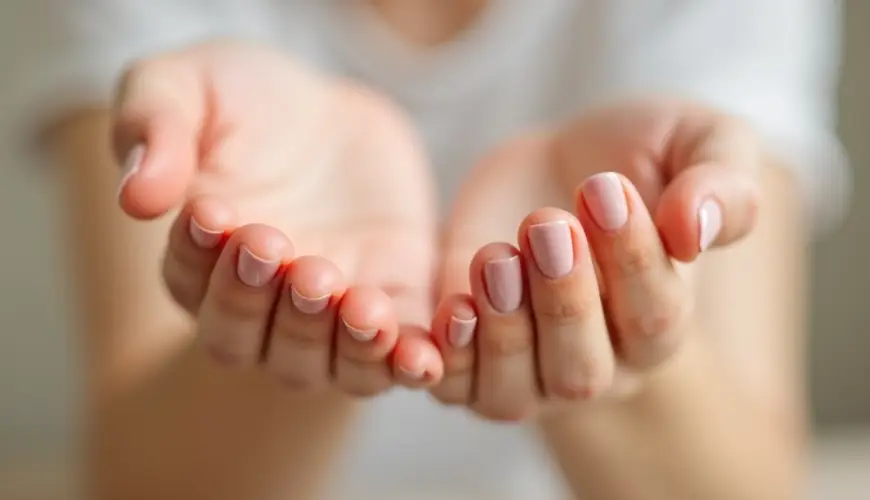
Few people realize when trimming their nails that they are looking at one of the most accurate indicators of their health. Nails are not just an aesthetic accessory that we polish and groom – they are living tissue that reacts to what is happening inside the body. Nail color, shape, and brittleness can reveal vitamin deficiencies, hormonal imbalances, liver problems, or even signals of more serious diseases. Dermatologists and internists have known this for a long time: nails are a window into the body.
This is no exaggeration. Medical literature describes dozens of conditions that manifest on the nails before other symptoms appear. All you need to do is learn to read what our hands show us every day.
Try our natural products
Nail Color: When Nature Speaks in Colors
A healthy nail has a naturally pinkish color with a translucent free edge. Once this color changes, the body is sending a signal worth paying attention to. White spots on nails, which many of us remember from childhood as signs of "lying," are in reality most commonly caused by minor trauma to the nail matrix – the place where the nail is formed. However, if the white discoloration affects the entire surface of the nail or multiple nails at once, it may be so-called leukonychia, which is associated with low levels of zinc, protein, or with liver and kidney disease.
Yellow nails are another common finding. Most often they are caused by a fungal infection, which affects approximately ten percent of the population, as stated by the American Academy of Dermatology. However, yellowing can also signal prolonged use of nail polish without a base coat, smoking, or – in more serious cases – thyroid disease, psoriasis, or lymphatic problems. If the yellow discoloration persists even after stopping nail polish use and you don't smoke, a visit to the doctor is in order.
Bluish or purplish nails are a symptom that should not leave anyone unconcerned. This shade occurs when tissues are not receiving enough oxygen – it may be a temporary condition during extreme cold, but it can also be a sign of heart or lung problems. Similarly, dark streaks running lengthwise along the nail plate may be harmless pigmentation, especially in people with darker skin, but in some cases they point to melanoma of the nail bed – one of the most insidious forms of skin cancer. The rule is simple: any new dark streak that is widening or changing should be seen by a dermatologist.
Red or dark brown dots under the nail that resemble splinter-like fragments are professionally called splinter hemorrhages – small bleeds under the nail plate. They can occur after an injury, but repeated occurrence without an obvious cause is one of the classic signs of heart valve inflammation (endocarditis). This is an example where a detail on the hand literally saves lives – early diagnosis of this disease is crucial for successful treatment.
Shape and Structure: What the Form of the Nail Reveals
Nail color is only one part of the story. Shape and structure provide another layer of information that a trained eye can read like a book. One of the most well-known shape-related symptoms is so-called clubbed fingers – a condition where the fingertips widen and the nails curve over the tip of the finger like a watch glass. This phenomenon, known in English as "clubbing," is associated with chronic lung diseases, congenital heart defects, or bowel diseases. It was described by Hippocrates himself, which is why it is sometimes called Hippocratic fingers.
Pitted nails – a nail surface covered with tiny dents, as if someone had pricked it with a pin – are a characteristic symptom of psoriasis. This autoimmune disease affects the skin and joints, but the nails are often one of the first places where it manifests. According to data from the National Psoriasis Foundation, up to 50% of people with skin psoriasis and up to 80% of those with psoriatic arthritis suffer from nail psoriasis.
Transverse ridges across the entire nail, called Beau's lines, are a fascinating record of what the body has experienced. They occur when nail growth is temporarily interrupted – for example, during high fevers, severe infectious diseases, surgical procedures, or chemotherapy. Because a fingernail grows approximately three millimeters per month, the position of the ridge can even be used to estimate retrospectively when the stress occurred. It is somewhat like tree rings – a silent but precise record of the past.
Conversely, longitudinal ridges – fine lines running from the nail root to its free edge – are usually completely harmless and naturally increase with age. They are caused by reduced production of keratin and moisture in the nail plate. However, if they are pronounced and accompanied by nail brittleness, they may be a sign of iron deficiency or thyroid disease.
Nail Brittleness: When Cream Alone Isn't Enough
Brittle, splitting, or fragile nails are among the most common complaints that people bring to dermatologists. The medical term for this condition is onychoschizia, and although many consider it a cosmetic problem, nail brittleness very often conceals specific nutritional or health-related causes.
The most common culprit is iron deficiency. Iron deficiency anemia causes not only fatigue and pallor but also characteristically changes the shape of nails – they can become flat or even concave like a spoon (koilonychia). If you notice that your nails are not only brittle but also unusually flat, it is definitely worth getting a blood count done.
Biotin deficiency – vitamin B7 – is another classic reason for brittleness. Biotin plays a key role in the synthesis of keratin, the protein from which nails (and hair) are made. Research published in the Journal of the American Academy of Dermatology showed that biotin supplementation led to improved nail strength in people with a proven deficiency. However, it is important to emphasize that biotin supplementation only makes sense if a deficiency has actually been confirmed – otherwise the body simply excretes the excess amount.
As a practical example: a thirty-year-old woman who switched to a strictly plant-based diet without sufficient nutritional knowledge began noticing that her nails were breaking and peeling. After visiting a doctor, it turned out she had low levels of iron, biotin, and zinc. A dietary adjustment and supplementation of nutrients at recommended doses were all it took – and within three months, her nails were noticeably stronger. This example shows that nail brittleness rarely stands on its own.
Dehydration and excessive exposure to water and chemicals also play a significant role. Frequent hand washing, working with cleaning products without gloves, or long baths cause the nail to repeatedly absorb water and dry out – and this gradually weakens it. Using protective gloves during household chores and regularly moisturizing nails with natural oils, such as jojoba or almond oil, are among the simplest and most effective preventive measures. Quality natural products for hand and nail care are also available within the range of eco-friendly cosmetics that do not contain unnecessary synthetic substances that irritate the skin.
Hyperthyroidism – an overactive thyroid gland – manifests as nails that grow quickly but are fragile and brittle. Hypothyroidism, on the other hand, causes slow growth, dryness, and roughness of the nail plate. The thyroid gland influences the metabolism of every cell in the body, so it is not surprising that its disorders manifest even in such a seemingly peripheral place as the nails.
As dermatologist Paul Kechijian once said: "Nails are like a diary – they record everything the body has experienced, you just have to know how to read them." And it is precisely this ability to read – observing your own body without panic but with conscious attention – that anyone can learn.
Of course, not every change on a nail means a serious disease. Small white spots from an impact, mild ridging with advancing age, or temporary brittleness after the winter period are perfectly normal phenomena. A reason for caution arises when the change affects multiple nails at once, persists for more than a few weeks, or is accompanied by other symptoms such as fatigue, weight loss, or joint pain.
Nail care is not just about visits to a nail salon. Healthy nails start from within – with adequate intake of protein, iron, zinc, biotin, and vitamin D, proper hydration, and a balanced lifestyle. Externally, they benefit from protection against chemicals, regular trimming, and moisturizing with natural oils. And last but not least – attention. It is enough to truly look at your nails from time to time. Not so they are perfect, but so they can tell you what they need.