

The end of cooking four meals for one dinner
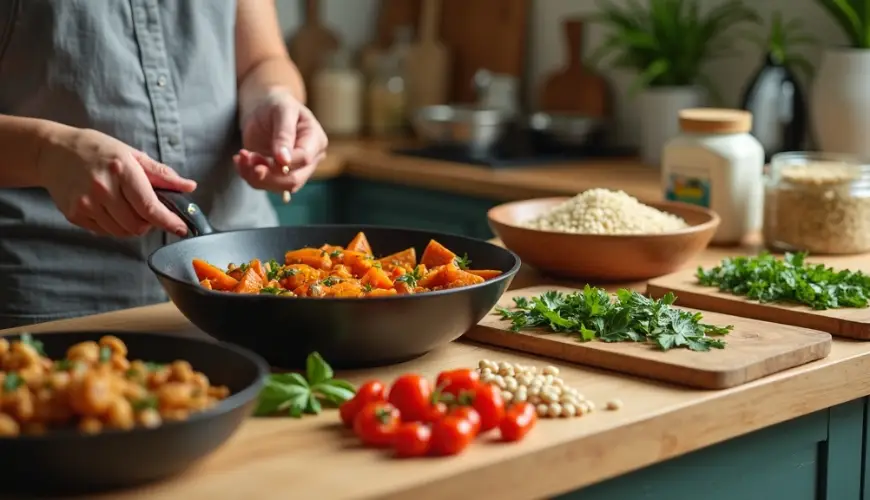
Anyone who has ever stood in the kitchen with a pencil in hand, trying to put together a weekly meal plan for the family, knows that feeling of mild despair. One family member doesn't eat meat, another hates vegetables, a third is on a gluten-free diet, and the fourth would happily eat the same thing every day. Yet they all sit at one table and expect dinner to just somehow work itself out. How do you cook one meal for the whole family without having to run a home restaurant with four different menus?
The good news is that this isn't just an idealistic cook's dream. There are proven strategies that make it possible to prepare food that satisfies vegetarians and meat lovers, children and adults, allergy sufferers and those who eat absolutely everything. It's just a matter of approaching cooking a little differently than before.
Try our natural products





The key to success: modular cooking
The key concept that has been gaining increasing popularity among families around the world in recent years is so-called modular cooking. The principle is simple: instead of preparing one finished dish where all the components are inseparably combined, individual components are prepared separately, and everyone then assembles their own plate according to their personal preferences. The result looks like one shared meal, but in reality it conceals a flexibility that can satisfy even the most demanding diners.
Let's take the Novák family from Brno as an example. Mom is a vegetarian, Dad can't imagine a meal without meat, the older daughter is currently experimenting with veganism, and the younger son is convinced that vegetables are an invention of childhood's enemies. Their solution became taco nights. On the table goes a bowl of sautéed vegetables, a bowl of chicken, tortillas, cheese, avocado, beans, and various sauces. Everyone assembles their own combination. The daughter has the vegan version, the son elegantly bypasses the vegetables, Dad loads up on meat, and Mom is happy with beans and avocado. One table, one dinner, zero compromises.
This approach works for a whole range of dishes. Buddha bowls, where everyone builds their bowl from different bases, proteins, and toppings, are another great example. Asian hot pots, where various ingredients are dipped into a shared broth, work equally well, as do classic Czech potato pancakes served with both meat and mushroom sauce for vegetarians. The modular approach doesn't require any special cooking skills – just slightly different planning.
It's also important to realize that modular cooking doesn't necessarily mean more work. On the contrary, preparing basic components separately can be faster than cooking one complicated dish. Rice cooks on its own, vegetables roast in the oven, protein is prepared in a pan – and suddenly you have the foundation for three different combinations with the same effort as for one finished dish.
Naturally, the question arises: where to start if you're just transitioning to modular cooking? The answer lies in the so-called "building blocks" of food. Every dish consists of a base (grains, legumes, potatoes), protein (meat, fish, tofu, eggs, legumes), and additions (vegetables, sauces, herbs, nuts). Once you internalize this breakdown, you naturally begin to see where you can create space for individual customization in meal preparation.
How to handle allergies and special diets without unnecessary stress
While modular cooking addresses the question of tastes and preferences, special diets and food allergies are a different chapter. Gluten-free diets, lactose intolerance, allergies to nuts or eggs – these are real health restrictions that require a more careful approach. According to data from the World Allergy Organization, approximately 220 to 520 million people worldwide suffer from food allergies, with the prevalence of allergies in children continuing to rise.
The good news is that many traditional recipes can be modified to accommodate various dietary needs without significantly changing their taste or preparation. The foundation lies in choosing recipes that are naturally "neutral" – that is, ones where allergenic ingredients are not an essential part of the dish but rather an addition. Soups, stews, risottos, or legume-based dishes are excellent candidates.
A practical trick is also to separate allergenic ingredients and add them only at the plate. If someone in the family is lactose intolerant, cheese or cream is simply served on the side and everyone adds their own. If someone is allergic to nuts, the nut topping is left out of the shared bowl and offered alongside. This approach doesn't require cooking two different meals, just a bit more attention when serving.
The choice of quality ingredients plays a key role in this context. The simpler and more natural the ingredients, the easier it is to adapt the recipe to various dietary needs. Highly processed foods with long ingredient lists are far more problematic from the perspective of allergies and intolerances than fresh, natural produce. This is precisely why the trend of returning to basic, quality ingredients is so strongly linked to the need to cook healthily for the whole family.
As British chef and healthy eating advocate Jamie Oliver once noted: "Cooking for a family doesn't have to be complicated. The simpler the ingredients, the better the food." And this principle applies doubly when various dietary restrictions exist within the family.
When planning a meal plan for a family with different needs, the so-called "lowest common denominator" principle also proves effective – that is, finding dishes that are naturally suitable for as many family members as possible. Legume soups, vegetable curries, roasted vegetables with various proteins, or Asian bowls are dishes that can easily meet the requirements of vegetarians, gluten-free eaters, and meat lovers all at once.
Planning the meal menu in advance significantly reduces the stress associated with daily decision-making. It's enough to spend twenty minutes once a week putting together a rough plan for the entire week and a shopping list. This seemingly small step has a big impact – according to research published in the journal Public Health Nutrition, people who plan meals ahead consume a healthier diet and throw away less food, which is beneficial both health-wise and economically.
Another practical tool is so-called batch cooking, meaning bulk food preparation for several days ahead. On the weekend, larger quantities of basics are cooked – rice, quinoa, legumes, roasted vegetables – and during the week, various meals are assembled from these components. Kids add their favorite sauce, adults prepare a more sophisticated combination, the vegetarian reaches for tofu, and the meat eater goes for chicken. The base is the same, the result is individual.
An interesting source of inspiration can also be the Japanese concept of "ichiju sansai," meaning "one soup, three sides." This traditional approach to Japanese dining naturally assumes that everyone assembles their plate from an offering of various small dishes. The result is variety, balance, and room for individual choice – exactly what modern families with different preferences need.
A significant aspect of family cooking is also involving the family members themselves in the food preparation process. Children who participate in cooking are demonstrably more willing to eat foods they would otherwise refuse. Research published in the academic journal Appetite shows that children involved in food preparation have healthier eating habits and a greater willingness to try new foods. Letting children wash vegetables, add spices, or stir batter isn't just a pedagogical intention – it's a practical strategy for broadening their taste horizons.
Family cooking also has a dimension that goes beyond mere nutrition. Shared food preparation and shared dining are rituals that strengthen family bonds and create memories. Psychologists from Harvard University repeatedly point out that families who regularly eat together have better communication, lower stress levels, and children in them achieve better academic results.
Naturally, not every evening has to be a gastronomic adventure. There are days when you simply open a can, order pizza, or throw together a quick scrambled eggs. That's perfectly fine. The goal isn't perfection, but a sustainable system that works for a specific family under specific conditions. Modular cooking, meal planning, and involving the whole family in the process are tools, not obligations.
Choosing quality, natural ingredients also simplifies the entire process. Fresh vegetables, quality legumes, good grains, and honest proteins – whether animal or plant-based – form a foundation from which you can easily assemble a dish suitable for different preferences. Organically grown produce also has the advantage of lower pesticide and synthetic additive content, which is especially important for families with children or members with food sensitivities.
Cooking for a family with different requirements doesn't have to be a source of daily stress. With a bit of planning, an open approach to modular meal assembly, and a willingness to experiment, the kitchen becomes a place where different needs naturally come together at one table – and where everyone leaves satisfied.