
# Home Reset in 30 Days Works Better Than a Big Cleanup
Everyone knows the feeling. You come home after a long day, look around, and instead of a sense of refuge, you're greeted by chaos. Things scattered on shelves, forgotten corners full of unnecessary items, drawers that barely close. The desire to change it all is strong, but the moment you think about where to begin, paralysis sets in. Suddenly the whole project seems too big, too time-consuming, and too exhausting. And so, once again, nothing happens.
But there is another way. A household reset spread over thirty days, where each day you focus on a single, clearly defined task, can transform your space in a way that won't overwhelm you, exhaust you, or steal your weekends. It's an approach that is gaining more and more followers around the world – and for good reason.
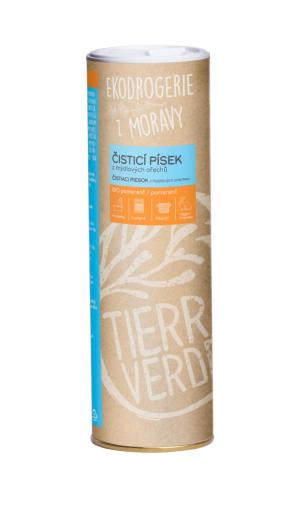
Try our natural products


Why the traditional "big clean" doesn't work
Most people approach home reorganisation as a project that must be completed in one go. They set aside an entire weekend, dive in with enthusiasm, and after three hours find themselves in the middle of perfect chaos – things are everywhere, energy is running out, and motivation is fading. The result is either unfinished work, or such extreme exhaustion that they won't return to the subject for another year.
Psychologists call this "overwhelm" – a state of overload, where the brain stops functioning effectively because it is confronted with too many stimuli and decisions at once. Research shows that decision fatigue is a real phenomenon: the more decisions we have to make in a short time, the worse the later ones become. During a big clean, you make decisions about every object, every category, every location – and after a while you start leaving everything as it was, simply to avoid having to think.
The principle of one task per day elegantly bypasses this problem. Each day you have one specific, manageable challenge ahead of you. No thinking about what to do first. No feelings of guilt about falling behind. Just one task that takes a maximum of twenty to thirty minutes, and then you can relax.
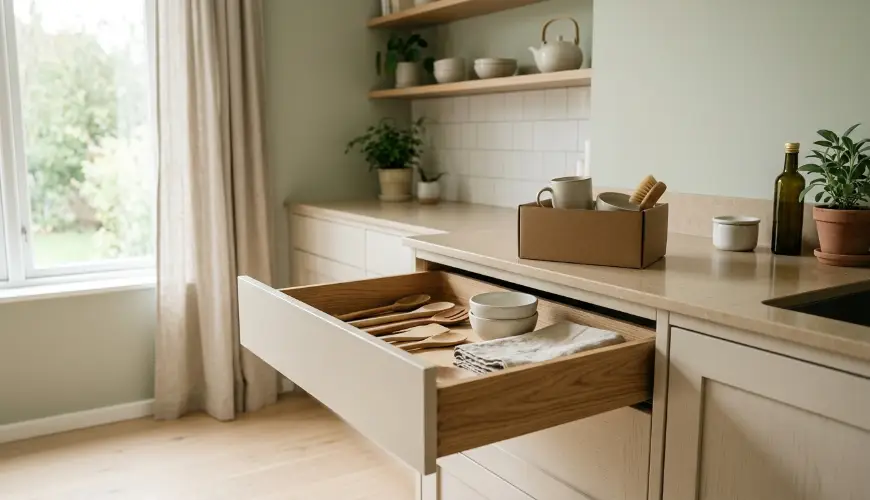
Think of Kateřina, a mother of two and a working woman who decided to try this approach after years of unsuccessful attempts at a "big spring clean". On the first day, she set herself the task of going through the contents of just one kitchen drawer. On the second day, she focused only on the medicine basket. On the third day, she removed three items from the bathroom. After thirty days, she felt as though she was living in a new flat – yet each day she had spent less than a quarter of an hour on the task.
How the 30-day household reset actually works
The entire concept rests on several simple principles that reinforce one another. The first is consistency over intensity – small daily steps lead to greater results than a one-off heroic effort. The second is clarity: each day you know exactly what awaits you and don't have to waste energy on planning. The third is visible progress, which motivates you to keep going.
The thirty-day plan typically begins with the places and categories that carry the least emotional weight. It's no coincidence that most home organisation experts recommend starting with something like a kitchen cutlery drawer or a spice shelf – these are areas where decisions are quick and the result is immediately visible. This small success creates positive feedback, and the brain starts looking forward to the next day.
As organisational consultant and author Marie Kondo noted: "The goal is not to have a perfectly tidy home. The goal is to create a space where you feel good." And that is the essence of the whole approach – it's not about perfectionism, but about a functional, calm space that supports wellbeing.
In practice, a thirty-day plan might look something like this. The first week focuses on the kitchen – each day one drawer, one shelf, one appliance, one corner. The second week moves on to the bathroom and toilet. The third week shifts to the bedroom and wardrobe. The fourth week closes with shared spaces – the living room, hallway, cellar, or garage. Of course, every home is different, which is why it's important to adapt the plan to your own situation.
Fewer things, better choices: A sustainable approach to the home
One of the most valuable side effects of this process is the realisation of just how many things we don't actually need. As you work through drawer by drawer and shelf by shelf, you naturally begin to ask: when did I last use this? Does it truly serve me, or is it just taking up space?
This shift in thinking opens the door to a more conscious approach to shopping and consumption. A study published in the Journal of Environmental Psychology showed that people who live in less cluttered spaces exhibit lower levels of cortisol – the stress hormone – and an overall greater sense of wellbeing. Household chaos is therefore not merely an aesthetic problem, but one that genuinely affects our mental health.
Once you get rid of unnecessary items, you naturally begin to think more carefully about what you bring into your home. And this is where space opens up for more conscious choices – products made from natural materials, eco-friendly cleaning products, items with a long lifespan that don't end up in landfill after a year. A sustainable home doesn't begin with buying eco-friendly products, but with the decision to own fewer things of higher quality.
This approach also has an economic dimension. When you know what you have and what you truly need, you stop buying duplicate items, stop paying for things you'll never use, and your purchasing decisions become more considered. Many people who have gone through a similar household reset report that their monthly household expenses dropped significantly – not because they were denying themselves things, but because they finally knew what they actually wanted and needed.
During the actual sorting process, it's useful to divide items into four categories: keep, donate, recycle, and discard. The last option should truly be the last resort. Items that are still functional but that you won't use can find a new home through various sharing and exchange platforms, community groups, or charitable organisations. In this way, the household reset becomes not only a personal but also a socially valuable activity.
One specific tool that many people use during this process is the so-called trial period box. Items you're unsure about keeping are placed in a box and marked with a date. If after three months you haven't opened the box even once, it's clear that you don't need those things. It's a simple but psychologically very effective way to overcome hesitation and emotional attachment to objects.
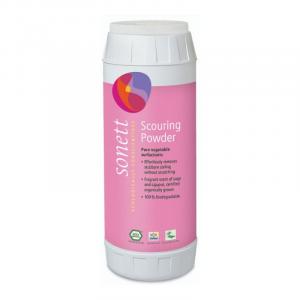
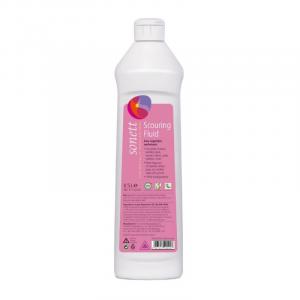
An important part of the whole process is also caring for the surfaces, materials, and products that remain in the home. A household reset is an ideal opportunity to switch to more eco-friendly cleaning products and preparations that are gentler on the environment and on your health. Conventional cleaning products contain a range of chemical substances whose long-term effects on the human body are not negligible – especially in enclosed spaces. Natural alternatives based on vinegar, baking soda, citric acid, or essential oils can handle most household tasks just as reliably.
The same logic can be applied when renewing textiles in the home – towels, bed linen, kitchen cloths. Instead of synthetic materials that wear out quickly and are difficult to recycle, it's worth considering products made from organic cotton, linen, or bamboo. These materials are pleasant to the touch, durable, and their production is gentler on the environment. Organisations such as Textile Exchange provide detailed information on sustainable textiles and certifications that help consumers navigate the available options.
After thirty days of a conscious, calm, and systematic approach, the home is transformed in a way that is lasting. It's not just that things are tidy. It's that you know where everything is, that every object in the house has its place and its purpose, and that the space around you begins to reflect the values you truly hold. No great stress, no weekends spent in exhausting cleaning sessions, no feeling of being overwhelmed by everything that still needs to be done.
Thirty days, thirty small steps – and a result that can genuinely change how you feel at home. Isn't it worth a try?