

# Homemade Falafel from Roasted Chickpeas Without Frying
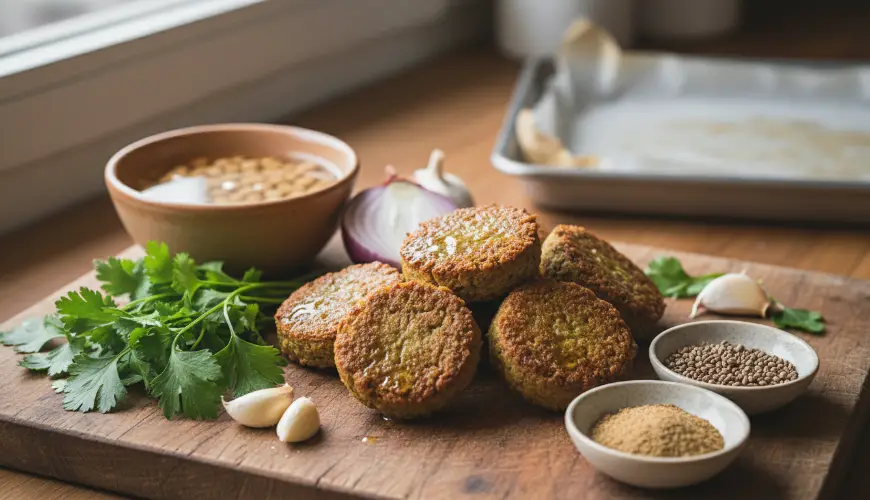
Falafel is one of those dishes that has managed to win the hearts of people all over the world. It originally comes from the Middle East, where it has been prepared for centuries, and today we can find it at street stalls from Berlin to New York. Yet many people hesitate to prepare it at home – and the main reason is usually the frying. The thought of litres of hot oil, the smell in the kitchen, and a calorie bomb on the plate can put off even the most passionate healthy eating enthusiasts. But what if there were a way to enjoy the authentic taste of falafel without all that fat and hassle? Baked homemade falafel from the oven is the answer that changes the rules of the game.
It is no compromise or concession. Properly prepared baked falafel is crispy on the outside, soft on the inside, and full of flavour – while containing significantly less fat than its fried version. According to research published at Harvard T.H. Chan School of Public Health, chickpeas and legumes in general are an exceptional source of plant protein and fibre, and baking preserves their nutritional potential much better than aggressive frying in oil.
Try our natural products

What makes falafel falafel – and why the method of preparation matters
The basis of every good falafel is chickpeas – that is a non-negotiable rule. Many beginners reach for canned chickpeas because they are more convenient, but experienced Middle Eastern cooks would just shake their heads sadly at this. The secret to truly good falafel lies in using raw chickpeas that have only been soaked overnight. Canned chickpeas are simply too moist, the dough falls apart, and the resulting falafel loses its characteristic texture. Soaked raw chickpeas, on the other hand, act as a natural binder – you just need to grind them with the other ingredients and the mixture holds together on its own.
Other essential ingredients are fresh herbs – primarily coriander and parsley – along with garlic, onion, cumin, and a pinch of ground coriander. It is precisely this combination of ingredients that creates the unmistakable aroma that wafts from every street falafel stall in the Middle East. If a little baking soda or baking powder is added, the falafel rises beautifully during baking and stays fluffy.
And now for the key difference: frying versus baking. The traditional recipe calls for deep-frying in oil heated to approximately 175–180 degrees Celsius. The result is undeniably tasty, but each piece absorbs a considerable amount of fat. In contrast, baking in the oven at 200 degrees for approximately 25–30 minutes offers comparable crispiness at a fraction of the calories. It is enough to lightly brush the patties with olive oil before placing them in the oven – and the oven does the rest.
An interesting real-life example is Jana, a thirty-year-old teacher from Brno, who loved falafel but had never prepared it at home because of the frying. After trying the baked version, she admitted that the result surprised her so much that she incorporated falafel into her weekly menu as a regular source of plant protein. "I didn't expect it to be so simple and yet so good," she says. Such experiences show that the baked alternative is not a compromise, but a fully-fledged – and in many ways better – choice.
It is also worth mentioning the ecological dimension of the whole matter. Frying requires large amounts of oil, which becomes waste after use. Baking, on the other hand, makes do with just two tablespoons of quality olive oil for an entire batch of falafel. For those interested in a sustainable lifestyle, this is an additional argument – less waste, less rubbish, the same joy of eating.
Step-by-step recipe: how to make baked falafel at home
Preparing baked falafel is not particularly complicated, but it does require a little foresight – specifically, soaking the chickpeas the day before. Anyone who remembers to do this is halfway there. The actual preparation then takes only about 20 minutes of active time, and the oven takes care of the rest.
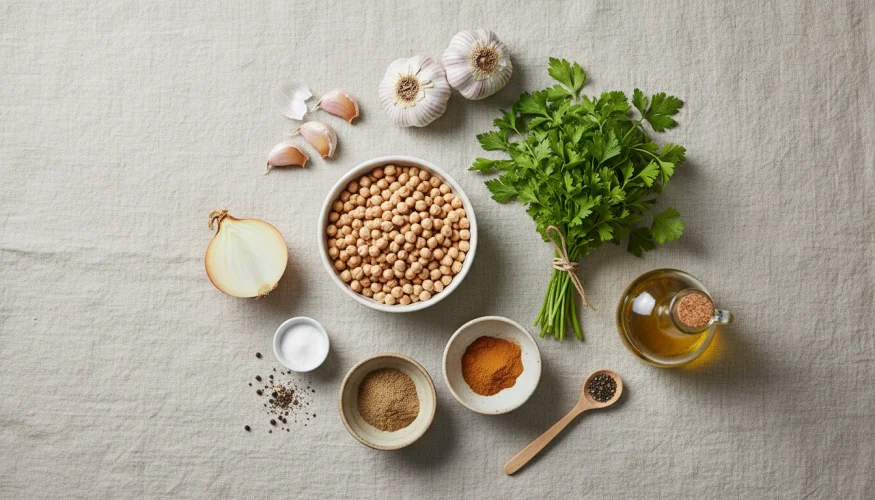
For approximately 20 pieces of falafel you will need:
- 250 g of dry chickpeas, soaked overnight in cold water
- a large handful of fresh coriander and parsley
- 3–4 cloves of garlic
- half a medium-sized onion
- 1 teaspoon of ground cumin
- 1 teaspoon of ground coriander
- salt and pepper to taste
- 1/2 teaspoon of baking soda or baking powder
- 2 tablespoons of olive oil for brushing
The soaked chickpeas are thoroughly drained and blended together with the herbs, garlic, onion, and spices in a food processor or blender. The goal is not a smooth paste, but a coarser, crumbly consistency – this ensures the right texture. If the mixture is too moist, adding a tablespoon of chickpea flour or breadcrumbs will help. The finished mixture is left to rest in the refrigerator for at least 30 minutes, then shaped into balls or patties and placed on a baking tray lined with baking paper. Each piece is lightly brushed with olive oil and baked in a preheated oven at 200 degrees until the surface turns golden and achieves a beautifully browned colour.
The result is surprisingly close to what one knows from street food stalls – and yet it was created without a drop of burnt oil and without the smell spreading throughout the entire flat.
Baked falafel goes wonderfully in a wholegrain pitta with fresh vegetables and tahini sauce, but it works equally well as part of a salad bowl or as a protein supplement to soup. Its versatility is one of its greatest strengths – it easily adapts to various dietary preferences, whether it is veganism, vegetarianism, or simply the desire to eat less meat.
For those who care about the quality of ingredients, it is worth knowing that the choice of chickpeas matters. Organic chickpeas from ecological farming not only support a more sustainable approach to soil management, but also tend to have a more pronounced flavour. The same applies to olive oil – extra virgin cold-pressed oil brings not only flavour to the dish, but also health-beneficial fatty acids, as confirmed for example by the European Food Safety Authority (EFSA).
For those who want to customise their falafel even further, you can experiment with adding red pepper, sun-dried tomatoes, or a little chilli. The baked version handles these variations very well – unlike the fried version, where added moisture can cause problems with consistency. In this respect, baking is more flexible and friendlier for kitchen experimenters.
It is also interesting how baked falafel behaves when reheated. While fried falafel is best fresh and loses quality the next day, the baked version can easily be reheated in the oven or in a dry pan and retains most of its crispiness. This makes it an ideal choice for meal prep – preparing food several days in advance, which is becoming increasingly popular among people with busy schedules.
Falafel as such has something democratic about it – it is cheap, filling, nutritious, and tasty all at once. The baked homemade version adds yet another dimension: accessibility for anyone who does not want to venture into frying but still wants to enjoy a wholesome meal with rich flavour. It is no coincidence that falafel has become one of the symbols of plant-based eating in modern times – and its baked variant further strengthens this trend.
As Israeli chef and cookbook author Yotam Ottolenghi, whose recipes have inspired millions of people to discover Middle Eastern cuisine, says: "Food is a way of telling a story about a place, a culture, and people." And baked falafel prepared at home from quality ingredients is exactly such a story – a story about how healthy eating does not have to be boring, complicated, or expensive.
Perhaps it is time to stop admiring falafel in restaurants and street stalls and start creating it in your own kitchen. The oven is on, the chickpeas are soaked – and the result is worth it.