
# Invasive Plants in the Garden and How to Get Rid of Them
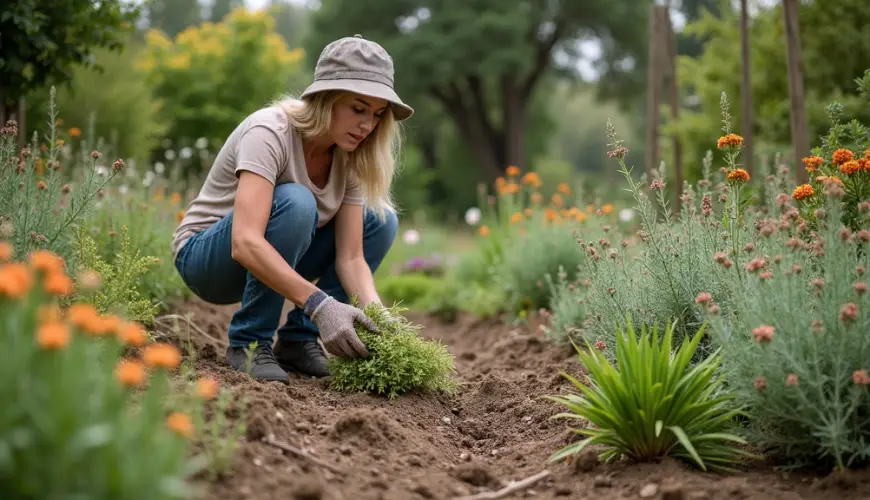
Everyone who has ever tended a garden knows that unpleasant feeling – you come to a flower bed and something is growing there. Something you didn't plant, don't want there, and the longer you wait, the harder it is to remove. Sometimes it's an ordinary weed, but other times it's something far more insidious: an invasive plant that can take over an entire corner of a garden in a single season, displace native species, and cause damage that takes years to repair.
Invasive plants are not just a gardening problem – they are a global ecological challenge. According to data from the European Environment Agency, the spread of non-native species is among the five main causes of biodiversity loss in Europe. And the Czech Republic is certainly no exception. Dozens of plant species that don't originally belong here have established themselves in our gardens, along roadsides, in ditches and on riverbanks – and some of them are truly dangerous.
Try our natural products

How to recognise an invasive species
Recognising an invasive plant is not always easy, especially for a gardener who doesn't pay much attention to botany. Nevertheless, there are certain signs that should raise concern. Invasive plants grow remarkably quickly, form dense stands that suppress everything around them, and are very difficult to remove – whether due to deep root systems, the ability to regenerate from small fragments, or massive seed production.
One of the best-known examples is Japanese knotweed (Reynoutria japonica), which arrived in Europe in the 19th century as an ornamental and fodder plant. Today it is considered one of the most aggressive invasive plants in the world. Its rhizome penetrates several metres deep, can grow through concrete and asphalt, and a new plant will grow from a single small piece of root within a season. If you see it in or around your garden – tall bamboo-like stems, heart-shaped leaves and white flowers at the end of summer – an immediate response is called for.
Another unmistakable intruder is giant hogweed (Heracleum mantegazzianum), which can reach a height of three metres and whose sap causes severe burns on skin when exposed to sunlight. This plant spreads along watercourses and has recently been making its way into gardens on the outskirts of towns and villages. You can recognise it by its enormous compound leaves, hollow ribbed stem, and large white umbellate flower heads.
Among the less dramatic but equally problematic species are Himalayan balsam (Impatiens glandulifera), tree of heaven (Ailanthus altissima), and Canadian goldenrod (Solidago canadensis) – the last of which many people know as a decorative garden perennial, not realising that it is spreading from their flower beds into the surrounding countryside. This inconspicuousness is one of the greatest traps: an invasive plant doesn't have to look dangerous. It can even be beautiful.
So how should you proceed if you want to find out whether a plant in your garden is invasive? A very practical tool is the iNaturalist app, which can identify a plant using a photograph and artificial intelligence, and also alert you whether it is an invasive species. Another reliable source is the Pladias database, maintained by the Institute of Botany of the Czech Academy of Sciences, where you can look up the distribution and status of individual species in the Czech Republic.
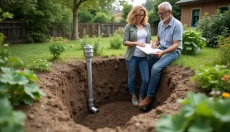
Consider a real-life example: a family on the outskirts of Brno left one corner of their garden to grow wild a few years ago, where several plants took hold spontaneously. The owners thought it was an ornamental grass – but it was Japanese knotweed. Within three years it covered an area of over fifty square metres, spread under the fence to the neighbours, and began pushing under the foundations of a brick garden shelter. Removal then took two full seasons of intensive work.
What to do when you find an invasive plant
The response to an invasive plant depends on the species, the extent of the infestation, and the resources available. But one thing is common to all situations: the sooner you act, the better. As botanist and science communicator Josef Hlásek puts it: "Invasive plants are like debt – the longer you ignore it, the more it grows."
For less aggressive species such as Himalayan balsam or goldenrod, consistent and repeated cutting or mowing before the seeds ripen may be sufficient. Timing is key – the plant must be removed before it sets seed, otherwise all effort will be wasted the following year. Goldenrod should be mown by July at the latest, Himalayan balsam ideally in June to early July.
With Japanese knotweed, the situation is considerably more complex. Mechanical removal alone is not enough – every excavation of rhizomes must be absolutely thorough, because even a small fragment of root left in the ground will guarantee regrowth. Experienced gardeners recommend combining repeated cutting (at least once every two weeks throughout the season) with chemical treatment if the situation requires it. Chemical products should always be a last resort, especially near watercourses where there is a risk of water contamination.
When dealing with giant hogweed, it is strongly advised not to work without protective equipment – rubber gloves, long sleeves, and ideally safety goggles are an absolute necessity. The plant should be cut below ground level, preferably in early spring before the leaves develop, or repeatedly mown in summer to prevent it from replenishing root reserves through photosynthesis.
There are also biological methods of combating invasive plants that are gentler on the surrounding environment. For example, specific insects or pathogens that feed on a particular invasive species without threatening native flora. These methods are still largely at the research stage, but are being successfully tested in some countries – for instance, the introduction of the psyllid Aphalara itadori as a biological control agent for Japanese knotweed in the United Kingdom.
What should be done with the removed material? This is a question on which the success of the entire effort depends. Invasive plants must not end up on the compost heap – most of them are capable of regenerating even from small remnants. The correct approach is to let the plants dry out in the sun (if they have no seeds), or take them to a managed composting facility where they are processed at temperatures high enough to destroy viable plant material. Seeds and rhizomes are most safely burned or taken to a municipal waste incineration plant.
Prevention is better than cure
The best strategy against invasive plants is, of course, not to let them into the garden in the first place. This sounds simple, but in practice it requires a degree of vigilance. Invasive species spread through various routes – by wind, water, birds, but also through garden soil, growing medium, or even purchased plants. Low-quality garden soil or compost from an unverified source may contain seeds or root fragments of invasive species.
It is advisable to purchase plants and soil from verified suppliers who pay attention to the quality and origin of their materials. It is equally important to monitor what is growing along fences, at neighbours' properties, and in the vicinity of the garden – invasive plants don't need an invitation, they arrive on their own. Regular inspection of flower beds and the edges of the property, particularly in spring and early summer, makes it possible to catch new occurrences before they have a chance to spread.
Plant selection for the garden also plays a major role. Some species that are still sold in garden centres as ornamental perennials or shrubs are in fact invasive or have invasive potential. These include certain varieties of goldenrod, butterfly bush (Buddleja davidii), and some species of knotweed. Before purchasing an unfamiliar plant, it is worth checking its status – for example, in the Pladias database or on the website of the Prague Botanical Garden, which regularly publishes educational materials on invasive species.
If you want to go even further, you can actively transform your garden into a refuge for native species. Planting native species – such as various types of bellflowers, oxeye daisies, salvias, or wild grasses – not only suppresses space for invasive intruders, but also supports local pollinators and other animals dependent on specific plant species. Gardens with a diverse native flora are more resistant to invasion than those with monocultures or large areas of bare soil.
Czech legislation on invasive species is based on European Union Regulation No. 1143/2014, which establishes a list of invasive species of Union concern and the obligations of member states in regulating them. In certain cases, landowners even have a statutory obligation to eradicate invasive plants – particularly where the species in question appear on the EU list and where their spread threatens surrounding ecosystems or neighbouring properties. Information on specific obligations can be obtained from the relevant municipal authority or from the Agency for Nature Conservation and Landscape Protection of the Czech Republic.
Caring for a garden free of invasive plants is not merely a matter of aesthetics or convenience. It is a conscious decision to contribute to the protection of local nature, support biodiversity, and pass on to future generations a landscape that is richer, healthier, and more resilient. And that is worth a little extra attention during the spring inspection of the flower beds.