

Why your joints hurt at a young age and how to prevent it
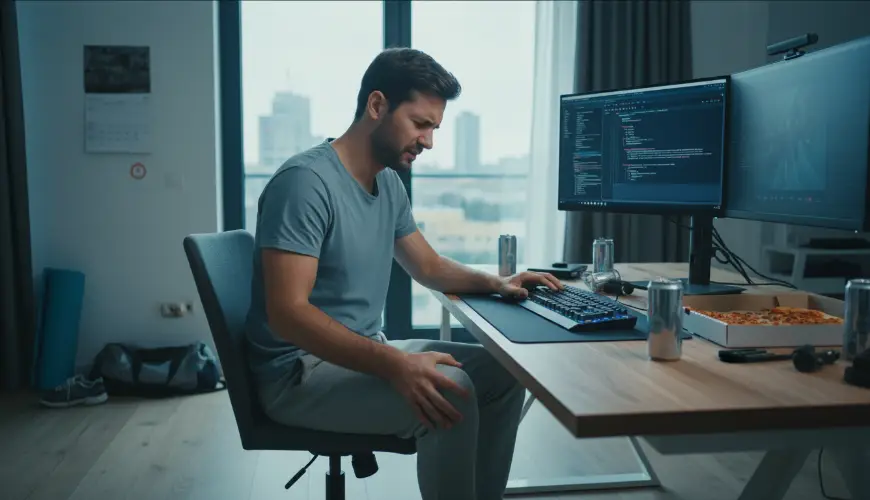
Joint Pain doesn't just affect seniors – an increasing number of young people are dealing with the unpleasant sensation of stiffness, cracking, or even chronic pain in their knees, wrists, or shoulders. While twenty years ago, most people in their twenties and thirties would rarely complain about their joints, orthopedic clinics today are seeing a significant rise in patients under forty. What's behind this trend, and when is it really time to stop ignoring the problem?
Imagine Marek, a twenty-eight-year-old programmer from Brno. He sits at a computer all day, occasionally goes for a run in the evening, but otherwise doesn't move much. One morning, he woke up with a sharp pain in his right knee without recalling any injury. At first, he told himself it would pass. It didn't. After three weeks of persistent pain and occasional knee swelling, he finally visited a doctor. The diagnosis? Early-stage chondromalacia – cartilage damage caused by a combination of a sedentary lifestyle, weak muscles, and poor posture. Marek's story isn't unique. It's actually characteristic of an entire generation that spends hours in front of screens and either completely neglects physical activity or overdoes it without proper preparation.
Joint pain at a young age has a whole range of causes, and most of them aren't related to age itself but rather to the way we stress – or don't stress – our bodies on a daily basis. Understanding these causes is the first step toward preventing occasional discomfort from becoming a chronic issue that fundamentally affects quality of life.
Try our natural products


Why your joints hurt even though you're not yet forty
One of the most common causes of joint problems in young people is, paradoxically, lack of movement. Human joints are designed to move regularly – it is precisely movement that nourishes cartilage, which has no blood supply of its own and receives nutrients from synovial fluid. When a person doesn't move enough, cartilage gradually loses its elasticity and resilience. According to data from the World Health Organization, approximately 27% of adults worldwide don't get enough physical activity, and in developed countries, this figure is even higher. A sedentary lifestyle is simply a silent enemy of the joints.
At the opposite end of the spectrum is overuse and inappropriate sports activity. Running on hard surfaces in poor-quality shoes, a sudden jump into intense training without gradual adaptation, or repetitive one-sided movements – all of this can lead to microtrauma of joint structures. Particularly popular high-intensity training formats like CrossFit or HIIT can, with poor technique, do more harm than good. It's not that these activities are inherently bad, but without proper guidance and respect for your body's limits, they easily become a risk factor.
Another significant cause that gets less attention than it deserves is overweight and obesity. Every extra kilogram places a load on the knee joint during walking equivalent to roughly three to four kilograms. During running or walking downstairs, this multiplier increases even further. In the Czech Republic, more than 60% of the adult population is overweight or obese, and this trend is unfortunately shifting into increasingly younger age groups. Mechanical overloading of joints caused by excess weight is one of the best-documented causes of premature cartilage wear.
Autoimmune and inflammatory diseases, which can manifest at any age, should not be overlooked either. Rheumatoid arthritis, ankylosing spondylitis, or lupus are not diseases of the elderly – many of them typically manifest precisely between the ages of twenty and forty. As the Czech Society for Rheumatology states, early diagnosis of these conditions is crucial because modern treatment can significantly slow or halt disease progression when caught early. If joint pain is accompanied by morning stiffness lasting more than thirty minutes, swelling without an obvious cause, or general fatigue, this group of diagnoses should be considered.
Hormonal factors also play their role. Women around their menstrual period, during pregnancy, or while using hormonal contraception may experience increased joint sensitivity because fluctuations in estrogen levels affect the metabolism of connective tissues. Stress and long-term psychological tension can also manifest in the musculoskeletal system – chronic stress raises cortisol levels, which, among other things, promotes inflammatory processes in the body and can worsen pain perception.
Nutrition is a separate chapter entirely. Vitamin D deficiency, which is extraordinarily widespread at our latitudes, is associated with an increased risk of joint problems. Equally important are omega-3 fatty acids with anti-inflammatory effects, collagen, vitamin C essential for connective tissue synthesis, and minerals such as magnesium or zinc. Conversely, a diet rich in industrially processed foods, refined sugar, and trans fats promotes inflammatory processes in the body. As American physician and researcher Andrew Weil aptly noted: "Chronic inflammation is the root of most serious diseases, including those that affect our joints."
All these factors often combine and mutually reinforce each other. A person who sits in an office all day, eats primarily fast food, is overweight, and only gets around to exercise once in a while – when they overdo it – is creating a literally toxic cocktail for their joints. And this is precisely the crux of the problem – joint pain at a young age is rarely caused by a single isolated factor.
Preventing joint problems: what actually works
The good news is that most joint problems at a young age can be prevented, or at least significantly alleviated. Regular, moderate exercise is the absolute foundation. This doesn't mean becoming a professional athlete – daily walking, swimming, cycling, or yoga is enough. The key is that the movement is regular, varied, and respects individual limits. Activities that strengthen the muscles around joints are particularly beneficial because the muscular corset takes on part of the load and protects joint structures from damage.
Proper posture when working at a computer, an ergonomically set up workstation, and regular stretching breaks may sound like trivial advice, but their impact is enormous. People who spend eight or more hours a day in front of a screen should stand up every thirty to sixty minutes, stretch, and ideally walk at least a few steps. Investing in a quality ergonomic chair or standing desk pays off far more than later visits to an orthopedist.
When it comes to nutrition, it's worth focusing on a varied diet rich in vegetables, fruits, fish, nuts, and quality proteins. An anti-inflammatory diet, as described by experts at Harvard Health Publishing, can demonstrably reduce the level of systemic inflammation in the body. It's also advisable to monitor adequate vitamin D intake – in our conditions, supplementation during the winter months is practically essential for the majority of the population.
An important but often underestimated component of prevention is maintaining a healthy body weight. Even a loss of five kilograms in an overweight person can mean relief equivalent to fifteen to twenty kilograms of load on the knee joint with every step. That's a huge difference that shows not only in how you feel but also in the objective condition of the cartilage.
For athletes and recreationally active individuals, several principles can effectively prevent joint problems: thorough warm-up before every activity, gradual increases in training intensity and volume, sufficient recovery between training sessions, and using quality footwear appropriate for the given sport. Proper exercise technique is more important than the amount of weight lifted or kilometers run.
Mental well-being should not be neglected either. Stress management techniques, adequate sleep, and overall life balance contribute to joint health more than it might seem at first glance. Chronic stress and lack of sleep disrupt the body's regenerative processes and promote a pro-inflammatory environment that damages joint tissues among other things.
Dietary supplements deserve a separate mention. The market offers an overwhelming number of products promising healthy joints – from glucosamine sulfate to chondroitin, collagen, and hyaluronic acid. Scientific evidence of their effectiveness varies, but the combination of glucosamine and chondroitin, for example, shows a mild positive effect for early-stage joint problems according to some studies. However, they are certainly not a miracle solution, and any dietary supplement should be understood as a supplement, not a replacement for a healthy lifestyle.
So when is it time to stop experimenting with home remedies and seek professional help? There are several warning signs that no one should ignore. Joint pain lasting more than two weeks without an obvious cause deserves a doctor's attention. The same applies to joint swelling, redness or increased temperature in the joint area, significant morning stiffness persisting for more than half an hour, pain that progressively worsens, limited range of motion, or cracking and popping accompanied by pain. People with a family history of rheumatic diseases should pay particular attention to their joints – genetic predisposition plays a significant role in many joint diagnoses.
A visit to the doctor usually involves a clinical examination, possibly imaging methods such as X-ray, ultrasound, or MRI, and laboratory tests focused on inflammatory markers and specific antibodies. Early diagnosis is truly crucial – many joint diseases can be treated very effectively when caught early, while delaying a doctor's visit can lead to irreversible damage to joint structures.
Joint pain at a young age is definitely not something that should be dismissed with "it'll pass" or "you're too young for that." Our joints are a sophisticated system meant to carry us reliably throughout our entire lives – but only if we take care of them. And that care doesn't have to be complicated or expensive. Regular exercise, a sensible diet, a healthy weight, adequate sleep, and a willingness to listen to your body's signals – that's a recipe that has always worked and still works today. Marek from Brno understood this, even if a bit later than would have been ideal. He changed his habits, started exercising regularly and going for walks, and his knee improved significantly. Every day is a good day to start taking better care of your joints.