
# Why a Clean Sink Is More Important Than a Clean Floor ## The Sink as a Bacterial Hotspot Many pe
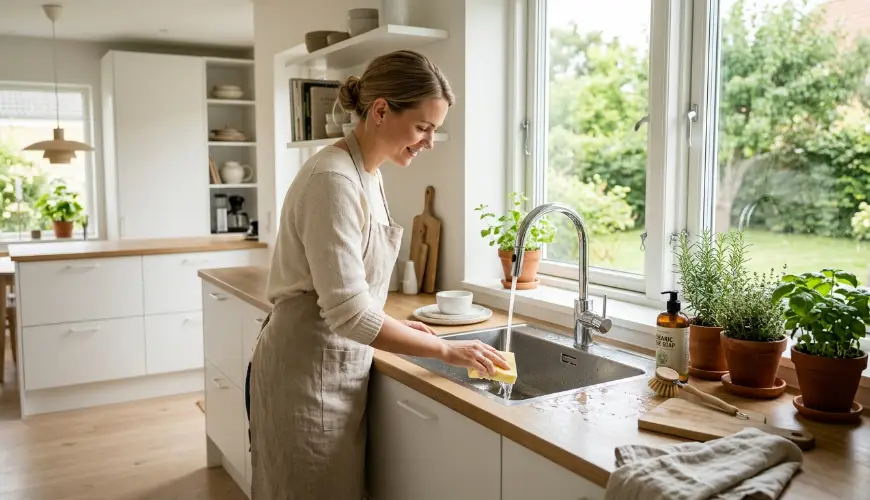
When guests come to visit, most people instinctively grab a mop for the floor, wipe dust from the shelves, and clean the toilet. The sink? They might just give it a quick wipe with a sponge and consider it done. Yet this seemingly mundane part of the kitchen is one of the most heavily used spots in the entire home – and science is confirming this with increasing conviction. Understanding how the home microbiome works can fundamentally change your approach to cleaning and your own health.
In recent years, the term microbiome has been discussed primarily in connection with gut health, but microorganisms inhabit every corner of our environment – including walls, furniture, carpets, and of course the kitchen sink. It is a complex ecosystem of bacteria, viruses, fungi, and other microscopic organisms that evolves alongside us and responds to the daily habits of its inhabitants. Researchers from the Home Microbiome Project, published in the prestigious journal PNAS, found that the microbial composition of a home is so unique that it could theoretically serve as a "fingerprint" for a specific family. This alone suggests how deeply our daily lives are intertwined with these invisible organisms.
Try our natural products
-1-m.jpg)
-1-m.jpg)
-1-m.jpg)
-1-m.jpg)
-1-m.jpg)
The sink as microbiome hotspot number one
Studies by the National Sanitation Foundation in the USA (NSF International) consistently rank the kitchen sink as the most contaminated spot in the home – far ahead of the toilet bowl. The results are surprising: the average sink was found to contain more bacteria than a toilet seat. The reason is simple and somewhat unpleasant. The sink receives scraps of raw meat, vegetables, fruit, eggshells, and used dishes. Moisture is maintained in it almost constantly, and the kitchen temperature creates ideal conditions for microorganism growth. Salmonella, E. coli, or listeria – these are not bogeymen invented by hygienists, but real inhabitants of a poorly maintained sink.
Meanwhile, the floor, to which we devote so much attention, is relatively safe from the perspective of pathogen transmission. Bacteria do exist on the floor, but their transfer to food or into the mouth is minimal under normal circumstances. The situation is different with the sink, where hands, dishes, and food come into direct contact with the surface literally hundreds of times a day. Imagine a typical Wednesday: in the morning you rinse a coffee mug, at noon you wash a plate after lunch, in the afternoon you rinse vegetables for dinner, and in the evening you use the sink to soak a pot. Each of these contacts is a potential pathway to transfer microorganisms further – to hands, to food, to children.
The sponge or cloth you use for washing dishes or wiping the sink complicates matters further. Research published in Scientific Reports showed that a kitchen sponge can contain up to 54 billion bacteria per cubic centimetre – a density comparable to human faeces. Yet most households replace it only once every few weeks, if at all.
The home microbiome is not just an enemy
It would be a mistake, however, to view the home microbiome exclusively as a threat. Science has shifted toward a more nuanced perspective over the past decade: not all bacteria are harmful, and a sterile environment can be just as dangerous for the immune system as one overrun with pathogens. The so-called hygiene hypothesis, now more precisely referred to as the "old friends" theory, suggests that insufficient exposure to diverse microorganisms in early childhood contributes to the rise of allergies, asthma, and autoimmune diseases. As microbiologist Rob Knight, one of the pioneers of microbiome research, puts it: "Microbes are not our enemies. They are part of us."
The key, therefore, is not to eradicate all life from the home, but to understand where the real risks lie and where common sense is sufficient. The living room floor where a dog rolls around and children play is not a problem from a microbiological standpoint – on the contrary, contact with diverse microorganisms from animals and soil can strengthen the immune system. The sink where raw food is processed, however, is a different category and deserves systematic care.
An interesting real-life example is a family that decided to switch to eco-friendly cleaning products and also reconsidered their cleaning routine. Instead of mopping the floor every day, they began paying more attention to the sink, kitchen surfaces, and replacing the sponge. After a few months, they noticed that the frequency of digestive problems in their children had significantly decreased – not because the flat was more sterile, but because they were cleaning where it actually mattered. This is of course an individual experience, but it corresponds with what food hygiene experts have been recommending for years.
Caring for the sink does not have to mean aggressive chemicals. There are a number of eco-friendly alternatives that are effective even against the most common pathogens. Baking soda combined with vinegar mechanically breaks down biofilm – a thin layer of bacteria that settles on the walls of the sink and resists simple rinsing with water. Lemon juice inhibits bacterial growth due to its acidity while also removing limescale. Essential oils such as tea tree or thyme have demonstrated antimicrobial effects in laboratory conditions, although their effectiveness in a domestic environment depends on concentration and method of use. For those seeking ready-made solutions, the market offers an ever-wider range of certified eco-friendly cleaning products that are gentle on the environment and on the home microbiome as a whole – meaning they do not destroy beneficial bacteria where it is not necessary.
Beyond the sink itself, its immediate surroundings also deserve attention. The drain cover and the drain trap are places where organic matter accumulates and decomposes, releasing not only unpleasant odours but also bacteria that can spread into the surrounding air when flushing or using the sink. Regular cleaning of the drain trap – ideally once a week – is one of the measures that has a demonstrable impact on the microbial quality of the kitchen environment. Equally important is replacing or disinfecting the kitchen sponge: experts recommend replacing the sponge every week or disinfecting it daily – for example by boiling it in water or placing it in the microwave for two minutes (wet, never dry).
How to reassess cleaning priorities
The fact that the sink is more microbiologically risky than the floor is not a call for panic, but for a reassessment of priorities. Traditional cleaning rituals are largely culturally conditioned – a gleaming floor has always been a visible signal of tidiness and care for the home, while the state of the sink remained hidden and overlooked. Modern science, however, offers a different perspective: the cleanliness that matters is the invisible kind.
The practical recommendation is therefore: give the sink daily attention, not just when it is visibly dirty. Rinse it after each use and wipe it down with a cleaning product once a day – thirty seconds is enough. Replace the sponge regularly and do not rely on simply rinsing it. Once a week, carry out a more thorough cleaning including the drain trap and drain.
The floor of course also needs care, especially in households with young children who crawl on it. But if you have to choose between hours spent polishing the parquet and ten minutes devoted to a thorough kitchen clean, science is unequivocal: invest your time where food, hands, and dishes meet a surface most frequently.
The home microbiome is a fascinating and still not fully explored field. Research such as that conducted at Stanford University shows that the microbial environment in which we live affects our health in far more complex ways than we previously imagined – from the immune system to mood to the risk of chronic disease. Caring for the home microbiome is therefore not merely a matter of hygiene in the traditional sense, but part of a broader approach to a healthy lifestyle. And that begins – surprisingly or not – at the sink.