

# How to Properly Care for Wounds and Abrasions Naturally Caring for minor wounds and abrasions usi
Everyone knows it. A child runs in from the playground with a scraped knee, a gardener nicks their finger with scissors, or someone catches their ankle on a step and ends up with an ugly graze. These situations are part of everyday life, and in most cases there's no need to immediately call an ambulance or rush to the pharmacy for a pile of chemical preparations. Yet surprisingly many mistakes are made when it comes to treating minor wounds and abrasions – not only in terms of effectiveness, but also regarding what we actually apply to our skin.
In recent years, interest in more natural and gentle approaches to body care has been growing, and wound care is no exception. More and more people are asking whether it is truly necessary to reach for strong disinfectants full of synthetic substances, or whether there are approaches that are equally effective yet gentler on the skin and the environment.
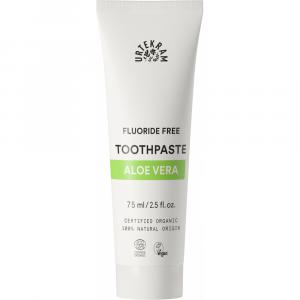
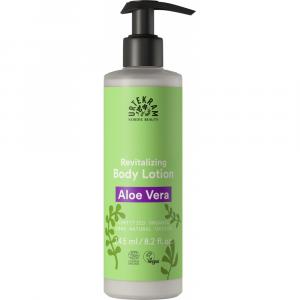
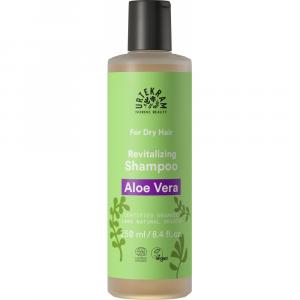
Try our natural products
What actually happens in a wound and why it matters
Before we get into specific procedures, it's useful to understand what takes place in a wound. The skin is the largest organ of the human body and also the first line of defence against the outside world. When it is injured – whether it's a minor graze or a deeper cut – a complex healing process is immediately triggered. First, bleeding stops and a blood clot forms, then the inflammatory phase begins, during which the immune system sends white blood cells to the site of injury to fight any bacteria. This is followed by the proliferation phase, in which new tissue forms, and finally remodelling, during which the scar gradually firms up and levels out.
This natural process is remarkably efficient – as long as we don't get in its way. And that is precisely where the problem lies. Many classic disinfectants, such as iodine tincture or strong hydrogen peroxide solutions, reliably destroy bacteria but at the same time damage healthy cells in the surrounding tissue and slow down the natural healing process. Research published in journals such as Wound Repair and Regeneration has repeatedly shown that aggressive disinfection can prolong healing rather than shorten it.
This does not mean that disinfection is unnecessary. It's a matter of how it is carried out and with what.
How to treat a wound step by step – naturally and effectively
Proper home care for minor wounds begins surprisingly simply. The first and most important step is to thoroughly rinse the wound with clean running water. This seemingly trivial action is in fact the most effective method of removing dirt, bacteria and foreign particles from a wound. Water mechanically flushes out everything that could cause infection, without damaging the tissue in any way. It is recommended to rinse the wound for at least three to five minutes – most people give up after thirty seconds, which is far too little.
After rinsing with water, it is advisable to use a gentle soapy solution around the wound, but not directly into it. If the wound is an abrasion with dirt in it, it can be carefully cleaned with a clean gauze pad or a piece of clean cloth, moving from the centre outwards. Never scrub vigorously, as this would damage the tissue and slow healing.
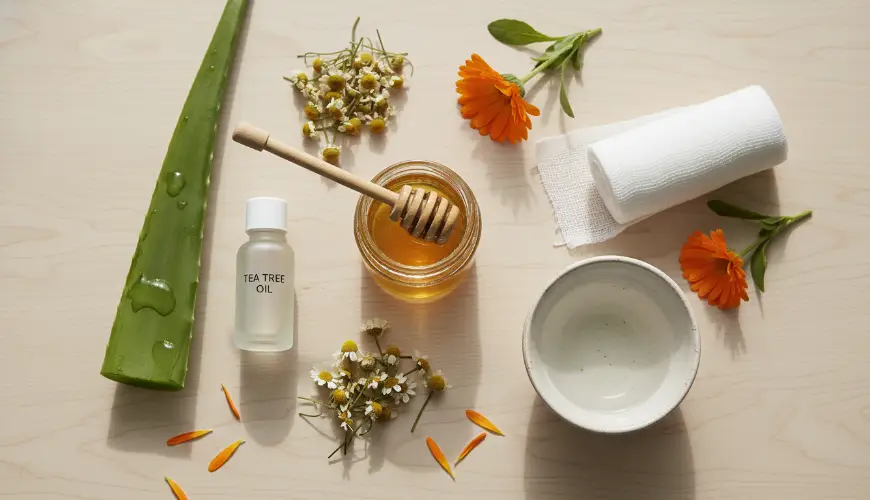
As a natural alternative to classic chemical disinfectants, colloidal silver has gained great popularity in recent years. It has proven antimicrobial properties without damaging healthy cells as aggressively as iodine or strong hydrogen peroxide. Tea tree oil works in a similar way, containing natural compounds with antibacterial and anti-inflammatory effects. Both products are available in specialist natural cosmetics shops or in online shops focused on natural care.
Another excellent aid is honey – particularly manuka honey, which is used even in hospital settings for its exceptional healing properties. It contains natural hydrogen peroxide, methylglyoxal and other substances with antimicrobial effects. The World Health Organization mentions it in its reviews as one of the traditional methods with a scientifically supported basis. Applying a thin layer of manuka honey to a wound and covering it with a sterile dressing can significantly support healing, especially for superficial abrasions.
Imagine this situation: Jana, a teacher from Brno, grazed her entire forearm on sharp rocks after falling off her bicycle during a weekend trip in nature. She had nothing with her except a bottle of water and a small bottle of tea tree oil in her backpack, which she carries as part of her natural first aid kit essentials. She rinsed the wound thoroughly with water, applied a clean scarf, and after returning home treated it with tea tree oil. Healing proceeded without complications and without the need for any strong chemical preparation.
Similar logic applies when choosing wound dressings. Modern moist wound healing – that is, covering a wound so that it retains optimal moisture – is now considered significantly more effective than the old approach of "letting the wound dry out in the air." A dry scab may look like protection, but it actually slows down the migration of new cells and prolongs healing time. Hydrocolloid dressings or simple sterile gauze pads soaked in natural substances (such as aloe vera or shea butter) create an ideal environment for faster healing that leaves less visible scarring.
Aloe vera deserves special mention. The gel from the leaves of this plant contains acemannan, vitamins C and E and a range of enzymes with anti-inflammatory, antimicrobial and moisturising effects. Applying fresh gel directly from the plant, or a quality product with a high aloe vera content, to an abrasion or minor wound can significantly accelerate healing and reduce the unpleasant burning sensation. A review study published in the journal Burns & Trauma confirms that aloe vera shows a positive effect on the healing of superficial skin injuries in clinical conditions.
Among herbs in general, chamomile also stands out, with its anti-inflammatory and healing properties having been used in folk medicine for centuries. A strong chamomile infusion cooled to room temperature can be used to rinse minor wounds or as the basis for compresses. Calendula works in a similar way – an ointment or oil is made from its flowers that is gentle on the skin while supporting tissue regeneration. These preparations are traditional staples of the home medicine cabinet, and their effectiveness is supported by both folk experience and modern scientific studies.
As Hippocrates once said: "Let food be thy medicine and medicine be thy food." This principle – seeking solutions in nature and in what we have available – applies to skin care as well. It does not mean rejecting modern medicine, but rather consciously distinguishing when it is truly necessary to reach for strong preparations and when gentle, natural remedies will suffice.
It is also important to mention what to avoid. Iodine tincture and strong hydrogen peroxide are still part of many home medicine cabinets, but their routine use on minor wounds is now rather discouraged by experts. Both preparations are cytotoxic – that is, harmful to cells – and can slow down the natural healing process. Alcohol (ethanol) is suitable for disinfecting the skin around a wound, not the wound itself, as it causes tissue drying and painful damage. Similarly, caution is needed with some commercial antibacterial ointments containing substances such as triclosan – while effective, its overuse contributes to the development of bacterial resistance.
When it is necessary to see a doctor
Natural home care has its limits, and it is important to know them. There are situations in which a visit to a doctor or clinic is essential and no natural alternative can replace it.
Warning signs include a wound deeper than one centimetre or one whose edges cannot be brought together, as such an injury will likely require stitches. Others include bleeding that does not stop even after ten minutes of direct pressure, visible bone or tendon, injury to the face or hands where nerves and blood vessels are densely packed, and of course any injury caused by a rusty object or an animal bite, where there is a risk of tetanus or other infection.
Signs of a developing infection – increasing redness around the wound, warmth, swelling, pus or fever – are a clear signal that it is time to see a doctor. An infection can spread very quickly, and home treatment will not be sufficient in such a case.
Home wound care without unnecessary chemicals is therefore not about rejecting science or blindly trusting natural preparations. It is a conscious approach that draws on the best of what both traditional knowledge and modern research have to offer. Clean water, gentle natural substances such as aloe vera, honey, tea tree oil or chamomile, and proper wound dressing – these are tools that in many cases are sufficient, while placing no unnecessary burden on the body or the environment. And that is an approach that makes sense not only from a health perspective, but also from the standpoint of a sustainable and mindful way of life.