
Try smart use of leftover rice and pasta and don't waste
Everyone knows the feeling. A bowl of rice from yesterday sits in the fridge, next to a plate with leftover pasta, and you wonder what to do with it. Throw it away? What a waste. Reheat the same thing again? A bit boring. And yet these seemingly worthless leftovers can be the foundation for something truly delicious – you just need to know how. Smart use of leftover rice and pasta is not just a matter of frugality, but also creative cooking that saves money, time, and the planet.
Food waste remains an enormous problem in the Czech Republic and around the world. According to data from the Food and Agriculture Organization of the United Nations (FAO), approximately one third of all food produced for human consumption is wasted globally. A large portion of this waste originates directly in households – and rice and pasta are among the most frequent victims of overstuffed fridges. Learning to work with them smartly is therefore not just an economic advantage, but also a small yet meaningful step towards a more sustainable way of life.
Try our natural products

Why leftover rice and pasta are so valuable
Cooked rice and pasta have one key advantage over raw ingredients: they are immediately ready to use. They require no lengthy cooking, meaning a meal can be assembled from them in just a few minutes. This is particularly valuable when you come home tired and hungry and don't want to spend an hour in the kitchen. Leftovers from the previous day then become a safety net rather than a burden.
Interestingly, cooled cooked rice has different properties compared to freshly cooked rice – as it cools, it develops so-called resistant starch, which behaves similarly to dietary fibre and has a beneficial effect on digestion. This effect is described, for example, by the Harvard T.H. Chan School of Public Health in its materials on fibre and healthy eating. So cooled rice is not inferior to fresh rice – in a certain sense, it is actually more nutritious.
Pasta, meanwhile, holds its shape better after cooling and is less likely to stick to the pan, which is an ideal quality for sautéing in oil or butter. Anyone who has ever tried to fry freshly cooked pasta knows how easily it turns into a sticky mass. Leftovers from the fridge, on the other hand, behave much more cooperatively.
Smart use of leftovers also draws on very old culinary traditions. Italian cucina povera – the cuisine of the poor – built entire recipes on the principle that nothing is thrown away. Similarly, Japanese cuisine has the dish chahan, or fried rice, which is traditionally prepared from the previous day's leftovers. As French chef Auguste Escoffier said: "A good cook is one who makes much from little." This idea resonates more than ever today.
What can be made from cooled rice and pasta
The possibilities are surprisingly varied and extend far beyond simply reheating in the microwave. Let's start with rice, which is a particularly versatile ingredient in this regard.
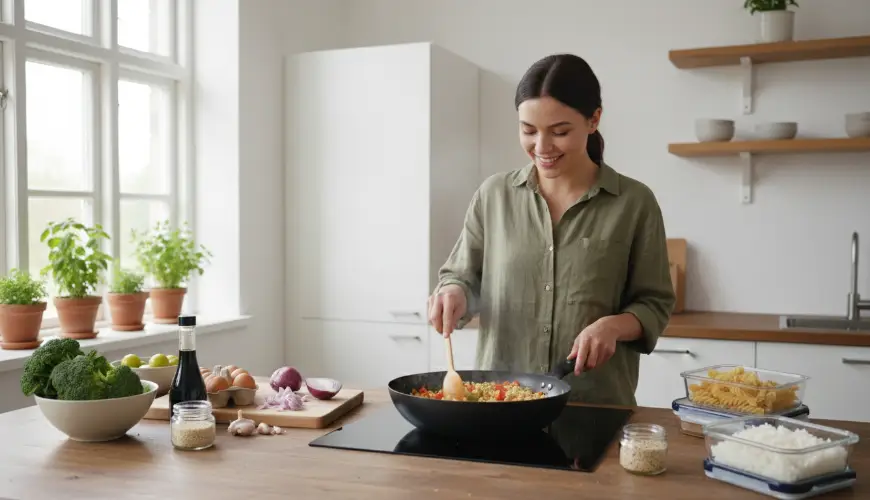
Fried rice is probably the best-known way to use up leftovers. Simply heat a pan or wok, add a little oil, garlic, whatever vegetables are on hand, and the rice. An egg, soy sauce, and a drop of sesame oil will transform ordinary leftovers into a dish that would cost a fair amount in an Asian restaurant. The key to success is high heat and quick stirring – the rice should be stir-fried, not steamed.
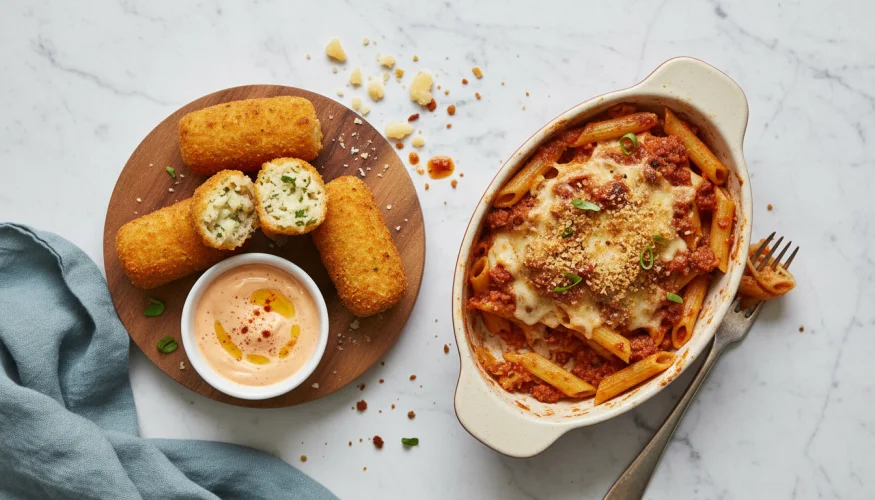
A less well-known but very tasty alternative is rice patties or croquettes. Leftover rice is mixed with egg, grated cheese, herbs, and optionally leftover vegetables or meat. The mixture is shaped into patties and fried in a pan until golden. The result is crispy on the outside and soft on the inside – great as a side dish or a standalone meal with a yoghurt sauce. A similar principle works for arancini, Italian deep-fried rice balls filled with cheese or a meat mixture, which are a traditional Sicilian speciality.
Rice can also be used in soups, where it serves as a hearty ingredient in place of a classic roux or semolina. Added to broth with a piece of vegetable and a little ginger, it creates a light yet filling soup that is ideal for a cold or on cooler days. And if any sweet or pudding rice is left over, it can easily be turned into a dessert – mixed with coconut milk, honey, and fruit, it becomes a refreshing dish that no one will identify as "leftovers".
Pasta offers an equally rich repertoire of possibilities. The simplest is a pasta salad – cold pasta goes well with vegetables, olives, feta cheese, or tuna, drizzled with a dressing of olive oil and lemon. Such a salad tastes excellent even cold and keeps in the fridge for another day. It is also one of the quickest ways to prepare a packed lunch for work or a day out.
Another great option is a baked pasta dish, known in Italian cuisine as pasta al forno. Leftover pasta is mixed with tomato sauce or béchamel, sprinkled with cheese, and baked in the oven. The result is a hearty, fragrant dish suitable for the whole family. Baking also adds a new dimension of flavour and texture to the pasta, so no one at the table will feel they are eating a "recycled" meal.
How to do it in practice: tips for everyday cooking
For leftovers to actually be used rather than end up in the bin, a few simple habits help. First and foremost, it is important to store leftovers properly – in a sealed container in the fridge, cooked rice and pasta will keep for two to three days without any problem. If it is clear they won't be used within that time, they can be frozen without hesitation. Frozen cooked rice behaves virtually the same as fresh after thawing and is suitable for frying or use in soups.
A good habit is also to cook rice or pasta intentionally in larger quantities than needed for a single meal. This approach, known in the English-speaking world as batch cooking, saves both time and energy – the hob or oven is switched on less frequently and basic ingredients are always at hand. With a supply of cooked rice and pasta in the fridge, putting dinner together becomes a fifteen-minute affair.
A practical example is the experience of a family from Brno who decided to change their kitchen habits after reading an article about food waste. Every Sunday they cooked a large pot of rice and a batch of pasta, which they then gradually used throughout the week in various dishes. The result? A noticeably lower shopping bill, less food waste, and a surprisingly more varied menu than before – because the need to improvise led the whole family to recipes they would never otherwise have come across.
When working with leftovers, it also pays to think about combining them with whatever is currently in the fridge or pantry. Leftover rice pairs wonderfully with eggs, pulses, vegetables of all kinds, as well as fish or meat. Pasta is similarly flexible – it goes well with cheeses, cured meats, fresh herbs, roasted vegetables, or even avocado. The key is not to follow precise recipes, but to have the courage to experiment and trust your own taste.
An important part of smart leftover management is also having the right equipment. Good sealable food containers, ideally made of glass or BPA-free certified plastic, will extend the shelf life of leftovers and prevent odours spreading in the fridge. At Ferwer you will find eco-friendly versions of such containers, which are kind to both their contents and the environment. A good non-stick pan will then make sautéing easier and prepare fried rice or pasta with minimal fat.
Leftover rice and pasta are not a problem – they are an opportunity. An opportunity to try new combinations, save money, reduce food waste, and at the same time appreciate the great value hidden in simple ingredients. A kitchen that knows how to work with leftovers is a kitchen that truly understands food in its fullest sense – and that is a skill that pays off every single day.