

Cyberchondria: Googling Disease Symptoms at Three in the Morning
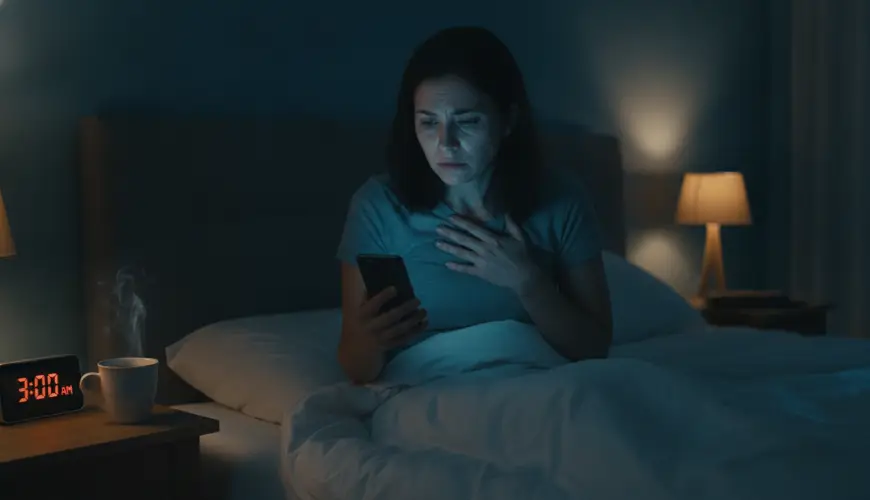
Almost everyone knows the feeling. It's the middle of the night, sleep won't come, and there's a strange pressure in the chest. Within seconds, the phone is in hand, and the first words are flying into the search engine. The results load, and ten minutes later, a person is convinced they're having a heart attack, have cancer, or are suffering from some rare tropical disease they'd never even heard of before. Come morning, it turns out it was just tense muscles from sitting at a computer all day. This scenario even has its own name – cyberchondria – and it's considerably more widespread than it might seem.
Cyberchondria isn't just a modern fad or a media buzzword. It's a genuine psychological phenomenon, which experts define as excessive and repetitive searching for health information online that leads to escalating anxiety rather than reassurance. The term was first used at the beginning of this millennium, but it wasn't until the proliferation of smartphones and unlimited internet access that it grew from a fringe problem into an everyday reality for millions of people. According to Microsoft research, a large proportion of users find that their anxiety deepens rather than eases when searching for health symptoms online.
Try our natural products




Why the night is so dangerous
Timing plays a crucial role in cyberchondria. Googling symptoms at three in the morning isn't just an innocent nocturnal habit – it's a combination of several unfavourable factors that converge at the worst possible moment. At night, the brain is tired, critical thinking is weakened, and the ability to rationally evaluate information is significantly reduced. There is also silence, in which every bodily sensation feels stronger and more urgent. A pain that would go unnoticed during the day, lost in the flow of everyday obligations, suddenly becomes the centre of attention.
The very logic of search engines adds to this. Algorithms aren't configured to display the most probable diagnoses – they display the most clicked and most shared content. And what do people click on? Dramatic cases, rare diseases, cautionary tales. Take Markéta, a thirty-four-year-old teacher from Brno, who one night began googling a headache. Within an hour, she was browsing forums about brain tumours, reading personal accounts from post-surgery patients, and planning a visit to the emergency room. In the morning, her husband pointed out that she had spent four hours the previous day marking essays without a break. The tension headache dissolved after two ibuprofen tablets and a short walk. Markéta's nocturnal search didn't help her – it only robbed her of sleep and added hours of anxiety.
This mechanism is no coincidence. The human brain is evolutionarily wired to assign greater weight to potential threats than to safe scenarios. This is known as negativity bias, and in the context of health searching, it acts as a catalyst for fear. Instead of telling oneself "a headache can have a thousand mundane causes," the brain at three in the morning automatically jumps to the worst possible option and begins looking for evidence to confirm it.
Psychologists call this process confirmation bias – the tendency to seek out and interpret information in a way that confirms our existing fears. On the internet, where content is virtually unlimited, one can find confirmation for almost any hypothesis. The result is a spiral in which every piece of information found leads to further searching, every search brings new unsettling findings, and anxiety escalates geometrically.
When does late-night googling become a real problem?
There is, of course, a fundamental difference between occasionally checking whether two over-the-counter medications can be combined, and a state in which health searching takes up hours each day and significantly impacts quality of life. The boundary between being informed and cyberchondria is surprisingly thin and easily overlooked.
Experts in psychiatry and psychology point out that cyberchondria most commonly develops in people who are prone to anxiety, or who have previously experienced a serious illness – either their own or that of someone close to them. It is therefore not a character flaw or excessive dramatisation, but an understandable response from a brain trying to eliminate uncertainty and gain a sense of control. The problem is that the internet never truly provides that control. As American psychiatrist and digital health expert David Greenfield aptly observed: "The internet doesn't inform us – we're addicted to it because it keeps us in a constant state of indecision."
Several specific signals can help identify when healthy information-seeking has crossed into problematic behaviour. If searching for health symptoms regularly takes longer than thirty minutes, if a person returns to the same concern repeatedly even after being reassured by a doctor, if search results consistently lead to more serious diagnoses rather than reassurance, or if late-night googling of symptoms disrupts sleep and causes significant daytime fatigue – all of these are warning signs worth paying attention to.
It is important to emphasise that cyberchondria is not the same as hypochondria in the classical sense, although the two phenomena can overlap. Cyberchondria is specifically tied to the online environment and can affect people who do not otherwise tend towards excessive health anxiety. All it takes is one stressful period in life, a lack of sleep, and a smartphone on the bedside table.
Research published in the Journal of Medical Internet Research showed that the more time people spend searching for health information online, the higher their overall level of health anxiety – regardless of whether they actually have any illness. In other words, the searching itself creates anxiety, rather than merely reflecting it.
The modern digital environment further compounds this problem. Social media is full of personal health stories, support groups for various diagnoses, and viral articles about insidious symptoms that "doctors are ignoring." Algorithms actively recommend this content to people who search for health topics – thereby creating an information bubble in which illness seems to be everywhere and health appears more fragile than it actually is.

How to keep a clear head in a sea of health information
The solution to cyberchondria is not simple, and it certainly doesn't lie in an outright ban on searching for health information. When used sensibly, the internet can genuinely be a useful tool – it helps people understand medical terminology, prepare for a consultation with a doctor, or find supportive communities. The key is conscious engagement with one's own habits and an understanding of the mechanisms that drive cyberchondria.
One of the most effective practical steps is to introduce a simple rule: no searching for health symptoms after ten o'clock in the evening. This restriction is not arbitrary – it respects the brain's biological rhythm and eliminates the riskiest combination of fatigue, silence, and unlimited access to information. If a symptom genuinely persists, there will be plenty of time in the morning to investigate it with a clear head.
It is equally important to learn to distinguish between sources. Health information on verified portals such as MedlinePlus or on the websites of reputable hospitals and medical faculties is of substantially greater value than posts on discussion forums or videos on platforms where anyone can publish anything. A quality source will always state who wrote the text, when it was last updated, and what expert sources it draws upon.
For those who recognise themselves as repeatedly and intensely experiencing cyberchondria, working with a psychologist or psychotherapist can be highly beneficial. Cognitive-behavioural therapy has demonstrated effectiveness in numerous studies for managing health anxiety – it helps identify irrational thought patterns and replace them with realistic ones. The aim is not to convince a person that nothing can ever happen to them, but to teach them to tolerate uncertainty without immediately dispelling it through compulsive searching.
Overall care for mental and physical health also plays a role. Chronic stress, insufficient sleep, and a sedentary lifestyle demonstrably increase levels of anxiety and, with them, susceptibility to cyberchondria. Regular exercise, adequate sleep, and conscious stress management are not mere clichés from health magazines – they are concrete tools that alter brain chemistry and reduce overall anxiety levels. Products that support quality sleep, from herbal teas and magnesium supplements to aromatherapy, can be practical additions when building healthier evening routines that gradually displace the phone and search engine from the bedside table.
It is also worth reflecting on what actually lies behind the late-night googling. The urge to search for symptoms at three in the morning is often a symptom of something else – overload, a loss of sense of control, unresolved worries that have nowhere to surface during the day. The phone and the internet are then simply a readily available pressure valve. Addressing the underlying cause tends to be more effective in the long run than fighting the symptom.
The world in which we have access to a virtually unlimited amount of information is, in many respects, remarkable. But it brings with it new challenges for which the evolution of the human brain was not prepared. Googling symptoms at three in the morning is one of the most vivid examples of how a powerful tool can, when misused, cause more harm than good. Recognising this mechanism, naming it, and working with it consciously – that is the first step towards ensuring that the internet serves our health, rather than undermining it.