

# Why Healthy Food Bores You and How to Change That
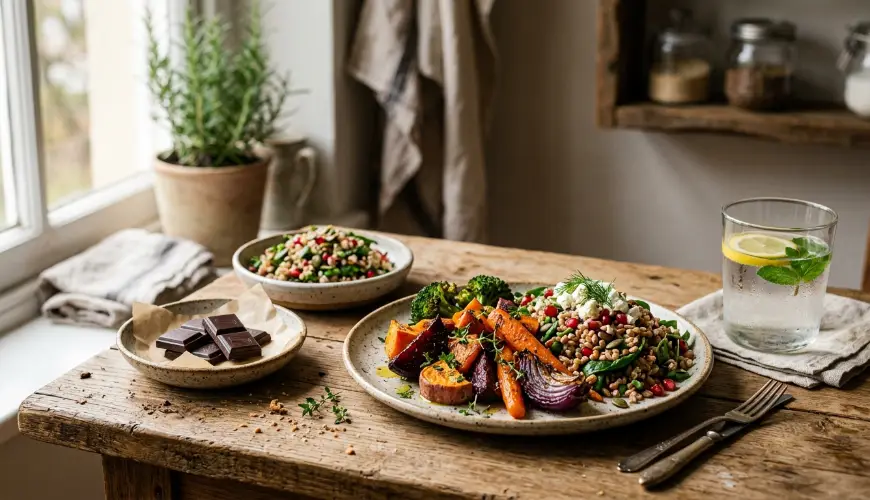
There is one thing many people refuse to admit out loud: healthy food bores them. Not because they don't know that vegetables are beneficial or that wholegrain bread is better than a white roll. They know this perfectly well. Yet evening after evening they find themselves at a bowl of crisps or a plate of pasta with cheese sauce, while their plan for "healthier eating" quietly dies somewhere in a drawer. Then comes the guilt, a new attempt, new disappointment. Many of us know this merry-go-round – and it's time to stop it differently than we're used to.
The key isn't stronger willpower or a stricter diet. The key is understanding why healthy food is boring, and approaching change in a way that respects both human psychology and taste buds at the same time.
Try our natural products




The problem isn't you – the problem is the approach
When people hear "healthy eating", most conjure up a specific image: steamed broccoli, skinless chicken breast, rice cakes and a glass of lemon water. This image is not only off-putting, but above all inaccurate. It emerged from decades of diet culture that placed health in direct opposition to pleasure. Either you enjoy food, or it's healthy – as if both at once were impossible.
Yet research in nutritional psychology shows something different. People who enjoy their food and don't treat it as punishment or obligation have healthier long-term eating habits than those who follow strict rules and lists of forbidden foods. Deprivation paradoxically strengthens the desire for forbidden fruit. The more you tell yourself that chocolate is off-limits, the more you think about it.
This phenomenon even has a scientific name – the so-called "rebound effect" or white bear effect, named after the famous psychological experiment by Daniel Wegner. All it takes is for someone to tell you not to think about a white bear – and you can think of nothing else. This is exactly how diet thinking works.
Alongside psychology, physiology also plays a role. The brain is programmed to seek out calorie-rich foods, because for hundreds of thousands of years of evolution, survival depended on their availability. This tendency doesn't disappear through willpower – it must be replaced by a different approach that offers the brain an alternative, not a prohibition.
Imagine Markéta, a thirty-four-year-old teacher from Brno. Every year in January she resolved to eat more healthily. She bought quinoa, spirulina and various superfoods she had no idea how to prepare. After two weeks of boring salads and unsatisfying lunches, she returned to her old habits, this time with an even stronger sense of failure. It was only when she stopped thinking in categories of "healthy versus unhealthy" and started looking for foods she genuinely enjoyed that were also nutritious that something changed. Today she cooks Thai curry with coconut milk, homemade bean burgers, and considers dark chocolate an everyday pleasure rather than a sin.
Markéta's experience is not exceptional. It is an illustration of what experts in nutritional behaviour call intuitive eating – an approach that rejects diets and instead builds on listening to one's own body and developing a positive relationship with food.
How to start when healthy food genuinely bores you
The first step is admitting what you actually enjoy eating. This sounds obvious, but most people spend so much energy trying to eat correctly that they've forgotten what brings them joy. Write down – without any judgement – ten foods you like. Then look at what they have in common. Is there a particular flavour? Texture? Method of preparation? This analysis is more valuable than any meal plan downloaded from the internet.
The second step is to look for healthier versions of favourite foods, not to replace them with something entirely different. If you love pizza, don't look for a celeriac salad recipe. Look for a homemade pizza recipe with sourdough dough, more vegetables and quality cheese. If you enjoy fried food, try oven-baking or an air fryer – the result can be surprisingly similar, but significantly lighter. The brain needs continuity, not revolution.
The third step, which is often underestimated, is paying attention to ingredient quality. A large part of why healthy food tastes boring comes down to using poor-quality ingredients. Watery supermarket tomatoes in January cannot taste like juicy summer tomatoes from a garden or a local farmer. Fresh herbs, good olive oil, quality spices – these are things that fundamentally transform the taste of food without adding calories or reducing nutritional value.
Spices deserve special mention. Turmeric, cumin, coriander, smoked paprika, ginger or sumac – these are ingredients that take ordinary vegetables into a completely different dimension. Many of the world's cuisines that are naturally healthy – such as Mediterranean, Indian or Japanese – are healthy precisely because the food is flavourfully satisfying. The Mediterranean diet is one of the best-documented dietary patterns in the world, and its secret lies not in deprivation but in an abundance of flavours, colours and textures.
The fourth, very practical change is to stop buying food you don't want to eat just because you "should". If you hate cabbage, don't buy cabbage. There are hundreds of other green vegetables that can fulfil the same nutritional function – spinach, rocket, peas, green beans, broccoli, courgette. Obligation is the greatest enemy of long-term change.
The fifth step is reconsidering what "healthy food" actually means. According to the World Health Organization, a healthy diet is varied, balanced and sustainable over time – not perfect at every moment. One slice of birthday cake doesn't ruin anyone's health. On the contrary, the stress of having eaten the cake can be more damaging to health than the cake itself. Chronic stress has a demonstrably negative impact on digestion, immunity and the cardiovascular system.
As Michael Pollan, American journalist and author of In Defense of Food, said: "Eat food. Not too much. Mostly plants." This simple sentence contains more wisdom than most diet guides – and requires no deprivation whatsoever.
Small changes that work better than grand revolutions
Changing eating habits is a matter of months and years, not weeks. Research in behavioural psychology, particularly the work of James Clear described in his book Atomic Habits, shows that lasting changes arise from small, repeated steps, not dramatic decisions. Add one serving of vegetables to a meal you already enjoy. Swap one drink a day for water or herbal tea. Try cooking one new dish from a different world cuisine once a week.
This method works because it doesn't require overcoming resistance – it builds on what already works and gradually expands it. The brain forms new habits most effectively when they are associated with a positive experience, not a sense of restriction.
The environment also plays an important role. If you have easily accessible fruit on the kitchen counter and crisps hidden at the back of the cupboard, you'll reach for fruit far more often – not because you have stronger willpower, but because you've made the right choice easier. This principle, which behavioural economists call "choice architecture", works surprisingly reliably.
The social aspect of food is also not to be underestimated. People eat better when they cook and dine in company. Shared food is a cultural ritual that goes beyond mere nutrition – it is a way of connecting with others, of celebrating, of caring for those close to us. If healthy eating means eating alone from a glass container at a computer, it's understandable that you find it boring. Invite friends over to cook, try a new recipe together with your partner, go to the market and let yourself be inspired by what is seasonal and fresh.
Seasonality is one of the most natural guides to healthy eating. Eating what is currently growing and available in a given season is not only nutritionally beneficial, but also more economically accessible and ecologically responsible. Spring asparagus, summer tomatoes, autumn squash, winter root vegetables – each season brings its own palette of flavours, which prevents monotony and naturally maintains dietary variety.
Finally, it is worth remembering that one's relationship with food is deeply personal and often carries traces of childhood, family patterns and cultural background. If the topic of food is strongly emotionally charged for you – whether in terms of overeating, restriction or anxiety around food – it can be very beneficial to speak with a nutrition counsellor or psychotherapist. This is not a sign of weakness, but an awareness that some patterns are rooted more deeply than any recipe can reach.
Healthy food doesn't have to appeal to you from day one. But if you stop looking for the perfect diet and start looking for foods that genuinely please you while also doing you good, you'll find that the line between "healthy" and "tasty" is much thinner than you thought – and perhaps doesn't exist at all.