

Social media and body acceptance
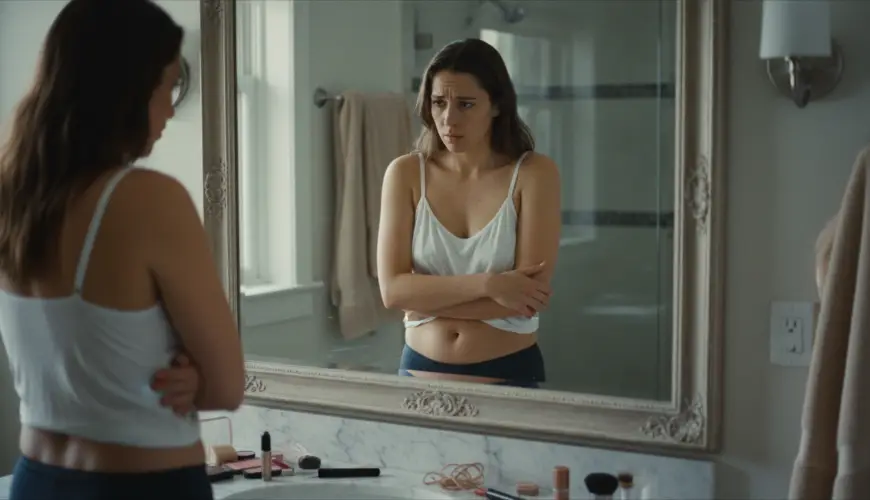
Every day, hundreds of images flood our screens – perfectly lit figures, flawless skin, carefully chosen photo angles. A few minutes of scrolling on Instagram or TikTok is enough to make a person start asking: "Why don't I look like that?" It's a question that a surprisingly large number of people quietly ask themselves, regardless of age, gender, or lifestyle. Body image and social media are in fact far more connected than it might seem at first glance, and their mutual relationship deserves attention.
The term "body image" refers to how a person perceives, feels about, and evaluates their own body. It's not about objective reality – it's a subjective experience that forms from childhood and continuously changes under the influence of surroundings, culture, interpersonal relationships, and indeed media. Psychologist Dr. Phillippa Diedrichs from the University of the West of England, who has long been dedicated to research on body self-perception, points out that negative body image is not just a cosmetic problem – it can lead to anxiety, depression, eating disorders, and an overall decrease in quality of life. And it is precisely the digital environment, where we now spend a significant part of our day, that amplifies this problem in a way previous generations never knew.
Social media in themselves are not the enemy. They allow us to stay in touch with loved ones, discover inspiration, learn new things, and find communities where we belong. The problem arises when passive content consumption turns into constant comparison of oneself with others. The American Psychological Association (APA) published in 2022 a comprehensive report on the impact of social media on adolescents, in which it stated, among other things, that intensive use of social media is associated with greater dissatisfaction with one's own body, particularly among girls and young women. But it's far from being limited to them – a growing number of studies show that men and middle-aged people face similar pressures as well, it's just talked about less.
How does it actually work? The mechanism is fairly simple, but all the more insidious for it. Social media algorithms are designed to show us content that makes us stop, that we like or comment on. And the human brain naturally pauses on visually attractive content – beautiful bodies, luxurious lifestyles, perfect meals. The more such content we consume, the more the algorithm serves it up. This creates a bubble in which it seems like the entire world looks like a magazine cover. But what we see is a carefully curated selection. Filters, retouching, dozens of attempts at a single photo, professional lighting – all of this creates an illusion that we rationally recognize, yet emotionally absorb as the norm.
An interesting experiment was conducted by researchers at Macquarie University in Australia, who divided a group of young women into two parts. One group spent time viewing idealized photos on Instagram, while the other viewed neutral content – photos of nature and architecture. After just ten minutes, the first group showed significantly higher dissatisfaction with their own bodies. Ten minutes. That's less than most of us spend on our morning scroll in bed before even getting up.
Try our natural products






Why We Constantly Compare Ourselves and What to Do About It
Comparison is a deeply rooted human instinct. Social psychologist Leon Festinger formulated his social comparison theory back in the 1950s, according to which people naturally evaluate their abilities and opinions by measuring themselves against others. In Festinger's time, people compared themselves with those in their immediate surroundings – neighbors, coworkers, classmates. Today, however, thanks to social media, we compare ourselves with millions of people from around the world, and often with those who represent the absolute elite in terms of physical appearance, fitness, or lifestyle. It's as if we were comparing our amateur cooking attempt with the creations of a Michelin-starred chef and feeling like bad cooks because of it.
This kind of upward comparison – that is, with those we perceive as "better" – has a demonstrably negative impact on self-esteem. And social media are practically built on this type of comparison. They don't show us someone else's average Monday morning, they don't show us their bad days, doubts, or moments when they don't feel comfortable in their own skin. They show us a curated highlight reel, the best moments selected from thousands of moments. And we compare them with our unfiltered, everyday reality.
Imagine, for example, Klára, a thirty-year-old teacher from Brno who tries to live healthily – she exercises three times a week, eats a balanced diet, and tries to get enough sleep. Yet every time she opens Instagram, she's flooded with photos of fitness influencers with perfect abs, precise macros, and energy that seems to never end. Klára knows those photos don't represent reality. She knows that many of those women spend hours a day exercising, that it's their job, that the photos are taken under ideal conditions. And yet every time, that quiet little voice speaks up inside her: "You're not good enough." Klára's story isn't exceptional – it's surprisingly universal.
So what helps? The first and perhaps most important step is consciously building awareness of what the content we consume does to us. It's not about demonizing social media or giving them up entirely – that's neither realistic nor necessary for most people. It's about approaching them with open eyes. Noticing how we feel after twenty minutes of scrolling. Noticing which accounts make us feel inadequate and which ones inspire us in a healthy way. This distinction is key – inspiration should lift a person up, not bring them to their knees.
A very effective tool is also active curation of your own feed. Social media give us the ability to influence what we see – all it takes is unfollowing accounts that trigger negative feelings and instead following those that promote body diversity, a realistic view of health, and a positive relationship with one's own body. The body positivity and body neutrality movements have brought a wave of content to social media that shows bodies of all shapes, sizes, and forms – reminding us that beauty doesn't have just one single form.
Tips for a Healthy Relationship with Your Body in the Digital Age
Building a healthy relationship with your own body is a process, not a one-time decision. It requires patience, kindness toward yourself, and often the courage to go against the current of a culture that teaches us that our worth is directly proportional to our appearance. However, there are several concrete steps that can support this process:
- Regular digital detoxes – even one day a week without social media can significantly reduce appearance-related anxiety and strengthen feelings of satisfaction.
- Mindfulness while scrolling – stopping and asking yourself: "How do I feel right now? Do I feel better or worse after this content?"
- Following diverse accounts – intentionally seeking out content that shows different bodies, different lifestyles, and different definitions of beauty.
- Movement for joy, not punishment – stop viewing exercise as a tool to "fix" the body and start seeing it as a way to feel good.
- Limiting comparison – reminding yourself that every person has a different genetic makeup, different life circumstances, and a different story.
- Open conversation – talking about your feelings with loved ones, or with a professional if negative body image significantly affects quality of life.
As writer and activist Sonya Renee Taylor once said: "Your body is not a problem to be solved." This simple sentence carries a profound truth – far too often we approach our bodies as a project that needs constant improvement, instead of seeing them as a home in which we live our entire lives.
It's also worth mentioning that a healthy relationship with your body doesn't necessarily mean constant love for your appearance. The concept of body neutrality, which has been gaining popularity in recent years, offers an alternative to the sometimes unrealistic demand to "love your body no matter what." Instead, it suggests approaching your body with respect and gratitude for what it can do – that it carries us through life, allows us to embrace loved ones, perceive the world around us, and experience the joy of movement. This approach can be more accessible and sustainable for many people than the pressure of unconditional self-love.
An important role is also played by how we approach a healthy lifestyle as a whole. Health isn't just about how a person looks – it's a complex state of physical, mental, and social well-being, as defined by the World Health Organization. When we focus on how we feel, how much energy we have, how well we sleep, and how we manage stress, instead of judging our worth by the number on the scale or the reflection in the mirror, we open the path to a much more authentic and sustainable concept of health.
And this is precisely where the circle closes. Social media can serve us as a tool for inspiration and connection, or as a source of constant comparison and dissatisfaction. The choice is largely ours – not in the sense that we should be blamed for how we feel, but in the sense that we have greater power over our digital environment than we often realize. Every unfollow of a toxic account, every conscious break from the screen, every moment when we choose to be kind to ourselves instead of critical – these are all small steps that gradually add up. And it is precisely from these small steps that a healthy relationship with one's own body is built – not perfect, not flawless, but human and real.