

How to Naturally Remove Grease in the Kitchen so the Range Hood and Tiles Shine Again

Grease in the kitchen has a peculiar characteristic: it doesn't appear all at once but gradually settles quietly in places where one would least expect it. On the range hood, it forms a sticky film; on the tiles near the stove, it collects dust; on cabinet handles, it leaves smudges; and on baking sheets in the oven, it turns into a burnt layer that seems "eternal." That's why more and more people are asking, how to naturally remove grease in the kitchen without aggressive chemicals, strong fragrances, and unnecessary single-use packaging. The good news is that in many cases, it can be surprisingly easy – often with items already waiting in the pantry.
Naturally, a question arises: if grease is so resilient, can something as ordinary as vinegar, baking soda, or lemon really suffice? In many situations, yes, because grease isn't "magical" – it's a mixture of fats, food residues, and often dust. Here, simple logic applies: either dissolve the grease or bind and wipe it away, ideally with the help of heat, gentle abrasives, and the right procedure. Eco-friendly kitchen cleaning isn't about secret tricks but understanding basic principles and smartly using commonly available ingredients.
Try our natural products



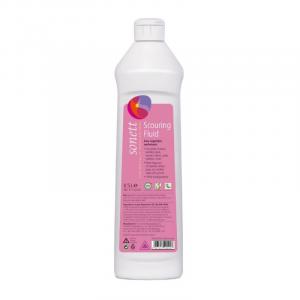
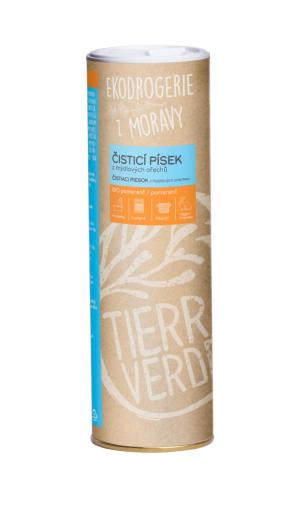
Why Grease Sticks and What Natural Solutions Work Best
Grease behaves like glue in the kitchen. When mixed with dust, it forms a grayish film that can't be wiped away with just water. Moreover, it often "bakes on" – such as on the range hood or tiles near the stove, where heat and steam alternate. It's disappointing when you take a wet cloth and find you're just smearing smudges around.
When looking for an answer to the question, how best to tackle grease naturally, it's worth turning to a combination of three things: heat, a degreasing component, and time. Warm water softens the grease, a natural "helper" dissolves or releases it, and a few minutes of action save effort. In practice, this means less scrubbing and a lower risk of scratching surfaces.
Among commonly available ingredients found in almost every kitchen, the most frequently used are:
- Vinegar (diluted): helps dissolve deposits and releases greasy film, great for tiles, glass, and stainless steel (with caution and proper rinsing).
- Baking soda: a gentle abrasive that helps lift grease from surfaces, suitable for burnt residues and tougher dirt.
- Lemon: citric acid and a pleasant fragrance, suitable for lighter grease, cutting boards, or as a complement.
- Salt: can help as a gentle "sand" for some stubborn stains, but care is needed on sensitive surfaces.
- Unscented dish soap / gentle dishwashing detergent: even in eco-friendly mode, it makes sense – a small amount of quality detergent can emulsify grease (disperse in water) so it can be removed without residue.
It's no coincidence that vinegar and soda have been traditionally used in households. As many educational materials on safer cleaning remind us, it's crucial to avoid unnecessarily aggressive mixtures and choose methods that don't burden the home environment. Sources of inspiration and general principles for safer use of chemicals at home are summarized long-term by organizations like the European Chemicals Agency (https://echa.europa.eu/ (useful mainly for understanding why it's good to limit irritating and volatile substances).
Eco-Friendly Kitchen Cleaning Step by Step: From Range Hood to Oven
The biggest difference between "forceful" cleaning and a gentler approach often doesn't lie in what is used to clean, but in how. Natural agents work best when given time and used purposefully according to the type of surface. And here, a simple rule applies: start with the greasiest spots (range hood, area around the stove), continue with the work surface, and finish with details (handles, switches, grout).
A typical real-life example: a family that cooks daily often notices that the kitchen "suddenly" looks dingy. In reality, it happens gradually. One weekend, someone leans their hand on the cabinet above the stove and ends up with a sticky film on their hand. At that moment, it becomes clear that the biggest problem isn't the grease itself, but that dust clings to it, forming a gray coating. And that comes off best when the surface is first degreased and then "cleaned."
Range Hood and Tiles: Warm Steam + Vinegar, But With Care
On the range hood, grease is most visible. For smooth surfaces, often warm water with a drop of gentle dish soap followed by cleaning with a vinegar-water solution (e.g., 1:1 or weaker depending on surface sensitivity) suffices. It's important not to let vinegar sit too long on sensitive materials and always wipe the surface with clean water and dry to avoid streaks.
For range hood filters (metal), soaking in hot water with detergent is effective. Those who want to stick to "kitchen classics" add a spoonful of baking soda. The grease starts to release and comes off more easily with a brush. It's simple but surprisingly effective: heat and time do half the work.
Cabinets and Handles: Hidden Spots Where Grease Hides
The surface of cabinets around the stove is often matte and looks "just a little dirty" at first glance. Yet it's often the stickiest. Here, a gentle approach pays off: warm water, a soft microfiber cloth, and a gentle dishwashing detergent. If a film remains, a weak vinegar solution helps, but always with a subsequent rinse.
Handles are a chapter of their own – hand grease mixes here with food residues. A quick wipe with a cloth soaked in warm water with detergent followed by a thorough cleaning works. Those who want a completely minimalist approach can manage with warm water and a drop of detergent; it's often more eco-friendly than making strong mixtures that need prolonged rinsing.
Stove Top and Surrounding Area: Baking Soda as a Gentle Helper
On the stove top, grease tends to turn into burnt-on patches. With glass-ceramic or stainless steel, caution is advised: rough scrubbing can leave scratches. It's better to make a paste from baking soda and water, apply it to the problematic area, let it sit for a few minutes, and then wipe it off with a soft sponge. Baking soda acts as a gentle abrasive but isn't "sandpaper" – still, it's good to test a small section first.
On gas stoves, grease clings to the grates and around the burners. Here, soaking in hot water with detergent helps; soda can speed up the process. Allowing everything to sit for a while makes cleaning effortless.
Oven and Baking Sheets: Patience Instead of Toxic Fumes
The oven often leads people to abandon the "natural" approach first. Yet even here, much can be done without aggressive sprays. For baking sheets and racks, soaking in hot water with detergent, possibly with soda, often suffices. Inside the oven, soda can be used as a paste: applied to burnt areas, left to act for longer periods (even overnight, if the surface allows), and then wiped away. It's slower, but the result is a clean surface without a pungent odor.
If one thing needs to be emphasized, it's this: natural cleaning is most effective when grease isn't allowed to build up over years. Regular small maintenance is often more eco-friendly than a one-time "general cleaning" that consumes a lot of water, time, and resources.
Using Commonly Available Ingredients: What Really Makes Sense and What to Avoid
When discussing how to tackle grease without chemicals, the internet offers hundreds of "guaranteed" recipes. Some work, others are more flashy than effective. The key is to stick to simplicity and safety. Using commonly available ingredients that are in every kitchen can be great if used correctly and with regard for materials.
Vinegar and soda are often mentioned as a duo, but it's not always a good idea to mix them together just "because it fizzes." When mixed, a reaction occurs that looks dramatic, but ultimately results in mainly water with salt (acetate) and escaping CO₂. Fizzing can mechanically help with some dirt, but for degreasing, it often works better to use these helpers separately and purposefully: soda for loosening dirt, vinegar for cleaning and removing film.
Lemon is pleasant for its scent and light degreasing, but sometimes isn't enough for heavy, old grease. On the other hand, it's useful where one doesn't want a strong "vinegar" odor. Speaking of scents: a household can be clean without being scented for miles. Sometimes it's actually an advantage – especially in the kitchen where food aromas naturally mix, and overpowering with fragrances can be distracting.
Attention should also be paid to surfaces. Wood, natural stone, or some lacquered surfaces may react sensitively to acids and abrasives. For wooden cutting boards, warm water, a gentle detergent, and quick drying help; lemon with salt is sometimes recommended but can be unnecessarily aggressive and drying. On stone (e.g., marble), vinegar can cause damage as acids can etch the surface. If unsure, it's worth testing on an inconspicuous spot.
In the ecological context, one practical detail is often overlooked: the biggest difference might be made by what is used to wipe. A quality microfiber cloth or washable towel captures and removes grease from surfaces much better than disposable paper towels that are immediately thrown away. And that's exactly the type of change that quickly manifests in the household – less waste, fewer purchases, less work.
"Cleanliness isn't about scent, but about what doesn't remain on the surface." This sentence may sound simple, but in the kitchen, it applies doubly: the goal isn't to mask odors but to remove the film to which more dirt adheres.
Those wanting to take eco-friendly kitchen cleaning a step further can also draw inspiration from recommendations for a more sustainable household from organizations focused on the environment, such as the European Environment Agency (https://www.eea.europa.eu/) (a general framework for reducing household burden, consumption, and chemical risks).
Finally, it's good to remember that "natural" doesn't have to mean "weak." It means more thoughtful: using what's already at home, giving it time, working with warm water, and not forgetting regularity. Grease doesn't win because it's stronger, but because it's subtle. And when the kitchen is maintained continuously, often very little is needed – warm water, a bit of gentle detergent, baking soda for tough spots, and vinegar for cleaning. At that moment, even cleaning that once felt like a weekend punishment can turn into a few peaceful minutes, after which the kitchen feels light, fresh, and "normally livable" again.