

Spring soups full of vegetables that will pleasantly lighten you up after winter
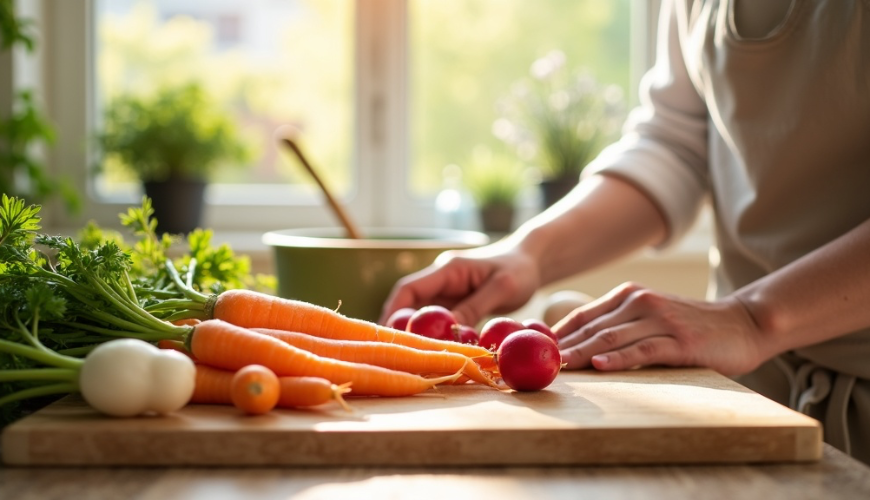
Spring has a special ability to change the mood in the kitchen. After winter, when one often relies on hearty broths, legumes, and long baking, suddenly something lighter, fresher, and more colorful starts to make sense. And this is where spring vegetable soups come into play – simple, fragrant, and surprisingly filling. It's not a "diet" compromise but a smart way to subtly reintroduce more plant-based ingredients, fiber, and seasonal flavors into the diet. Anyone who has ever opened the fridge after a long day to find a bunch of radishes, a few carrots, and some leeks knows that soup is often the quickest way to turn small things into a full meal.
At the same time, the availability of ingredients changes in spring. Spring vegetables are usually more tender, juicier, and naturally sweeter than those consumed in January. Instead of heavy sauces, just a few minutes in a pan, a good broth, and a handful of herbs are enough. The soup then is not just "something to warm up with" but a small ritual: colors, scents, and flavors meet in the pot, reminding us that the season has truly turned.
Try our natural products






Why spring vegetables make such a difference in soup
Spring vegetables have one big advantage: they don't require complicated handling. Young carrots, spring onions, leeks, kohlrabi, radishes, spinach, peas, or first herbs like chives and parsley can stand out even in a simple broth. The less one "overpowers" them with spices, the more their natural taste comes through. In practice, this means shorter cooking, less salt, and often less fat – without feeling like something is missing.
From a nutritional perspective, it's worth thinking of soup as an easily digestible base. Vegetables in a warm form are often easier to digest for many people and also help with hydration due to the liquid content. Authoritative sources like the World Health Organization have long emphasized the importance of regular fruit and vegetable intake within a varied diet – and soup is one of the most convenient ways to achieve this without counting and stress.
Spring soups also beautifully respond to what's currently available. There's no need to stick to a precise list of ingredients. If celery is missing, parsley can replace it. If there's no broccoli, cauliflower or kohlrabi can serve. This flexibility makes spring soups a kitchen genre that can be repeated over and over without becoming tiresome.
And then there's another dimension that is often underestimated: soup can calm the pace of the day. In many households, spring looks like more outdoor activities, longer walks, children returning from the playground hungry, and adults often postponing "something quick" until the last minute. In such moments, a pot that can be reheated, supplemented with bread or cooked grains, and be ready is very convenient.
Tasty, healthy, and nutritious soups without complications
When one hears tasty, healthy, and nutritious soup, many people imagine a long list of ingredients and hours in the kitchen. Yet, nutritional value often doesn't rely on complexity but on good composition. A spring soup can be light and still satisfying – it just needs one "anchor." It could be a potato, red lentils, chickpeas, oats, buckwheat, or perhaps barley. The result remains fresh, but the body feels like it's had a real meal.
A significant role is played by the base. Some swear by homemade broth, but in spring cuisine, a simpler route often works: a quick vegetable base of onions, leeks, and root vegetables, simmered for twenty minutes and then built upon. Those who want to enhance the flavor without heavy ingredients can reach for miso paste (added at the end to avoid overcooking), quality olive oil, or a pinch of lemon zest. The soup then feels "complete," even if it was made from just a few things on hand.
In everyday life, it often looks like this: on Thursday evening, half a bunch of radishes, a tired leek, and a handful of spinach that doesn't want to wait till the weekend gather in the fridge. Instead of ending up in the trash, the vegetables end up in the pot. The leek is briefly sautéed, diced kohlrabi or potato is added, it is covered with water or broth, and after a few minutes, spinach is added to the soup. On top, chives and a drop of oil. The result? A dinner that is quick, inexpensive, and yet feels like it was planned in advance. "Soup is the kindest way to give vegetables a second chance," is sometimes said in kitchens where waste is minimized – and in spring, this is doubly true.
It's also good to remember one practical thing: spring vegetables are delicate, so they benefit from short cooking. Spinach, peas, or asparagus are often added at the end to retain their color and flavor. If the soup is thickened, it can be done more gently than with a roux – for example, by pureeing part of the vegetables or adding a cooked potato.
Those who want to take it a step further and connect cooking with a sustainable approach can pay attention to what is commonly discarded. Carrot or radish greens can be turned into a quick pesto, but in small amounts, they are also suitable for soup – adding a herbal flavor and making use of more of what's already at home. In the spirit of sustainability, the framework offered by, for instance, the UN Environment Programme in topics on reducing food waste and more resource-friendly practices is inspiring – even though in the kitchen, it often starts with a simple decision: "Make soup instead of throwing away leftover vegetables."
Recipes for simple spring soups that can be varied
The following ideas are not tied to one "correct" version. Take them as a springboard – and feel free to adjust them to what grows in the garden, what's in the farm box, or what's left after weekend cooking. Such recipes for simple spring soups are the most likely to become a regular part of the week.
- Spring leek soup with peas and potato: A bit of oil is used to soften the leek (including some of the green tops), diced potatoes are added, covered with broth, and cooked until soft. Towards the end, peas (even frozen ones) are added and briefly cooked. Part of the soup can be blended for a creamier texture. Chives and a few drops of lemon on top "lift" the soup.
- Kohlrabi soup with carrots and marjoram: Kohlrabi is unjustly overlooked in soups, yet it is gentle and fresh. Just cut it into small cubes, add carrots, onions, and cook in a vegetable base. Marjoram adds a familiar "home" note. For a more nutritious version without meat, add a handful of barley or buckwheat.
- Spinach soup with spring onions and red lentils: Spring onions are briefly sautéed, rinsed red lentils (which cook quickly) are added, covered with water or broth, and once softened, spinach is added. The soup can be blended smooth or left partially structured. The advantage is that lentils provide protein, making the soup feel like a full meal, even though it's still light.
- Radish soup with their greens (gently spicy): Radishes are often only eaten raw, but they mellow nicely in warm dishes. Sliced radishes are briefly stewed with onions, a potato or cauliflower is added for thickening, everything is cooked and blended. The greens are added only at the end, briefly, to remain fresh. The result is unexpectedly elegant and ideal for moments when something new is desired, but not something complicated.
- Quick "green" soup with herbs: The base is leeks or spring onions, zucchini or broccoli is added, briefly cooked, and blended. At the end, a large handful of herbs – parsley, chives, a bit of dill. This variant tastes great even lukewarm, which is more suitable in the first warm days than one might expect.
All these soups share a common principle: seasonal vegetables, a simple base, and seasoning that doesn't overpower. And if time is an issue, it can be saved by roughly chopping the vegetables and then blending the soup. It doesn't detract from the taste, just speeds up the journey from chopping board to table.
Spring soups also pair excellently with what's usually at home: a piece of sourdough bread, toasted croutons, a spoonful of yogurt or plant-based alternatives, seeds on top. And for those who want the soup to be more "work-ready," it can be complemented with cooked rice, barley, or leftover roasted vegetables from the previous day. Suddenly, one bowl becomes a meal that sustains energy all afternoon.
Perhaps this is the greatest magic of spring in a pot: nothing has to be forced. Just look around, see what's fresh, give it space, and let the vegetables speak for themselves. And when next deciding what to cook, a simple question arises: couldn't a spring vegetable soup win today, tasting good, satisfying, and yet remaining as light as the first warm breeze?