
How to Cook Kaldoun and Refresh Your Home Menu
Kaldoun – A Czech Classic Making a Comeback
Among the treasures of Czech cuisine, which today remain somewhat on the fringes of the everyday menu, is kaldoun. A dish with a long tradition, once a staple of Sunday lunches, it is now regaining attention among lovers of traditional gastronomy. Few recipes so beautifully combine the honesty of home cooking, the rich flavors of Czech ingredients, and a sustainable approach to cooking.
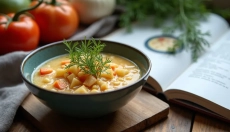
What exactly is kaldoun? This thick broth is most often prepared from poultry giblets, such as hearts, livers, gizzards, or necks, and sometimes even from the meat itself, especially from goose or duck. Goose kaldoun and duck kaldoun are among the tastiest variants, traditionally served, for example, at St. Martin's feasts. Kaldoun is served with noodles or liver dumplings and often includes root vegetables, cream, butter, and nutmeg.
The Roots of Kaldoun Reach Deep into History
The word "kaldoun" has an exotic sound, but its origin is purely domestic. Fundamentally, it's a hearty soup made from giblets, cooked mainly in bourgeois and rural households. It appears in old cookbooks as early as the 18th century and has persisted in various forms until the mid-20th century. Its uniqueness lies not only in its taste but also in its ability to utilize parts of the animal that would otherwise go unused. Today, when there's increasing talk about a sustainable approach to eating, kaldoun emerges as a dish with much to offer the modern person.
Unlike classic broth, kaldoun is richer not only in flavor but also in nutrients. Giblets are a source of quality proteins, iron, and B vitamins. For example, goose liver, often added to kaldoun, is high in iron and vitamin A. When you add homemade butter, cream, and root vegetables, you get a dish that satiates, warms, and provides the body with what it needs during colder periods.
Try our natural products


How to Make Kaldoun That Tastes Like Grandma's
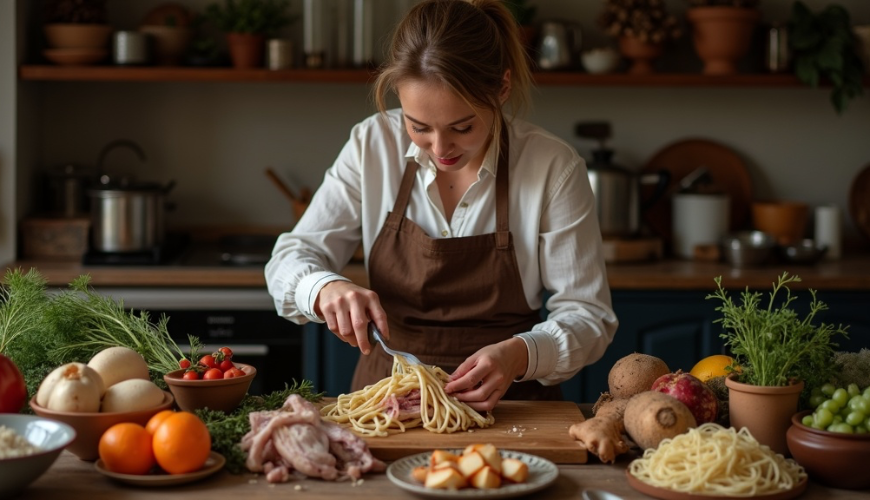
Cooking a proper kaldoun according to a traditional recipe isn't difficult, but it requires a bit of patience. First, you need to prepare a strong broth from poultry giblets—ideally from goose or duck. If you have access to organic or farm-raised poultry, even better. The flavor of the broth will be more pronounced, and the meat and giblets will be of higher quality.
For the soup, you will need:
- Approximately 500 g of goose or duck giblets (hearts, livers, gizzards, necks)
- 1 carrot, 1 parsley root, a piece of celery
- 1 onion, butter for sautéing
- Salt, pepper, allspice, bay leaf, nutmeg
- 100 ml of whipping cream
- 1 tablespoon of plain flour
- A bit of butter for the roux
- Homemade noodles or liver dumplings
The giblets are first thoroughly cleaned and cooked together with the onion, root vegetables, and spices until tender. The broth is then strained, the meat is cut into pieces, and returned to the soup. A roux made from butter and flour, thinned with some broth, is then added, and everything is seasoned with cream. Finally, homemade noodles or liver dumplings are added to the soup, transforming it into a royal meal.
Some recipes suggest adding wine or a drop of lemon juice to enhance the flavor. Imagination knows no bounds. It's important for the soup's flavor to remain balanced, with a gentle hint of spices and creamy smoothness.
Goose or Duck Kaldoun? Each Has Its Charm
Both variants of kaldoun—goose and duck—have their enthusiasts. Goose kaldoun tends to be milder, with a higher fat content, making it richer and more filling. Duck kaldoun has a slightly more intense meat flavor. In both cases, it is a dish that surprises with its depth and complexity.
In the Czech countryside, goose kaldoun was often prepared as part of the St. Martin's menu. The goose was roasted to a crisp, and the remaining giblets were used to make soup. This tradition ensured that the entire bird was used without waste—nothing was left unused. This philosophy of kitchen economy is once again very relevant today.
In one Moravian village in Haná, they still maintain the tradition of a communal St. Martin's lunch, where kaldoun is served according to Grandma Marie's recipe. In the 1960s, she portioned every goose so that nothing was wasted—and the giblets always ended up in the kaldoun. "Without kaldoun, it just wouldn't be St. Martin's," say the locals.
Kaldoun as a Symbol of Sustainability in the Kitchen
In recent years, there has been a growing interest in so-called nose-to-tail cooking, a practice where all parts of the animal are used. Kaldoun fits perfectly into this philosophy. Instead of buying special broth mixes or instant soups, you can use leftovers from home-raised poultry. Moreover, cooking with giblets is not only ecological but also economical—giblets tend to be cheaper than meat and yet have high nutritional value.
From a health perspective, kaldoun is a nutritious dish containing collagen, vitamins, and minerals—substances that support the immune system, joint health, and skin quality. And if the soup is made without excess salt and with quality home ingredients, it can be part of a balanced diet.
A New Life for Traditional Recipes
Perhaps today is the time to leaf through our grandmothers' cookbooks and give a chance to recipes that deserve rediscovery. Kaldoun doesn't only belong in nostalgic memories—it can be a great part of a modern menu when prepared with love and quality ingredients. Although giblets are not for everyone, when prepared correctly, they can surprise even those who have avoided them so far.
As the famous gastronome Jean Anthelme Brillat-Savarin said: "Tell me what you eat, and I will tell you who you are." By choosing kaldoun, we show that we value tradition, good food, and a responsible approach to ingredients.
Kaldoun is more than just soup. It is a story of Czech cuisine, offering something to even the 21st century. Whether you prefer goose kaldoun or the duck variant, one thing is certain—a good soup brings people together, warms, and reminds us that there is strength in simplicity.