

Warm versus cold meals in spring will determine how stable your energy will be
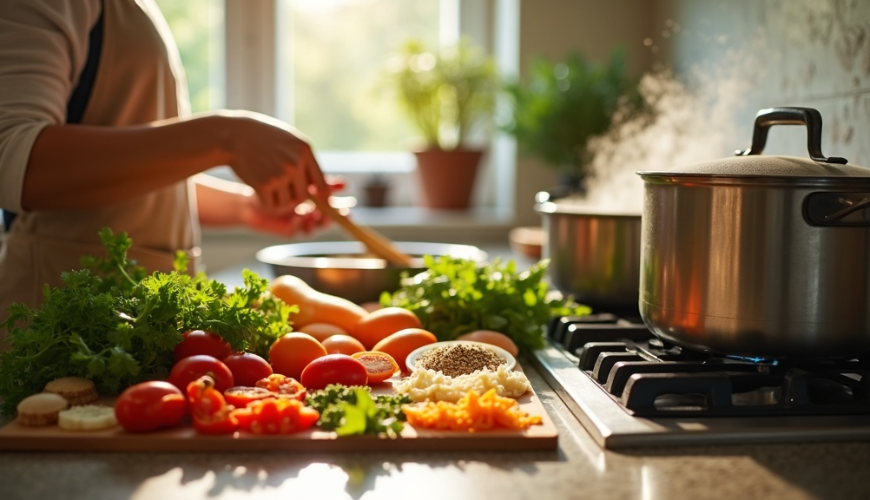
Spring can surprise a person. In the morning, it's still cold; by the afternoon, the sun makes you put away your coat, and by evening, a cup of tea is welcome again. Similarly, the appetite often behaves erratically: after winter, you're drawn to something lighter and fresher, yet the body doesn't want to completely give up warm foods that soothe and satisfy. No wonder the question "warm versus cold foods in spring – what's better?" returns every spring, along with the practical dilemma of whether to eat more warm or cold foods in spring to keep energy stable, digestion comfortable, and the mind clear.
The answer isn't one-worded because "better" changes according to weather, time of day, activity level, and how one feels after winter. Spring is a transitional period, and transitions usually favor flexibility over extremes. Instead of strict rules, a simple logic works better: warm up when the body is chilled or tired, and lighten and refresh when the sun and longer days call for lightness. Additionally, many people experience fluctuating energy levels in spring, and food can pleasantly balance this "oscillating mode."
Try our natural products





Warm versus Cold Foods in Spring: Why It Matters
Warm food has a significant advantage: it's often easier to digest because it's soft, heated, and typically contains liquid (soups, porridge, steamed vegetables). Cold foods, on the other hand, score points for freshness, crunchiness, and quick preparation – a salad or cottage cheese with fruit is ready in minutes. However, in spring, variable weather comes into play, along with the fact that digestion isn't fully "up to speed" after winter. Some feel heavier, others constantly hungry, and some alternate between the two.
When discussing how to eat in spring for energy, one often forgets one thing: energy isn't just "how many calories," but also how one feels after eating. There's a difference between feeling sleepy and needing coffee after lunch or feeling pleasantly full and wanting to go for a walk. The temperature and composition of food significantly influence this.
There's no universal ban on cold or requirement for warm foods. It's more about context. If it's ten degrees outside, windy, and someone returns from a walk feeling frozen, a large cold salad can act as a "brake." Conversely, in warm afternoons, when lighter jackets are worn, a heavy winter dinner can be unnecessarily burdensome. Spring simply favors alternation – and smart timing.
For those seeking authoritative sources on this topic, it's worth reading about the principles of a healthy plate and meal composition on Harvard T.H. Chan School of Public Health – The Nutrition Source or practical dietary recommendations from the World Health Organization (WHO). They don't address "warm versus cold" as a fashion trend but explain well why balance, fiber, quality proteins, and fats are crucial – things that stabilize energy regardless of the season.
When Warm Food Makes Sense in Spring (and When Cold Does)
Spring is characterized by the body's attempt to switch from "winter mode" to a lighter, more active one. Mornings, however, remain chilly, and the body appreciates something that starts it without shock. Thus, warm breakfasts prove more beneficial in spring than one might think – and it's not just about tradition.
Warm food is especially suitable:
- when it's cold in the morning or evening,
- when recovering from illness, feeling tired, or chilled,
- when digestion protests (bloating, heaviness),
- when longer-lasting satiety is needed.
A typical example is oatmeal – it doesn't need to be cooked into "baby porridge." Simply briefly cook or scald oats, add apple, cinnamon, nuts, and a spoonful of seeds. The result is simple, cheap, and keeps energy stable. Similarly, rice or buckwheat porridge with fruit, or a savory variant with egg and vegetables, works well.
On the other hand, cold foods naturally make their way back onto the plate in spring with the first fresh leaves, radishes, and herbs. Cold food makes sense:
- when it warms up and the body desires lightness,
- after exercise (combined with protein),
- as a quick snack,
- when needing to increase vegetable intake and hydration.
Be cautious of the common spring scenario: someone wants to "eat lightly," has a large cold salad without protein or fats, and an hour later is hungry and craving sweets. Not because the salad was wrong, but because it lacked a building component. Simply add legumes, eggs, fish, tofu, quality cheese, or a handful of nuts or olive oil dressing. Suddenly, from "light vegetables," you have a full meal that sustains you.
A nice "bridge" between warm and cold are lukewarm meals: warm grains (bulgur, quinoa, buckwheat) with fresh vegetables, herbs, and a simple dressing. Lukewarm dishes are often the most pleasant in spring – they're neither winter hot nor an icy shock.
How to Eat in Spring for Energy: Less Extremes, More Rhythm
Spring energy is peculiar. Days are longer, one wants to accomplish more, but the body sometimes acts like it doesn't want to yet. Here, a simple rhythm helps: warm and stabilize in the morning, have a good lunch at noon, and lighten in the evening – but don't starve.
In the morning, it's good to remember that energy levels also depend on how quickly blood sugar spikes. Sweet pastries or just fruit may appear "spring-light" at first glance, but often lead to a crash two hours later. Therefore, it's wise to base breakfast on the trio: complex carbohydrates + protein + fat. Temperature is the second step – and in spring, warm or lukewarm usually wins.
At noon, a full-fledged lunch that is neither "winter-heavy" nor merely symbolic is beneficial. If one is active and working, the body needs fuel. Soups work great, which can be complemented with a piece of bread or grains, and bowl-type meals: a base of grains, protein, and vegetables. In the evening, something simpler often suffices – like a vegetable cream, omelet, cottage cheese spread with sourdough bread, or a salad, but with something filling.
Spring also includes spring cleansing, but the word "cleansing" is often confused with drastic restriction. However, a gentle adjustment is much more practical: more vegetables, more fiber, fewer ultra-processed foods, sufficient fluids, and regular exercise. As one often-quoted sentence, which appears in various forms in expert longevity texts, states: "It's not about perfection, but about what is eaten repeatedly." And spring is the perfect time to start repeating things that give energy, not guilt.
In real life, it might look like this: in the office, "quick" lunch discussions resume after winter. One day, a cold store-bought salad – just leaves, corn, a bit of dressing – is on the table. Good for the first hour, but by the second hour, the drawer with cookies opens. But if similar salads are supplemented with chickpeas, a few spoons of cooked quinoa, and an olive oil and lemon dressing, hunger calms, and the afternoon can be managed without sugary patches. It's not magic, just practical composition.
And one more thing: spring is a time when many people try to "lighten up" in drinking too. But coffee and sweet sodas don't solve hydration. Water, unsweetened teas, and even broths or soups remain the foundation. Hydration also affects appetite: when the body is dehydrated, it often craves quick energy, meaning sweets.
Tips for Specific Foods That Work in Spring (Warm, Cold, and "In Between")
To make it clear how to implement this in the kitchen, here are a few specific ideas that match what spring brings: changing temperatures, a desire for fresh things, and the need for stable energy. The following tips can be mixed and matched depending on whether it's more "coat" or "sweater" weather outside.
- Warm breakfast: oatmeal with apple, cinnamon, and nuts; or savory buckwheat porridge with egg and spinach
- Spring soup: vegetable cream (broccoli, peas, cauliflower) topped with seeds; or miso soup with vegetables and tofu
- Lukewarm salad: roasted root vegetables (carrot, beetroot) with arugula, goat cheese, and nuts; or quinoa with herbs, cucumber, and chickpeas
- Quick cold snack: plain yogurt or kefir with fruit and seeds; hummus with crunchy vegetables and a piece of quality bread
- Light dinner: omelet with vegetables, herbs, and salad; or cottage cheese spread with radishes and chives
Notice that even "cold" tips always contain something that maintains energy: protein (yogurt, legumes) and often fat (seeds, olive oil, nuts). This is crucial in spring because the body likes to move into activity, but without stable fuel, it starts to slow down.
Returning to the question of whether to eat more warm or cold foods in spring, the practical answer is: ideally both, just wisely. Warm or lukewarm food often does well in the morning and evening, and freshness and crunchiness can be added at noon. And if a spring day comes with sunshine but a chilly wind, it's perfectly okay to have a salad – just build it to be substantial, not "just green."
Ultimately, spring isn't about who wins the warm versus cold battle, but about how lighter seasonality meets a feeling of safe satiety on the plate. And that's a combination that can be fine-tuned without stress: sometimes with soup, sometimes with a lukewarm grain bowl, or sometimes with plain yogurt and seeds. Just pay attention to whether the food leaves energy – or just more hunger.