
Where to Start Spring Cleaning So the Work Quickly Decreases and the Home Breathes Again
Spring has a unique ability to reveal what can easily be overlooked in winter. Suddenly, there's a fine film of dust on the windows, remnants of de-icing salt hold fast in the hallway, and tiny "winter" deposits appear in the corners of rooms, simply because there was more heating, less ventilation, and more living at home. So every year, the same question returns: where to start the spring cleaning to avoid ending up exhausted in the middle of the apartment, feeling like the work is piling up faster than it's disappearing?
Spring cleaning often feels like a big project, but in reality, it's more about smartly resetting the household after the winter. It's not about chasing perfection; it's about making the apartment or house breathe again, easier to maintain, and a place where one feels lighter. When combined with a desire for a more considerate approach, another question arises: how to prepare the household for spring after winter without compromising health, nature, or time? The good news is that it can be done simply—with a few principles, a little planning, and the help of natural cleaning, which doesn't burden the air at home or the water in the drain.
Try our natural products
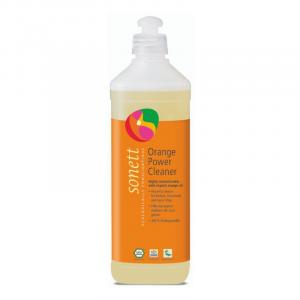
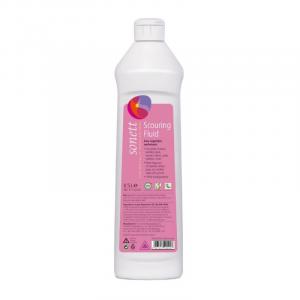
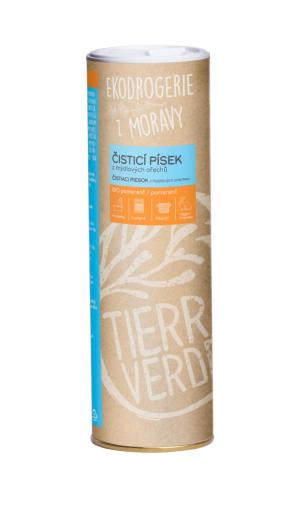
What to clean first to make cleaning make sense
Spring cleaning often stalls because it starts "somewhere"—like in the bathroom—and gradually more and more tasks are added, turning into chaos. But when considering what to clean first at home before spring cleaning, the answer is surprisingly practical: it's worth starting with what affects the rest of the household. That is, dust, air, and places that touch everyday operations.
Start from top to bottom and from "dry" to "wet". First, remove dust from the upper surfaces (light fixtures, shelves, tops of cabinets), then the textiles that hold dust (curtains, blankets, pillows), and only then deal with floors and wet cleaning. This method isn't about being pedantic—it's just plain logic. If you mop first and then shake dust off the curtains, you're essentially doing the work twice.
A quick "starter" declutter that opens up space helps a lot. Typically, this involves the hallway and kitchen counter. The hallway is often full of small items after winter—gloves, scarves, hand creams, impregnations, and especially shoes that were alternated according to the weather. Once the hallway is simplified, the household seems tidier just by entering a clean space. The kitchen sets the rhythm of the day; when the counter and sink are clean, everything else is suddenly easier to manage.
In practice, it might look like this: quickly air out, remove textiles for washing, wipe dust from visible areas, and free up work surfaces. Only then does it make sense to go into detail. "Cleaning isn't about doing everything at once, but about doing the right thing in the right order," says a frequently repeated piece of advice among people who keep their homes orderly without unnecessary stress—and this is doubly true in spring.
For those who want to approach cleaning more healthily, recommendations on indoor air quality can be inspiring—for example, the World Health Organization (WHO) highlights that indoor air affects health more than we often admit. And spring is the perfect time for a "restart": less dust, fewer irritating scents from harsh cleaners, more fresh air.
How to prepare the household for spring after winter—without unnecessary toil
Winter leaves several typical traces at home. The air tends to be drier and heavier, dust clings to radiators and around windows, and a fine gray film from more frequent shoe wear or brought-in dirt settles on the floor. In the bathroom and kitchen, limescale often becomes apparent because water is heated more and more showers are taken in winter. Then there are the "invisible" things: overfilled closets, drawers where small items accumulate, and food supplies bought for reserves in winter.
Preparing the household for spring isn't just about scrubbing. It's a combination of three steps: lighten, air out, clean. Lightening means sorting out what no longer makes sense to keep at home—clothing that wasn't worn all season, expired cosmetics, old sponges and cloths, empty containers that "might come in handy someday." Airing out isn't just opening a window for five minutes but ideally a draft for a short time and regularly, to exchange air without unnecessary cooling. And cleaning then becomes much easier because it's done around things that actually remain.
A simple plan helps, answering the question of where to start spring cleaning in a specific household. Not according to an ideal list from the internet, but according to what's most "felt"—somewhere it's the windows, elsewhere the kitchen, somewhere else the textiles. Surprisingly effective is starting with what brings a quick visual effect: clean windows and light in the rooms often create the impression that more has been cleaned than actually accomplished.
And now an example from everyday life, familiar to almost everyone living in a city: a family in an apartment by a busy road postpones window washing "until spring." But once they start, they find that it's not just about the glass—the frames, sills, blinds, and there's a layer of dust behind the radiator. When done in the right order, it's not endless work: first vacuum around the windows and radiator (even with a narrow attachment), then wipe the frames and sills, and finally wash the glass. The result? More light in the room and a desire to continue. This is precisely the moment when spring cleaning stops being a punishment and becomes a small transformation of the home.
Those who want to go a step further can remind themselves that the "spring" feeling often comes from changing textiles. Washing curtains, airing duvets, rotating the mattress, cleaning sofa covers—these are things that aren't immediately visible but have a big impact on how it feels to breathe and sleep at home. And here, a more gentle approach is suitable: instead of strongly scented agents, opt for gentle, eco-friendly detergents or soap-based products that don't irritate the skin or nose.
Tips and tricks for natural spring cleaning that work
Natural cleaning isn't nostalgia or a fad. It's a practical way to clean without unnecessary chemical burden—and often more cheaply and with less packaging. Moreover, spring is a time when more airing is done, so the household can be "retuned" to products that don't leave a heavy perfume cloud in the air.
The basic principle is simple: for most common dirt, a few proven helpers suffice. Typically, this involves an acidic component for limescale (such as citric acid or vinegar), a mild abrasive for burnt-on and stubborn dirt (like baking soda), and a quality soap or surfactant product for grease (a gentle dish soap or universal cleaner). It's important not to overdo it by "mixing everything with everything"—for instance, combining vinegar and baking soda fizzes impressively, but the acid and base neutralize each other, resulting in less cleaning effect than expected.
A big spring topic is limescale in the bathroom and kitchen. Here, natural cleaning shines: citric acid dissolved in water (in a reasonable concentration) helps on faucets, shower enclosures, and kettles. The advantage is that it doesn't leave aggressive fumes, and with proper use, it's gentle. On more sensitive surfaces—like natural stone such as marble—caution is needed because acids can etch the surface. When unsure, a test on an inconspicuous spot is worthwhile.
Another spring chapter is kitchen grease, which likes to settle over winter on upper cabinets, extractor hoods, or tiles. Here, warm water, time, and a good degreaser help—often, a soap cleaner or dish soap in warm water, plus a microfiber cloth, suffices. When grease isn't immediately attacked "with force" but allowed to soften for a while, it comes off much easier, without scraping.
And what about floors? Spring is the perfect time to return to simplicity: vacuum, mop with just a slightly damp mop, and avoid over-saturating with scents. For wooden floors, less water and a gentle wood-specific cleaner are better. For tiles, warm water and a mild universal cleaner work well. The fewer unnecessary layers left on the floor, the less dust will cling to it.
When seeking truly usable tips and tricks for natural spring cleaning, a few small things that save effort and time prove most effective. They fit into one list—and often, this is more valuable than ten different guides:
- Let the product work: whether it's a soap cleaner for the kitchen or citric acid for limescale, a few minutes of action does more than pressure and scrubbing.
- Work with microfiber and the right cloth: glass and mirrors often streak unnecessarily due to unsuitable textiles, not because of a "bad" product.
- Clean in the direction of the light: with windows, mirrors, and shiny surfaces, every mark shows; when cleaning during the day and checking with reflections, it's done faster.
- Replace small items that spoil the impression: a new sponge, a washed bathroom mat, a cleaned drain, or a residue-free bin often make a bigger difference than a thorough cleaning of drawers.
- Fewer products, more regularity: a few proven products of good quality are better than a cupboard full of bottles used once a year.
The credibility of natural cleaning is also supported by the fact that it's not an "alternative without rules." For instance, the European Chemicals Agency (ECHA) long provides information on chemicals and their safe use. Even though the average person won't read databases, the very idea is clear: it's sensible to limit unnecessarily harsh or strongly scented mixtures at home, especially where eating, sleeping, and children's play occur.
Spring cleaning also has a subtle aspect: what goes down the drain. When using gentler products, not only does it relieve the nose and skin, but also the water flowing from the household. And those who want to take a truly sustainable path can opt for concentrated eco-cleaners, refillable options in their own bottles, or biodegradable products when restocking. This gradually reduces the amount of plastics and the "chemical cocktail" that commonly resides at home.
Perhaps this is the greatest magic of spring cleaning: it's not just a task to be checked off. It's an opportunity to reset what has a place at home and what doesn't, what's pleasant to touch and look at, and what can be done more simply. And when one next wonders what to clean first and how to start spring cleaning, often it's enough to open the window, let in the light, and start with what influences the entire rest—air, dust, and everyday places that make a house a home.