

Homeopathic remedies that people buy in pharmacies raise the question of whether they really work
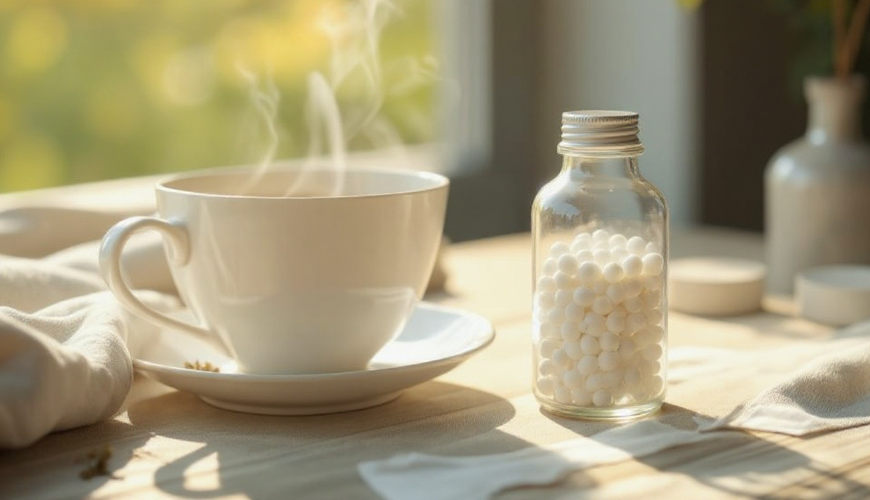
Homeopathy is one of those topics that can divide a family dinner faster than a debate about politics. Some swear by it, while others consider it to be expensive sugar pills without any effect. Yet, a surprisingly large number of people in the Czech Republic encounter it—in pharmacies, through recommendations from acquaintances, and in discussions among parents looking for gentler solutions when their children are troubled by a cold, cough, or tummy ache. So, what exactly is homeopathy, when and how is it used, and most importantly: do homeopathic treatments work, and if so, how? And does homeopathic treatment make sense in today's world?
Try our natural products

What Are Homeopathics and Where Did Their Popularity Come From
When you hear “homeopathy,” most people think of small white pellets in a tube. But what are homeopathic treatments really? They are preparations made according to the principles of homeopathy, a system formulated by German physician Samuel Hahnemann at the turn of the 18th and 19th centuries. The basic idea is simple and memorable: “like cures like” (in Latin, similia similibus curentur). This means that a substance that causes certain symptoms in a healthy person is believed to help treat similar symptoms in a sick person when used in extremely diluted form.
Homeopathy also stands on a second, equally important pillar: repeated dilution and so-called dynamization (shaking). In practice, this means that the starting material (of plant, mineral, or animal origin) is diluted in steps so that the resulting solution may contain only trace amounts of the original substance—and many commonly sold homeopathics probably do not contain even a single molecule of the original substance. Does that sound paradoxical? This is where the biggest controversy begins: homeopathy claims that the effect does not lie in the chemical amount of the substance, but in some “information” carried by the carrier (such as sugar or water). Science, on the other hand, argues that without an active substance, there is nothing physiologically acting and that the concept of “water memory” lacks a reliable basis.
It is also good to know that homeopathics in the European context fall into a special category of medicinal products. They are registered, but their registration usually does not mean the same as for standard drugs, where efficacy is typically demonstrated in studies. In the Czech environment, it is useful to look into the overviews published by the State Institute for Drug Control (SÚKL)—if only to clarify how the requirements for different types of preparations differ in practice.
The popularity of homeopathy is often explained by the fact that it offers an understandable story, a gentle approach, and a strong emphasis on individuality. At a time when people are seeking a gentler lifestyle, a more ecological household, and a generally more sustainable approach to themselves and their surroundings, a part of the public naturally turns to “softer” alternatives. However, homeopathics and everything about them are not just about a feeling—when it comes to health topics, it makes sense to stick to facts, context, and safety.
When and How to Use Homeopathics: Rules, Expectations, and Common Practice
The question of “when and how to use homeopathics” has two aspects: how homeopaths describe it and how people actually do it at home. In homeopathic theory, there is so-called “constitutional” treatment, where the overall condition of the person is extensively mapped—temperament, sleep, cravings, stress reactions, recurring issues—and a “tailored” remedy is chosen. Alongside this is so-called acute homeopathy, which people often practice on their own: for colds, injuries, coughs, stress before exams.
In real life, it might look like this: a family gets caught in the “carousel” of winter viruses. Parents try common prevention (ventilating, humidifying the air, ensuring sufficient fluids and rest), but they also want something the children can take without protest. A suggestion for homeopathy might come up at the pharmacy. Children usually have no trouble taking it—it tastes sweet, dosing is simple, and psychologically it feels like “something is being done.” And that is an important moment: even if the efficacy of homeopathics is questioned, the care ritual and attention given to the sick can genuinely improve the experience of the illness.
How are homeopathics most commonly used? Typically in the form of granules (pellets), tablets, drops, or ointments. In homeopathic recommendations, it’s often mentioned that you shouldn’t touch the granules with your hands (to avoid “contamination”), that they should dissolve in the mouth, and that they should be taken away from meals, coffee, menthol, or strong aromas. From the perspective of conventional medicine, these are more traditional rules of the method rather than proven necessities.
It’s fair to add a practical note: if people use homeopathics as a supplement for mild and self-limiting issues (typically common viral infections), usually nothing dramatic happens. The problem arises when homeopathic treatment is used as a substitute for effective therapy for more serious conditions or when it delays seeing a doctor.
When to Pay Attention and Not Wait for “It to Work”
Homeopathics are often associated with the notion that “they can’t harm.” However, the risk often doesn’t lie in the pellets themselves but in what isn’t done because of them. If symptoms are worsening, lasting a long time, or warning signs appear (shortness of breath, high fever in small children, signs of dehydration, blood in stool, severe pain, neurological symptoms), it is safer not to rely on an alternative.
In this context, it’s worth reminding broader consensus from professional institutions. For instance, the British NHS states that there is no convincing evidence of the efficacy of homeopathy beyond placebo. Similar statements are made by other authoritative sources and professional societies in various countries.
Do Homeopathics Work—and How? What Studies, Placebo, and People’s Experiences Say
Here lies the core of the controversy: do homeopathics work and how? Science views efficacy primarily through the lens of clinical studies and biological plausibility. Homeopathy faces challenges on both fronts. Firstly, it is difficult to explain the mechanism of action at high dilutions (typically beyond the threshold where no molecule of the original substance probably remains). Secondly, when quality reviews of studies are conducted, the results usually show that homeopathy doesn’t work better than a placebo, or that positive results are associated with methodological weaknesses.
For orientation, one can refer to reviews like those in Cochrane (an internationally respected database of systematic reviews). Cochrane covers many medical areas and generally demands high standards of evidence. In various indications, it repeatedly shows that if weak studies are filtered out, the effect of homeopathics diminishes or disappears.
And yet: many people will say that homeopathics helped them. How is that possible?
One explanation is the placebo effect—and this is not an insult or “imagining things.” Placebo is a real psychobiological phenomenon: expectations of improvement, a sense of safety, attention, and care can influence pain perception, stress response, and some symptoms. Also, many issues for which people take homeopathics have a natural course: a cold usually resolves on its own, minor pains fluctuate, rashes improve after removing irritants. If homeopathics are administered at that moment, it’s easy to attribute a clear cause and effect.
Another explanation lies in the fact that a homeopathic consultation is often long and detailed. The person has space to describe what is happening, and someone listens. This, in itself, can be healing. As it is sometimes said: “Not every relief must come from a pill—sometimes it comes from finally being heard.” And this might be the most important part of the whole debate because it shows that the demand for homeopathy often reflects a demand for accessible, humane, and patient care.
Does Homeopathic Treatment Make Sense When Efficacy Is Not Proven?
The question “does homeopathic treatment make sense” doesn’t have a universal answer, as it depends on what one considers “sense” to mean. If it’s about demonstrable specific effects beyond placebo, then the answer, according to current knowledge, is rather skeptical. However, if someone is looking for a supplementary care ritual for mild issues that calms them, helps them slow down, and maintain a regimen (rest, hydration, sleep), then one could say that it might have a certain “sense”—but under clear conditions.
A sensible framework looks something like this: homeopathics are not a substitute for vaccinations, antibiotics where they are truly indicated, or the treatment of chronic or acute serious diseases. They can at most be a supplement that motivates a person towards a gentler regimen and does not prevent them from seeking professional help when needed.
It’s also good to remember that “natural” does not automatically mean safe—and while with homeopathics there is often the argument of minimal active substance, exceptions do exist (e.g., poor manufacturing, inappropriate use, or risk in specific groups). And most importantly: the greatest risk is delaying effective treatment.
If homeopathics are purchased, it makes sense to consider the economic aspect as well. People often aim for a sustainable lifestyle and think about what to spend on. It’s fair to ask a rhetorical question: if a household invests in health, wouldn’t quality sleep, a varied diet, exercise, mental well-being, and prevention bring more benefit than another tube of granules?
A Simple Example from Everyday Life
Imagine a situation familiar to many households: a child comes home from school tired, with a scratchy throat, and by evening, a cold develops. Parents are faced with a choice—immediately “administer something” or wait. When they opt for homeopathics, they often simultaneously do several other things: brew tea, remind about hydration, give an earlier bath, ventilate, dim the evening program, and the child goes to bed earlier. The next day is often better. Was it due to the homeopathics? Or was it more likely a combination of rest, fluids, and the body having space to fight? In real life, it’s hard to separate—and that’s why it’s so easy to attribute the effect to what was “extra” and symbolized treatment.
How to Think About Homeopathy Rationally and Without Unnecessary Conflicts
The debate about homeopathy often becomes unnecessarily heated. Yet, it can be conducted more calmly: acknowledging that people have their experiences while not losing sight of what the data says. It’s practical to view homeopathics as something that can have a subjective benefit (a sense of care, calming, placebo effect), but that should not replace medicine where there is demonstrable risk or where effective treatment exists.
Anyone wanting to be clear on the topic can gradually go through several simple guiding questions: Is this problem serious or worsening? Isn’t it better to first adjust the regimen and give the body time? Is an examination being postponed? And is the person prepared to accept that what helped might have been the natural course of the illness?
Homeopathics remain part of the market and home medicine cabinets and are unlikely to disappear anytime soon. Perhaps because they carry the promise of simplicity at a time when health is a complex topic and everyone would most prefer to find a gentle, quick, and risk-free path. Yet, when it comes to health, it pays to rely on verified information, not succumb to shortcuts, and have trustworthy sources at hand—be it SÚKL for orientation in medicines or the positions of institutions like the NHS, which summarize what has been (and hasn’t been) proven regarding homeopathy.
And if a reasonable compromise is sought somewhere in all this, it often looks surprisingly simple: take care of oneself and the household so that the body is not unnecessarily burdened, choose gentle habits, do not underestimate prevention, and take homeopathics—if at all—as a supplement that should not stand in the way of real help when needed.