

How to Clean a Glass-Ceramic Cooktop to Keep It Shiny Without Scratching It
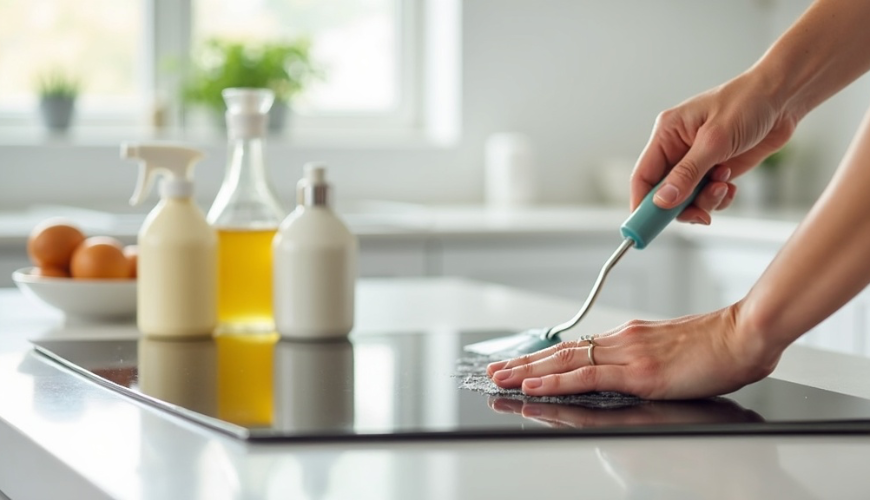
The glass-ceramic stove top is one of those inventions that almost goes unnoticed in the kitchen—until the first burnt stain appears. Suddenly, everything becomes visible: the drop of milk that overflowed, the greasy film from frying, and crumbs that look like a major disaster on the glossy surface. And because glass-ceramic often dominates the kitchen counter, people naturally want it to look clean. But how to clean a glass-ceramic stove top quickly, effectively, and gently at the same time? And most importantly: how and with what to safely clean a glass-ceramic stove top without scratching or dulling it?
The good news is that it usually isn’t a question of "scrubbing harder," but rather choosing the right method, letting the cleaner work for a while, and avoiding a few bad habits passed down from generation to generation. These little things often determine whether the stove top will look like new or gradually become covered with smudges and micro-scratches that can’t be undone.
How to Clean a Glass-Ceramic Stove Top Without Scratches and Stress
The basic rule is simple: glass-ceramic may seem durable, but its surface is sensitive to abrasive powders, scouring pads, and clumsy scraping with a knife. Most everyday messes come off much more gently than people think.
First, it’s good to clarify when to clean. For common dirt (grease, fingerprints, dried drops), it's worth waiting until the stove top cools down. For sweet and sticky spills—typically melted sugar, caramel, syrup, or jam—it’s better to act as soon as possible, while the surface is still warm (not so hot as to risk burning). Sweet residues can literally stick to the glass-ceramic and are harder to clean over time.
In practice, this gentle yet reliable method proves effective: first, wipe off loose crumbs and dust with a soft cloth, then apply a small amount of suitable cleaner and let it work for a while. Then comes wiping—ideally with microfiber or a soft sponge without a rough layer. Sometimes warm water with a drop of gentle dish soap is enough; other times, a specialized glass-ceramic cleaner is needed, which also helps with shine.
For those who want to be really sure they’re cleaning safely, following the recommendations of appliance manufacturers can be helpful. For example, BSH (Bosch/Siemens) commonly recommends using a glass-ceramic scraper for burnt-on residues and avoiding abrasives; similar advice is given by other brands. They generally agree that the right tool is half the battle.
"The best cleaning is the one that doesn’t damage the surface—and yet leaves it spotless."
It sounds like a cliché, but "spotless" is crucial for glass-ceramic: smudges are much more visible on it than on a traditional stove.
The Most Effective Tips for Cleaning a Glass-Ceramic Stove Top That Make Sense in Everyday Life
When "the most effective tips for cleaning a glass-ceramic stove top" are mentioned, many people expect a miraculous trick. Often, though, it’s more about a combination of small habits that can be done even on a weekday when there’s no time for a big clean-up.
One of the most practical tips is to reset your mind to understand that glass-ceramic isn’t cleaned with force, but with process: soften – loosen – wipe – polish. Softening is done by time and the right product, loosening by the right tool (often a scraper), wiping with a soft cloth, and polishing with a dry microfiber.
It also helps what happens before the actual cleaning: cooking with a lid, watching for overflows, and occasionally wiping the edge of the pot so grease doesn’t drip down. It may sound like a detail, but it’s precisely the edges of the cookware that create that typical gray film on the stove top, which then causes smudges.
For those with harder water at home, another chapter is known: limescale marks. On a black surface, they can appear as "dirt that won’t come off," but often it’s just a mineral deposit. A mildly acidic helper—such as a solution with a bit of vinegar or citric acid—usually helps, but it’s important to proceed gently and then wipe everything well with clean water to avoid leaving marks.
And then there are burnt-on residues. These are often handled poorly because people panic and grab the first rough thing that comes to hand. Yet there’s a more elegant way: a glass-ceramic scraper with a sharp blade (designed specifically for this surface) can remove the burnt residue in one or two strokes without unnecessary scrubbing. It’s important to hold it at a low angle and not press. If the surface is dry, it can be slightly moistened or a bit of cleaning product used before scraping to make the scraper glide.
A real-life situation helps to illustrate: in a typical household, pasta is often cooked, and as soon as the water starts foaming, a second of inattention is enough. Milk or starchy water overflows, sizzles on the hot burner, and creates a white crust. Many people leave it "for later," but then it becomes a hard edge that invites scrubbing. However, if the stove top is allowed to cool down, a gentle cleaner is applied, and a scraper is used after a few minutes, it comes off surprisingly easily. Finally, just swipe with microfiber and add a dry polish. The result looks almost as if nothing happened—and that’s exactly the type of victory one appreciates in the kitchen.
When it comes to products, it pays to stick to a few principles. Powdered cleansers and "universal" abrasive pastes can leave micro-scratches that eventually show as dull spots. Similarly, the rough side of a sponge is a frequent silent enemy for glass-ceramic. On the contrary, products specifically designed for glass-ceramic stove tops work well, as do gentle versions of ecological cleaners that don’t leave aggressive residues.
And what about popular baking soda? It’s popular in households, but it’s good to handle it carefully. Baking soda is mildly abrasive, so if used as a thick paste and applied with pressure, it can gradually dull the surface. If used, it should be in a very gentle concentration, without pressure, and only locally. It’s safer to opt for a product developed for glass-ceramic, which is designed not to leave marks.
How and With What to Safely Clean a Glass-Ceramic Stove Top: A Gentle Routine That Works Long-Term
Safe cleaning of a glass-ceramic stove top is really about a long-term relationship: the less stress the surface endures, the longer it remains smooth, shiny, and easy to maintain. This is useful not only aesthetically but also practically—a smooth surface cleans faster, and dirt doesn’t "bite" into it as much.
It starts with what you clean with. Ideally, have just a few things on hand: a soft sponge, microfiber cloth, paper towel for the first grease wipe, and a glass-ceramic scraper for burnt-on spills. Add a gentle cleaning product. For those who prefer a more ecological household, choose products that are effective but don’t unnecessarily burden the home air or wastewater with aggressive chemicals.
The "finish" is also important. Glass-ceramic often appears clean until light from a window shines on it or one looks from the side—and suddenly smudges are visible. That’s why the last step helps: polish dry. Just a few strokes with a dry microfiber. Sometimes it’s the difference between "tidy" and "truly clean."
Safety also involves what to avoid. When cleaning, it’s better not to use products intended for ovens or strong degreasers, which can be too aggressive for glass-ceramic and leave stains. Similarly, it’s unwise to "experiment" with a scouring pad just because it’s handy. A single shortcut like that can mean a scratch that won’t be buffed out.
Resources worth keeping in mind include consumer and professional organizations. For example, the British organization Which? has long warned that for smooth cooking surfaces, the best combination is a gentle cleaner and suitable scraper, while abrasives and rough tools are a common cause of surface damage (see: https://www.which.co.uk/ – home and kitchen appliances section). Similarly, stove top manufacturers often have recommended procedures and lists of what to avoid on their websites; it’s worth respecting them, as they’re based on testing specific surfaces.
Perhaps the most interesting part of the whole thing is that the right routine also saves time. Those who regularly wipe the glass-ceramic after cooking (even just with a damp cloth, if needed) and give it a thorough clean every few days usually only deal with minor issues. Those who delay it then fight with burnt-on marks once a week and feel like "it can’t be cleaned." It’s not a question of perfectionism, but rather physics: fresh dirt is soft; old dirt is hard.
And what if the stove top is clean but still doesn’t look good? A common reason is a thin film of grease or cleaner residue that wasn’t spread evenly. Then a simple trick helps: wipe the stove top with clean water, dry it, and only then, if necessary, use a small amount of a product designed for glass-ceramic and polish again. Sometimes this removes even "rainbow" reflections that look like damage but are actually just a layer of residues.
When it comes down to it, the question of "how to clean a glass-ceramic stove top" isn’t about finding one magical product. It’s more about giving the surface what it needs: gentleness instead of force, the right tools instead of improvisation, and regularity instead of big scrubbing. In the kitchen, it won’t happen that the shiny stove top becomes a source of stress—instead, it will remain what it should be: a practical place for cooking that can be brought back to form in a few minutes, even when something occasionally burns or overflows. And who wouldn’t want to save one worry in a household where there’s always something to do?