

Home office versus office: What are the advantages and disadvantages of working from home in practic
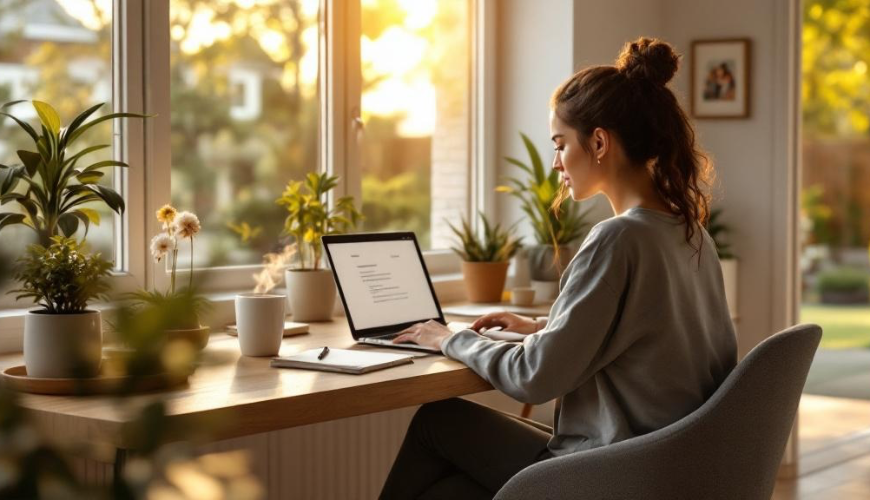
Working from home has transformed over the past few years from an exceptional perk to a common part of professional life. Although it's often talked about as a synonym for freedom, the reality is more nuanced: some people truly thrive in a home environment, while others find after a few weeks that they miss the office rhythm, spontaneous conversations by the coffee machine, and a clear boundary between "now I'm working" and "now I'm off." The debate of home office versus office is therefore not about which is "better," but rather about who is suited to work from home, what the advantages and disadvantages are, and most importantly: how to work effectively from home without burning out or drowning in procrastination.
In the Czech Republic, the framework for remote work is increasingly being addressed—not just culturally, but also legislatively. A basic overview of the obligations and rights surrounding remote work is offered by, for example, the Ministry of Labour and Social Affairs, which is particularly useful when setting up a home office for the long term, not just "on trial." However, there's one thing that no regulation can cover: everyday practice. This starts with small details—where to sit, how to plan the day, what the mind does when the fridge is within reach—and ends with big questions like motivation or a sense of purpose.
Try our natural products






Home Office Versus Office: It's Not Just About the Place, But the Rhythm of the Day
The office has one huge advantage that's hard to describe but easy to recognize: structure. One arrives somewhere, meets colleagues, sits down, starts working, goes to lunch, returns, and when leaving, work usually stays behind the door. In a home environment, boundaries blur. In the morning, just open the laptop in pajamas and "work is already underway." And in the evening? Just one more email, five more minutes, quickly finish a small task... and suddenly that's the new standard.
That's why it's worthwhile to stop thinking of the home office as "work without commuting" and start viewing it as a different way of organizing time and energy. The office naturally supports short interactions, quick questions, and team dynamics. The home office often favors deep focus—if you can create an environment where you're not interrupted every ten minutes.
In practice, differences appear even where you wouldn't expect them. For example, an introvert may be more productive at home because there's less social noise, while an extrovert may feel disconnected, and without regular feedback, their enthusiasm for work may decrease. Some need people around to "get into the swing," while others just need peace, good lighting, and a task list. And then there's a third group: people who find they prefer a hybrid—some days at home, some days in the office, depending on the type of work and current period.
When talking about productivity, one often overlooks an uncomfortable truth: effective work from home isn't automatic. It's not that people don't work at home—they just work differently. Either too much (because they want to prove they're "working hard" from home) or fragmented (because the home offers an endless number of small temptations). Thus, the question of "how to work effectively from home" becomes a very practical discipline.
Advantages and Disadvantages of Working from Home: Freedom, But Also Hidden Costs
Among the most frequently mentioned advantages of working from home is time savings. Commuting can take up an hour or two daily, and when this time is returned to your life, it shows—in sleep, exercise, family, and mental health. Many people also appreciate the ability to better organize their day: take a break when energy wanes and return to work when the mind is fresh. For some professions, the home environment is simply more effective: fewer distractions, more space for concentration, the ability to set the temperature, light, and silence to your liking.
But with advantages come less visible disadvantages. One of them is loneliness and social isolation—not necessarily dramatic, but rather insidious. Days can blend together, communication shrinks to chat and video calls, and after a while, you realize you miss spontaneous humor, facial expressions, and the small human "nothings" that make work more bearable. Another disadvantage is the risk of work spreading throughout the day. Once there is no clear boundary, there's pressure to be available all the time. And that's a path that often ends in exhaustion.
Home infrastructure also plays a role. Some have a study and peace, others share the kitchen table with children, a partner, homework, and a pile of laundry. Working from home then isn't just about discipline but logistics. And sometimes negotiation: who needs silence when, who has which calls, who handles lunch.
Interestingly, some "disadvantages" can be mitigated by changing habits, not necessarily changing nature. For example, fatigue from constant video calls can be limited by clear rules on when a call is necessary and when a short message will suffice. Overload can be curbed by planning the day realistically and with breaks. Fragmentation can be cut by creating simple rituals that naturally arise in the office.
One practical example from real life: a small marketing firm switched to partial home office and quickly realized the problem wasn't productivity but constant switching. People had open chat, email, project tools, and occasionally reacted to small things "just for a moment." The result? By eight in the evening, they felt like they worked all day, but big tasks weren't moving. A simple agreement helped: two hours in the morning and two in the afternoon are "quiet blocks" without the expectation of immediate response. Suddenly, calm returned, along with the feeling that work has a beginning and an end. It's not magic—just a reminder that effective home office often consists of small rules that protect attention.
And when it comes to attention, it's worth recalling a frequently quoted thought:
"What you protect, grows; what you leave to chance, falls apart."
In the context of working from home, this is doubly true: protected attention grows into quality work, unprotected attention falls apart into hundreds of small interruptions.
How to Work Effectively from Home: Motivation, Environment, and a Few Simple Rules
The biggest myth of the home office is that all you need is a laptop and an internet connection. In reality, the key is the environment—not just physical, but mental as well. Motivation isn't a permanent state, but rather a fluctuating resource that can be supported or depleted. And the home environment is relentless in this: when everything is "within reach," the brain will choose what's easy, pleasant, and quickly rewarding.
It starts with the place. Ideally, you should have at least a small corner dedicated primarily to work. It doesn't have to be a separate room—sometimes a table by the window and a clear agreement with the household that certain hours are a work zone will suffice. Ergonomics are important too: chair, monitor height, lighting. When the body suffers, the mind focuses worse, and fatigue comes faster. And fatigue is often a hidden reason for procrastination—you think you "lack willpower," but in reality, you're just overburdened or uncomfortably twisted.
Then there's the rhythm of the day. Many people find it helpful to start "like going to work": change clothes, ventilate, take a short walk around the block, and only then sit down to tasks. It sounds trivial, but these rituals create a psychological transition between home and work. Equally important is the end ritual: tidy up the desk, note what will be tomorrow, close the laptop. Without this, the brain feels like it's always on alert.
And what about efficiency? A simple rule often works: tackle hard tasks first, then the easy ones. In the morning (or when you're at your best), it's worth tackling the task that requires the most concentration. Emails and operations can be moved to a time when energy naturally wanes. The home environment tends to lead you to start with small things—and those can eat up the whole day.
A big topic is communication. In the office, many things are resolved "incidentally," but at home, you need to be a bit clearer. Writing briefly, specifically, and arranging in advance when things are discussed helps. Not just for productivity, but also for mental well-being: when it's clear that a response doesn't have to come within two minutes, tension decreases on both sides.
And now for the most practical part: tips and tricks for an effective home office that can be implemented without major investments and often bring quick relief.
Tips and Tricks for Effective Home Office That Make Sense Even in a Regular Apartment
- Set a fixed start and end of work (even "just" in the calendar) and take it as seriously as in the office. When time has no boundaries, it starts to fall apart.
- Work in distraction-free blocks and take short breaks in between. No one can completely avoid distractions at home, but you can stop opening the door to them repeatedly.
- Have one list of priorities for the day (three main tasks are often enough) and don't get carried away by the feeling that productivity means having "checked off" twenty small things.
- Reduce visual chaos in the work corner—piles of papers, open boxes, or a cluttered desk can surprisingly increase internal unrest.
- Plan movement just like a meeting. A short walk after lunch can sometimes do more than another coffee because it resets attention.
- Agree with the household on signals (headphones, closed doors, a sign) to avoid having to explain every few minutes that "I'm really working now."
Into all this, another subject subtly sneaks in, which sometimes gets lost in productivity debates: the quality of the environment and habits outside of work. When working from home long-term, it becomes more important what kind of household you actually live in. Ventilation, clean air, moderate noise, light, but also what you use for cleaning at home or what materials you wear when spending all day in them. Not because it "increases performance" by itself, but because it reduces small everyday discomforts and supports the feeling that home is a place where you can function long-term. Anyone who has ever spent eight hours in a room that's overheated and unventilated knows how quickly work becomes a battle with fatigue.
The crucial question, however, remains: who is working from home suitable for? Usually for those who have at least a basic option to create a quiet work corner, can manage their time, and don't mind that a large part of communication is planned, not spontaneous. It's also suitable for professions where independent work prevails and outputs can be measured by results, not by "sitting at a desk." On the other hand, it's more challenging for people who are at the start of their careers and learn by observation, or for those who need frequent team contact to stay in pace. And obviously, for households with little space and a lot of activity, a full home office can be more stress than a benefit.
When all is said and done, the dilemma of "office or home" often resolves itself when it's no longer treated as an ideology. Sometimes the office is the best tool for collaboration and quick decision-making, other times home is the best tool for focus and deep work. And sometimes a small change—clearer rules, a better rhythm, a bit of consideration for one's energy—can turn a home workday into a normal, sustainable day, after which there's energy left for life. After all, isn't that what matters most?