

Chronotype and your body determines your daily rhythm
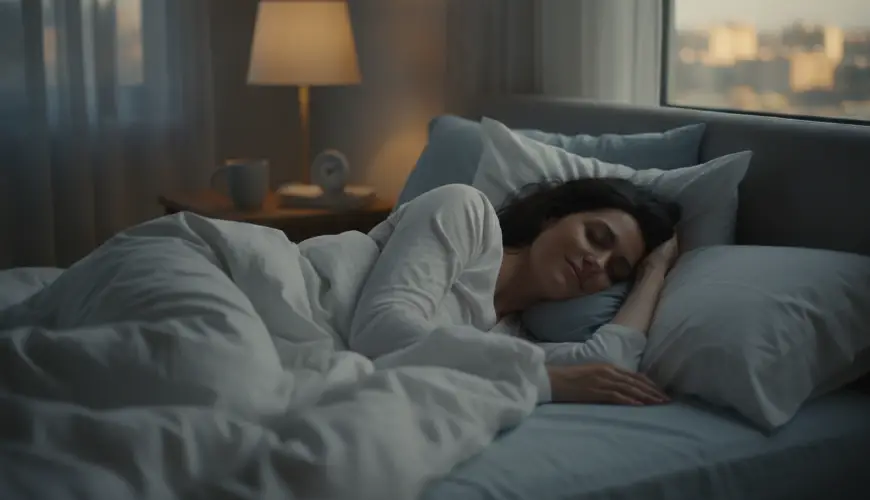
The alarm goes off at six in the morning. One woman jumps out of bed full of energy, makes herself a coffee, and by eight she's managed a jog, breakfast, and reading the newspaper. The other rolls over to her other side, hits snooze for the third time, and only starts slowly functioning around nine. She isn't lazy. She isn't unmotivated. Her brain and body simply run on a different biological clock – and the culprit is something scientists call a chronotype.
The topic of chronotypes has been gaining increasing public awareness in recent years, and for good reason. A growing body of research shows that our natural sleep-wake rhythm is not a matter of willpower or habit – it is deeply encoded in our biology, genetics, and even our sex. And yet society continues to reward early rising as a virtue and perceives night owls as lazy or undisciplined. But is that really fair?
Try our natural products

What is a chronotype and why does it matter
A chronotype is an individual biological predisposition towards when a person feels most active, most alert, and best able to concentrate. Simply put, it determines whether you are a morning lark, a night owl, or somewhere between these two extremes. It's not just about when you go to sleep or when you wake up – your chronotype influences peaks in cognitive performance, physical energy, digestion, immune function, and emotional stability throughout the day.
The biological rhythm is driven by what is known as the circadian system – the body's internal clock regulated primarily by light and darkness. A key role is played by a small area of the brain called the suprachiasmatic nucleus, which coordinates the release of hormones such as melatonin and cortisol. However, the settings of these internal clocks are not the same for everyone. Genetic studies have identified dozens of genes that influence the length and timing of the circadian rhythm, with variations in genes such as PER3, CLOCK, or BMAL1 directly determining whether you are naturally a morning or evening type. A large study published in Nature Communications analysed data from nearly 700,000 people and confirmed that chronotype has a strong genetic component.
This means that trying to transform yourself from a night owl into a morning lark through sheer willpower is roughly as effective as trying to change your height or eye colour. You can adapt, but the underlying settings remain.
It is also important to note that chronotype is not static throughout life. It changes with age – children tend to be morning types, puberty brings a marked shift towards an evening chronotype, and as we get older, the tendency shifts back towards morning hours again. For women, however, this trajectory is more complex, because hormones enter the picture.
Hormonal cycles, chronotype, and the female body are interconnected in ways that science is only gradually uncovering. Oestrogen and progesterone, whose levels change throughout the menstrual cycle, pregnancy, the postpartum period, and menopause, directly influence the circadian rhythm. Research shows that women of reproductive age have, on average, a shorter circadian period than men, meaning their internal clocks tick slightly faster. Even so, this does not mean they are automatically morning types – the influence comes from a combination of genetics, hormones, age, and environment.
A woman in her forties who has struggled with early rising her whole life may find that in perimenopause her sleep rhythm changes again – and not always for the better. Sleep disturbances are among the most common complaints of women during this life stage, with fluctuating oestrogen levels directly disrupting both the quality and timing of sleep. This is where chronotype and women's health intersect in very concrete ways.
The social pressure to rise early and its cost
The modern working world is built on the assumption that a productive day begins early in the morning. Schools start at eight, meetings are scheduled for nine, and whoever arrives at the office last tends to be perceived as less diligent. This system significantly advantages morning types and systematically disadvantages night owls – and women who are evening chronotypes feel this doubly.
German chronobiologist Till Roenneberg, one of the world's leading experts on this subject, champions the concept of "social jet lag" – a state in which people are forced to live in conflict with their biological rhythm due to the demands of society. His research shows that social jet lag affects approximately two thirds of the population and is associated with an increased risk of obesity, metabolic disorders, depression, and cardiovascular disease. Roenneberg summarises it this way: "Telling a night owl to get up at six in the morning is like telling someone to fly from New York to London and perform at one hundred percent the very next day."
An everyday example might be a secondary school teacher who is a pronounced night owl. She naturally goes to bed around one in the morning, her brain is most active between ten and one, and yet she must get up at six every day to make it to her first class. The result is chronic fatigue, poorer concentration during morning hours, and a feeling of constantly falling behind. No motivational app or earlier bedtime will fix this – her body simply functions differently.
Yet if this woman could work from ten o'clock, her performance, wellbeing, and health would demonstrably improve. A study from the University of Oxford led by Paul Kelley showed that shifting the start of school to a later hour significantly improved both students' academic results and their health – and the same principle applies to adult workers.
How to work with your chronotype instead of fighting it
Understanding your own chronotype is not merely an interesting biological curiosity – it can be the foundation for meaningful changes in everyday life. If you know that your cognitive peak occurs between ten and one, it makes sense to schedule demanding tasks, creative work, or important decisions during that time. Routine administration, emails, or meetings without a fixed agenda can then fill the less productive hours.
Several basic chronotypes have been described, for example, by American psychiatrist and sleep specialist Michael Breus in his book The Power of When. Breus works with four archetypes – the lion (morning type), the bear (average type aligned with the solar cycle), the wolf (evening type), and the dolphin (light sleeper with an irregular rhythm). Most people identify with the bear, but pronounced wolves – women with a late chronotype – make up a significant portion of the population whose needs have long been overlooked.
For women who belong to the evening type, several practical approaches are key:
- Negotiating flexible working hours where possible can have a significant impact on both health and performance.
- Exposure to natural light early in the morning helps shift the circadian rhythm somewhat earlier – a morning walk without sunglasses is a simple yet scientifically supported tool.
- Limiting blue light from screens in the evening slows the suppression of melatonin and makes falling asleep naturally easier.
- A consistent wake-up time – even at weekends – reduces social jet lag, although for night owls this is one of the hardest disciplines to maintain.
- Communicating with those around you about your own chronotype, whether with a partner, employer, or doctor, because chronotype also influences when medications are most effective or when it is appropriate to undertake more demanding physical activities.
At the same time, it is important to let go of guilt. The productivity culture and glorification of early rising – "the early bird catches the worm" – is deeply ingrained, but is not scientifically supported as a universal truth. A night owl who works in alignment with their chronotype can be just as productive, healthy, and content as a morning lark – provided their environment allows for it.
It is worth mentioning that diet and lifestyle can also mildly influence chronotype. Regular exercise, a balanced diet rich in magnesium and tryptophan, limiting caffeine in the afternoon hours, and good sleep hygiene will not transform a night owl into a lark, but they can ease the discomfort of social jet lag. High-quality magnesium in bisglycinate form is one supplement that can support the natural relaxation of the nervous system in the evening and make falling asleep easier – regardless of chronotype.
The science of chronotypes also opens a broader question: what would society look like if working and school systems respected the biological diversity of their members? Finland and some Nordic countries are already experimenting with more flexible school start times, and the results are encouraging. The Covid-19 pandemic brought many people a shift to working from home and, with it – unintentionally – the opportunity to work in greater alignment with their own rhythm. Many employees reported better sleep, higher productivity, and improved mood. Then they returned to the office and were back to waking up at six.
Chronotype is not an excuse or a diagnosis. It is part of who you are – just like your temperament, metabolism, or the way you process stress. And that is precisely why it deserves respect, not a battle. Women who will never be morning larks are not less disciplined or less ambitious. Their bodies simply play by different biological rules – and it is high time we started taking those rules seriously.