

Bruxism and stress are destroying your teeth and sleep

You wake up in the morning with a dull ache in your jaw, sore temples, and a feeling as though you've been chewing on rocks all night. Your teeth hurt even though you haven't eaten anything, and your partner complains that you make unpleasant sounds resembling the grinding of glass during the night. If this situation sounds familiar, you're probably suffering from bruxism – a condition that most people know almost nothing about until it starts causing serious problems.
Bruxism, meaning the involuntary grinding of teeth and clenching of the jaw, affects an estimated 8 to 31% of the adult population. The range is so wide because many people are completely unaware of their problem – it most commonly occurs during sleep, when we have no conscious control over our bodies. The World Health Organization classifies sleep disorders and related conditions among the growing health challenges of modern times, and bruxism undoubtedly belongs in this category.
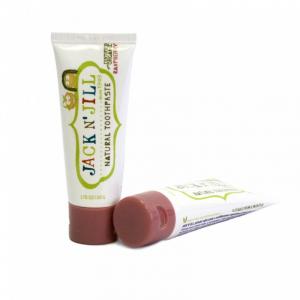
Try our natural products





What actually happens in the jaw during the night
To understand why bruxism is so insidious, it helps to picture what takes place in the mouth during a single night. The jaw muscles – particularly the chewing muscle known as the masseter – are among the strongest muscles in the human body. During conscious biting, they can exert pressure of approximately 70 to 150 kilograms per square centimetre. During nocturnal teeth grinding, however, this pressure can be significantly higher, because conscious regulation and natural protective feedback are absent. The teeth are therefore subjected to enormous stress for hours at a time, repeatedly, night after night.
The result is microscopic and macroscopic cracks in the enamel, wearing down of the teeth, their shortening, and in advanced cases even cracking or tooth loss. But that is far from all. Excessive strain on the jaw muscles leads to their overloading, which manifests as headaches, pain around the ears, a feeling of fullness or pressure in the ears without any infection, as well as neck and shoulder pain. The jaw joint – the temporomandibular joint, abbreviated TMJ – is chronically overloaded, which can lead to its dysfunction and a painful syndrome known as TMD (temporomandibular dysfunction).
Many people come to their doctor complaining of ear or head pain, when the actual cause of their problems lies precisely in nocturnal teeth grinding. Dentists can recognise bruxism fairly easily – it is enough to look at the wear on the tooth enamel, which has a characteristic pattern distinct from ordinary wear caused by food or a toothbrush.
Stress as a trigger hiding beneath the surface
Why do teeth grind in the first place? The answer lies largely in psychology and in how the human brain processes stress. Modern research shows that bruxism and stress are very closely linked – chronic psychological burden, anxiety, and accumulated emotions literally translate into muscular tension throughout the body, the jaw included. It is one of many ways in which the body responds to what the mind cannot or does not manage to process consciously.
Consider Markéta, a thirty-four-year-old project manager from Prague who spent several months dealing with a demanding project, overtime, and team conflicts. She told herself she was managing stress well – she went to yoga and tried to sleep enough. Yet every morning she was woken by jaw pain. It was only when her dentist showed her photographs of her worn teeth and explained what was happening that she understood her body was responding to stress in a way she herself had not perceived at all. This is a story dentists know intimately, and it repeats itself in their surgeries day after day.
The science behind it is fairly solid. Research published in the specialist journal Journal of Oral Rehabilitation has repeatedly confirmed a correlation between levels of psychosocial stress and the occurrence of bruxism. Triggers can include work overload, relationship problems, financial insecurity, but also seemingly less serious factors such as major life changes – moving house, a new job, or the arrival of a child. The nervous system responds to all these stimuli with increased activation of the sympathetic branch – the so-called "fight or flight" response – and this activation manifests, among other things, in increased tension in the jaw muscles.
It is worth noting that bruxism worsened significantly during the Covid-19 pandemic. A 2021 study published in the Journal of Clinical Medicine recorded an increase in the occurrence of symptoms associated with teeth grinding and jaw pain, with increased anxiety, disrupted sleep patterns, and the general uncertainty of that period identified as the key factors.
Beyond stress, there are other risk factors. Consumption of caffeine and alcohol, particularly in the evening hours, can increase muscular activity during sleep. Smoking, certain medications – particularly antidepressants from the SSRI group – and sleep disorders such as sleep apnoea are also associated with a higher incidence of bruxism. Genetic predisposition also plays a role, as bruxism tends to recur within families.
How to protect yourself and what actually helps
The good news is that bruxism can be treated, or at least its effects significantly reduced. The bad news is that there is no simple, universal solution – it is a complex problem that requires a complex approach.
The most widespread and at the same time most straightforward means of protecting the teeth are occlusal splints, sometimes also called night guards or tooth protectors. These are individually manufactured plastic devices worn over the teeth before sleep, preventing direct contact between tooth surfaces. They do not stop the grinding itself, but they protect the teeth from mechanical damage and reduce the load on the jaw joint. A dentist is able to precisely adapt the splint to the shape of a patient's teeth, and a splint made in this way is significantly more effective than inexpensive versions available from a pharmacy.
Alongside physical protection, it is absolutely essential to address the underlying cause. If the trigger is chronic stress, then a splint alone will not solve the problem – it will only alleviate its manifestations. Psychotherapy, particularly cognitive-behavioural therapy, has demonstrated a positive effect on reducing bruxism in numerous studies by helping people manage stress and anxiety more effectively. As the renowned psychiatrist Viktor Frankl said: "Between stimulus and response there is a space. In that space lies our freedom and ability to choose our response." It is precisely this space – the capacity to respond consciously to stress rather than through automatic muscular tension – that is the goal of therapeutic work.
Physiotherapy focused on the jaw, neck, and shoulder area can provide significant relief from pain and restore proper function to overloaded muscles. Massage of the jaw muscles, exercises to release tension in the head and neck area, and biofeedback techniques – where the patient learns to perceive and consciously release tension in the jaw – are among the methods with good results.
In terms of everyday habits, there are several things that can improve the situation fairly quickly. Limiting caffeine after 2 pm, avoiding alcohol before bed, regular relaxation before lying down – whether that means a warm bath, meditation, reading, or light stretching – can all contribute to calming the nervous system and reducing nocturnal muscular activity. It is equally useful to pay attention to how we spend time in front of screens: blue light from phones and computers disrupts melatonin production and worsens sleep quality, thereby indirectly contributing to a worse course of bruxism.
Some people swear by magnesium – and science at least partially supports them. Magnesium plays an important role in regulating neuromuscular activity, and its deficiency can contribute to muscle cramps and increased tension. Supplementing magnesium in the form of a quality supplement or through a diet rich in nuts, seeds, leafy vegetables, and wholegrain products can be one piece of the puzzle. It is not a miracle cure, but as part of a broader approach to caring for both body and mind, it makes sense.
Botulinum toxin – better known by its trade name Botox – has in recent years begun to be used in the treatment of severe forms of bruxism. Injections into the chewing muscles temporarily reduce their capacity to generate strong contractions, thereby significantly reducing tooth damage and pain. This is a method reserved for more serious cases and carried out by a specialist physician, but the results in appropriately selected patients are very promising.
Bruxism is not merely a dental problem – it is a window into the overall state of the organism, an indicator of how well or poorly we are managing the demands of everyday life. Ignoring it means risking not only the loss of a healthy set of teeth, but also chronic pain, disrupted sleep, and a reduced quality of life. Conversely, taking it seriously and treating it as a signal worth paying attention to can be the first step towards mornings that begin differently – without a painful jaw and with a genuine sense of rest.