
A sustainable household with children can work when you start with small steps
Life with children is beautifully noisy, fast, and sometimes a bit chaotic. And amid this chaos, a question that has been asked more and more frequently in recent years often arises: can parenting be combined with sustainability at home? When piles of laundry, snack boxes, spilled drinks, and art supplies rotate at home, "eco" can seem like another task on the list. However, sustainability in a family doesn’t have to be a perfect project or a competition for the smallest carbon footprint. Often, it’s more of a series of small decisions that save money, nerves, and the planet in the long run — and at the same time teach children skills that will benefit them throughout their lives.
The notion that a sustainable household with children means only cloth diapers, homemade cosmetics, and zero waste can be unnecessarily restrictive. The reality is much more practical: it's about having a household that works, is healthier, and wastes less. And when children are involved, sustainability naturally becomes a family culture, not a one-time challenge.
Try our natural products




Sustainability with children is not about perfection but about smartness
Looking at the family budget and daily consumption, it's clear why so many people are interested in how to live sustainably with children. Children grow fast, their needs change, and so does the amount of stuff that flows through the household. It’s no surprise that families often find the greatest opportunities for savings and waste reduction — and it doesn’t have to mean deprivation.
Sustainability in a family can start very simply: by stopping buying "just in case" and starting to buy "because it makes sense". Reparing things instead of throwing them away. Prioritizing quality over quantity. Showing children that things have value even after they become "familiar". It might sound simple, but these habits are deeply ingrained in future attitudes towards money, work, and nature.
It's also good to remember that sustainability isn’t just about waste. It includes energy, water, food, household chemicals, clothing, and the way things are acquired. Those looking for tips on sustainability when there are children at home often find that the biggest changes happen in routine situations: at breakfast, doing laundry, cleaning, shopping, or packing a school snack.
And why does it work even in a family where time is scarce? Because sustainable choices are often more convenient in practice. A quality bottle doesn’t leak, a sturdy box doesn’t break, a universal cleaner doesn’t take up half the shelf, and second-hand clothes don’t hurt as much when they rip on the playground.
"The most sustainable thing is the one you already have."
This phrase is often repeated in the eco world, and in families, it applies doubly: many "new" needs can be solved by sharing, borrowing, swapping, or smart planning, not by another purchase.
How to involve children in a sustainable household without a fight
Deciding on an eco household with children is one thing, making it actually work is another. Children don’t like bans "because it’s supposed to be that way", but they respond great to understandable reasons, a clear system, and the feeling of being part of something important. Those figuring out how to involve children in a sustainable household often find that simplicity and play work best.
Let's take a common example from real life: a family with two children (a preschooler and a first-grader) is dealing with a constant accumulation of packaging, food scraps, and lost socks at home. Instead of a big "eco revolution", they introduce three small changes: place three sorting bins in a visible spot, leave a bowl for compost scraps at the dining table, and give each child a small "clothespin" task for the laundry. The result? Not only less mess but also fewer arguments. Children love knowing what’s expected of them — and being "helpers".
To avoid it remaining just a theory, it pays to follow a few principles:
- Simplify the system: waste sorting makes sense, but five different bins in a small apartment can be more of a burden than a help. Fewer categories, but regularly.
- Show the impact: when a child sees that bio-waste becomes soil for herbs, they’ll understand it faster than from a lecture.
- Give children competence: young children can carry boxes to the dishwasher, older ones can check if the lights are unnecessarily on.
- Allow room for mistakes: if plastic ends up in the paper bin, the world won’t end. What’s more important is discussing it normally, without shame.
Interestingly, sustainability often becomes a "children's project". Once children understand the principle, they tend to be surprisingly consistent. And sometimes even funny: they can remind parents that it’s really not necessary to take another bag at the store when there’s already one at home.
When explaining, it’s useful to rely on credible sources, but simply and without fear-mongering. For parents who want to be sure that sorting and waste prevention make sense, the overview and recommendations on the European Environment Agency website are useful, as it has long summarized the impacts of consumption and waste in Europe in an understandable way.
Little things that amuse children and relieve adults
A sustainable approach often takes hold best in activities that are visible and have quick results. Children like to "count" and "check", so you can gently introduce a family game of waste detectives: who finds a dripping tap, unnecessarily lit light, or an open freezer? It’s not about control, but about attention.
The same goes for the kitchen. Children love rituals and repetition, so you can create a habit: once a week "fridge inventory", which results in a simple meal. Vegetable scraps end up in soup, stale bread in croutons, overripe fruit in smoothies. Not only does this reduce waste, but it also teaches that food is not to be taken for granted. According to the FAO (Food and Agriculture Organization of the United Nations), food waste is a globally significant issue — and households play a big role in it. That's why family habits are one of the most practical places to start.
How to save in a household with children sustainably: less stuff, more utility
Sustainability is sometimes mistakenly associated with being expensive. Yes, some eco-friendlier products have a higher purchase price. But family reality shows that the biggest savings don’t come from "eco shopping", but from fewer purchases and longer product life. Those figuring out how to save in a household with children sustainably often find that the key is a combination of three things: planning, reuse, and sensible investments.
This is most evident with clothing. Children outgrow clothes before they have a chance to "wear them out". At this point, a cycle makes sense: second-hand shops, swapping with friends, handing down between siblings, quality pieces that last through more children. And when buying new, it’s worth looking at material and workmanship because one well-made sweatshirt often outlasts three cheap ones.
The same goes for toys. A child's room can be full, yet you hear: "I have nothing to play with." Often it’s not a lack, but an overload. Sustainability in this case means fewer toys, but ones that support imagination: building blocks, bricks, art supplies, figurines, books. And when toys are rotated, rotation works great — some are put away and after a month they "reappear" as new. Fewer purchases, more joy.
A big chapter is household cleaning. In a family with children, cleaning is frequent, so it pays to think about what’s used for cleaning. Gentler cleaning agents that are also effective help reduce unnecessary chemical load and packaging. Plus, it often turns out that there’s no need for ten different products — just a few universal helpers and a good microfiber cloth that lasts a long time. A sustainable household with children doesn’t rely on everything being "organic", but on being purchased thoughtfully and used up completely.
And what about energy and water? That’s where family savings add up the fastest. A short shower instead of a long bath every day, turning off stand-by mode, washing at lower temperatures, air-drying clothes when possible. It’s not about asceticism, more about habit. Children also love having "their task": someone checks if the fridge door is closed, another ensures the water isn’t left running while brushing teeth. Small roles make a big difference.
There’s also another subtle benefit: when consumption is discussed at home normally, children naturally develop a relationship with items. Not in the sense of fear, but in the sense of respect. And in times of fast fashion and disposable solutions, this might be the most valuable thing.
Sustainable habits that make sense even in a busy week
Family life often runs in the mode of "just make it work somehow". Therefore, it’s good to choose tips for sustainability in a household with children that don’t increase stress. Instead of big resolutions, it helps to choose one area per month: say, snacks, laundry, or shopping.
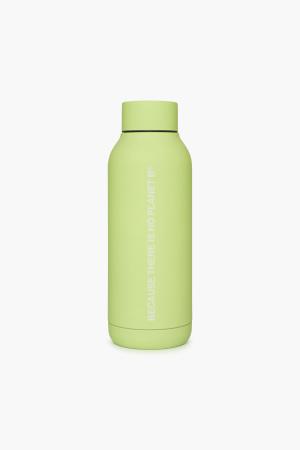
With snacks, there’s surprisingly great potential. Replacing disposable bags and napkins with a box and cloth napkin is immediately noticeable — in the trash and the wallet. And children often quickly get used to the idea that the packaging belongs at home. Similarly, a reusable bottle instead of sugary drinks "on the go" saves not only waste but also unnecessary sugar.
When shopping, a simple rule works: go to the store with a plan and on a full stomach. It’s an old piece of advice but still holds true. Fewer impulsive purchases mean fewer items that go unused at home and less food that ends up in the trash. A sustainable household isn’t about having perfect stocks — it’s about having adequate stocks that actually get used.
And if the sustainable plan sometimes collapses under the weight of illnesses, activities, and work? That’s also part of reality. Sustainability in a family isn’t a straight line, more of a curve. Sometimes it works better, sometimes less so. What’s important is that the household gradually learns to make decisions that are more considerate, healthier, and economically sensible — without guilt.
Ultimately, the question of "how to live sustainably with children" isn’t just about ecology. It’s also about creating a home environment where things make sense, where there’s less waste, and where children see that their everyday choices have an impact. And when you add a bit of lightness, humor, and a willingness to make gradual changes, sustainability can become a natural part of family life — just like a shared dinner, bedtime reading, or the morning rush that somehow always works out in the end.