

A quick refreshment that is fresh and healthier can be made from a few common ingredients from the f
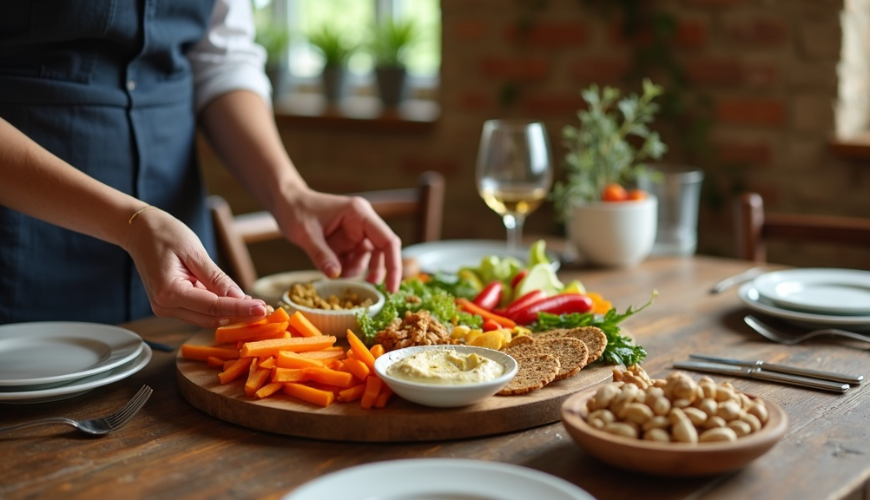
An unexpected visit can surprise you at the least convenient moment: the house is messy after dinner, the fridge is "empty," and the only question running through your mind is – what to offer as quick refreshments that won't offend but also won't take half a day to prepare. The good news is that quick refreshments don't have to be just an emergency plate of cookies. Even with ordinary ingredients that almost everyone has at home, you can conjure up something that looks nice, tastes fresh, and can even have a healthier option. And most importantly: without stress.
In Czech households, there's a traditional reliance on open sandwiches, bundt cake, or "something savory for the TV." But times are changing – and so are tastes. Some people eat less sugar, others avoid ultra-processed foods, and some are looking for gluten-free or plant-based alternatives. Yet the principle remains the same: to offer guests something small to nibble on, ideally so that everyone finds something they like. And because the greatest charm lies in simplicity, it pays to think more in terms of "building blocks" rather than complicated recipes.
Try our natural products




Quick Refreshments Without Panic: Just a Few Smart Rules
When the doorbell rings and someone announces they are "just dropping by," it's not about perfection. It's about hospitality. And that can be surprisingly easy to manage if you stick to three things: something crunchy, something creamy, and something fresh. Crunchy can be bread, crispbread, crackers, nuts, or vegetables. Creamy can be a spread, hummus, a curd mix, plant-based "cheese," or a yogurt dip. And a fresh element can be as simple as a cucumber, apple, tomato, lemon, or a handful of herbs.
It may sound trivial, but this exact principle is behind most refreshments that look "thoughtful." The difference is in the details: cut items into similarly sized pieces, place them on one board or tray, add something colorful, and don't be afraid to use what you already have at home. Tips for quick refreshments from ingredients we have at home often start with the pantry: a can of chickpeas, tuna, olives, sun-dried tomatoes, mustard, honey, nuts, oats, cocoa. In the fridge, there's usually yogurt, eggs, cheese, or vegetables – and you can put together more than it seems.
It makes sense from a sustainability perspective too. According to the FAO (Food and Agriculture Organization of the United Nations), a significant portion of food is wasted in households, often due to poor planning or "leftovers that nobody wants." Quick refreshments for a visit are a great opportunity to use leftovers nicely and with respect for food. Sometimes all it takes is to add herbs, a drizzle of olive oil, and a little imagination.
And one more thing: not every visit requires a table full of treats. Often it's enough to offer tea or coffee and something small. As they say: "It's not about how much there is, but how it's presented."
"Hospitality is not about showiness, but about attention."
What to Offer When There's "Nothing" at Home: Savory, Sweet, and Healthier Options
In practice, the most common question is what to offer as quick refreshments for an unexpected visit. And that's when having a few tried-and-tested combinations in mind helps. It doesn't have to be a "recipe" in the classical sense; rather an idea of how to combine commonplace ingredients so that it seems intentional.
Savory Quick Bites That Look Bistro-Style
When there's bread available (even from yesterday), you're set. Yesterday's bread can be turned into toast, bruschetta, or small open sandwiches. Just lightly toast it on a pan or in the oven and top it with whatever's in the house: garlic, tomato, olive oil, cheese, hummus, avocado, hard-boiled eggs. It looks "Italian," tastes good, and guests feel thought-of.
A similar category is a quick "what's in the house" platter: cheese, olives, pickles, nuts, sliced vegetables, and a dip. It's simple, but it almost always works, because everyone can pick according to their taste. If you're looking for healthy refreshment options, just swap crackers for whole-grain or for carrot and cucumber, add hummus, and a handful of seeds.
Spreads are also very versatile. From curd, white yogurt, or plant-based alternatives, you can make a base in two minutes, which can be flavored in a hundred ways: garlic and herbs, mustard and honey, curry and lemon, or just salt, pepper, and chives. If there's a can of tuna or chickpeas at home, a more filling version is created. And if you add bell pepper and cucumber, suddenly it's a "full-fledged refreshment."
Sweet Refreshments Without Baking (and Without Loads of Sugar)
A sweet finish is often expected automatically, but not everyone wants cake. And that's where you can offer something lighter. A "quick dessert in a glass" works great: white yogurt or curd, a spoonful of honey or maple syrup, cinnamon, and fruit (fresh or frozen). If you have nuts or granola at home, add them for a crunch, and it looks like a café dessert.
If you find dark chocolate in the drawer, it can be broken into pieces and served on a plate with fruit. And if you have a banana and oats at home, you can quickly make simple pancakes: mash the banana, mix in the oats, form small cookies, and fry them on a pan or bake them for a few minutes in the oven. It's not Christmas cookies, but as quick refreshments, it surprises.
For unexpected visits, sweet no-bake options are often the most practical: minimal dishes, quick preparation, and yet the feeling that something is happening. And if you want to go the sustainable route, it's good to have a few quality ingredients at home that last a long time – like cocoa, nuts, seeds, or dried fruit. In small amounts, they provide great service.
One Real Example: Ten Minutes, Three Plates, Zero Stress
Imagine a typical situation: Saturday afternoon, there's a piece of bread left, a cup of white yogurt in the fridge, half a cucumber, a few carrots, and an opened jar of mustard. Does it sound like nothing? Yet you can make refreshments for two to three people: slice the bread into small slices and briefly toast them, mix the yogurt with mustard, salt, and pepper for a quick dip, slice the cucumber and carrot into sticks. Add a handful of nuts from the pantry or apple slices. In ten minutes, there's a board on the table that looks neat, tastes fresh, and moreover, it's a healthier refreshment than just opening a bag of chips.
And that's exactly how simple and quick recipes for refreshments for a visit work: not as a complicated procedure, but as the ability to combine common things into a pleasant whole.
Simple and Quick Recipes for Refreshments for a Visit (From What Is Usually at Home)
Sometimes it's handy to have a few specific ideas at hand that can be repeated and varied. It doesn't have to be anything demanding – more like "quick sets" that make sense and can be built on basic ingredients. The following tips are deliberately flexible to adapt to what's in the fridge at the moment.
Hummus "Last Minute" from Chickpeas
A can of chickpeas is a small treasure. Just rinse them, mash them with a fork or blend with a little olive oil, lemon (or vinegar), salt, and garlic. Tahini is not necessary; if you have it, add it, if not, the world won't end. The result can be served with bread or vegetables. In terms of healthy refreshment options, it's a staple because it's filling, plant-based, and well-combinable.
Curd Spread in Two Versions: Herb and "Spicy"
Curd or thick white yogurt transforms into a spread in a minute. Herb version: salt, pepper, chives, parsley, a drop of lemon. Spicy version: a teaspoon of mustard, a pinch of paprika (sweet and hot), optionally chopped pickles. Serve on bread, with crispbread, or as a dip with vegetables. For those who want, adding a few seeds on top – pumpkin or sunflower – makes a nice touch.
Quick "Bruschetta" Without Rules
Toasted bread, tomato (or even just tomato passata), salt, pepper, olive oil. If there's garlic at home, add it. If there's basil, even better. If there's none of that, pickles and a drop of oil can be used – it sounds strange, but on a small piece of bread, it can surprise. This is exactly the type of refreshment that is quick to make and yet feels "grown-up."
Fruit and Chocolate as a Minimalist Dessert
Apples, pears, bananas, or oranges cut into pieces and a few squares of quality dark chocolate. It's not complicated, but in practice, it works great – especially when the fruit is arranged on a plate and the chocolate is lightly broken. For those who want to go a step further, a teaspoon of nut butter can be added. It creates a sweet refreshment that isn't just based on sugar.
"Leftovers" as an Advantage: Soup in a Mug or a Bowl of Nuts
Sometimes the best refreshment is the one that already exists. Leftover soup from yesterday can be heated and served in smaller mugs as informal refreshments, especially in cooler months. And when there's no time for anything, even a bowl of quality nuts or roasted chickpeas can save the day. From a nutritional point of view, nuts are among the foods often recommended as part of a varied diet – for example, Harvard T.H. Chan School of Public Health summarizes why nuts can be beneficial for heart and overall health (of course in reasonable amounts).
One List for Quick Orientation: What Is Worth Having at Home "Just in Case"
- Cans and Jars: chickpeas, beans, tuna/sardines, olives, sun-dried tomatoes, pickles
- Dip Base: white yogurt/curd or plant-based alternative, mustard, lemon/vinegar, garlic
- Crunch: crispbread, whole-grain crackers, nuts, seeds
- Seasoning: olive oil, honey, cinnamon, paprika, dried herbs
These aren't "apocalypse supplies," but small items that are useful even in a regular week. And when unexpected visitors come, these exact things allow you to come up with tips for quick refreshments from ingredients we have at home without a trip to the store.
It's actually reassuring to know that refreshments don't have to be a performance or a test of hospitality. Often, it's enough to open the fridge with a slightly different perspective: not "I have nothing," but "I have the basics and I'll complement them smartly." And when you add a clean board, a few napkins, and water with lemon in a jug, the atmosphere almost makes itself – guests relax, conversation flows, and a short visit easily turns into a pleasant afternoon that no one planned, but everyone remembers.