

Why the female body and health need a different approach to nutrition, sleep, and disease diagnosis
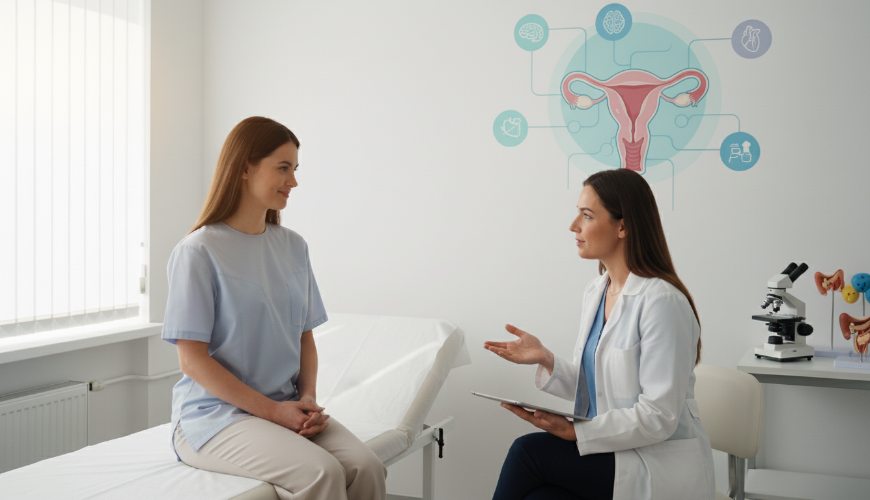
Few people realize how deeply rooted the assumption is that medicine and health recommendations apply universally to everyone. For centuries, medical research focused predominantly on the male body, and only in recent decades have we begun to understand that women's bodies and health require an entirely specific perspective. This is not just about gynecology or obstetrics – the differences extend into cardiology, neurology, nutrition, sleep, and mental health. So why do women need a different approach to health, and what lies behind it all?
Try our natural products





Imagine a situation that plays out in doctors' offices around the world every day. A forty-year-old woman visits her doctor with fatigue, chest pain, and a feeling that "something isn't right." She receives a diagnosis of stress or anxiety and leaves with a recommendation to rest more. Several months later, it turns out she was suffering from early-stage heart disease, the symptoms of which manifest differently in women than in men. This woman is not an exception – according to the American Heart Association, women during a heart attack often don't experience the classic crushing chest pain, but rather shortness of breath, nausea, back or jaw pain, and extreme fatigue. This is precisely why their symptoms are more often overlooked or misinterpreted.
The roots of this problem reach deep into the history of modern medicine. Until the 1990s, women were systematically excluded from clinical studies. The U.S. National Institutes of Health (NIH) only mandated by law in 1993 that women and minorities be included in federally funded research. Until then, most knowledge about diseases, medications, and their dosages was based exclusively on data obtained from male subjects. Women continue to feel the consequences of this approach to this day – from medications that cause stronger side effects in them to diagnostic procedures that simply fail to detect their symptoms.
Women's bodies and health are not merely a variation of the male pattern. The differences begin at the cellular level and permeate the entire organism. Hormonal cycles, which accompany a woman from puberty through the reproductive years to menopause, influence practically every organ system. Estrogen and progesterone don't just act on reproductive organs – they regulate inflammation, affect bone metabolism, modulate the immune response, and influence mood and cognitive function. When these hormones fluctuate, which happens every month and then dramatically during perimenopause and menopause, the entire body responds in ways that medicine is only beginning to fully understand.
Take autoimmune diseases, for example. According to data from the American Autoimmune Related Diseases Association, women make up approximately 80 percent of all patients with autoimmune diseases. Lupus, rheumatoid arthritis, multiple sclerosis, Hashimoto's thyroiditis – all of these conditions affect women significantly more often than men. One explanation is the more complex immune system of women, which fights infections more effectively but is also more prone to turning against the body itself. Yet research into autoimmune diseases long focused on general mechanisms without regard to sex differences, and many women waited years for a correct diagnosis.
Nutrition, Exercise, and Sleep Through the Lens of Women's Health
An equally specific approach is required in the area of nutrition and exercise. General recommendations like "eat less, move more" ignore the fact that female metabolism functions differently and responds to various stimuli differently than male metabolism. Women naturally have a higher percentage of body fat, which is not a flaw but a biological necessity – adipose tissue plays a crucial role in hormonal regulation and reproductive health. Extreme diets and excessive exercise can lead in women to the so-called female athlete triad – a combination of eating disorders, loss of menstruation, and bone mass loss that can have lifelong health consequences.
Women's nutritional needs also change throughout life far more dramatically than men's. During reproductive years, women need significantly more iron due to menstrual losses. During pregnancy and breastfeeding, demands for folic acid, calcium, iodine, and a range of other micronutrients increase. During menopause, calcium and vitamin D intake becomes critical due to the rapid loss of bone mass that can lead to osteoporosis. According to the World Health Organization, osteoporosis affects one in three women over fifty, while in men it is one in five. Yet many women have no idea about their risk until the first fracture occurs.
It is also interesting how differently women's sleep functions. Research shows that women need on average about twenty more minutes of sleep than men, yet they suffer from insomnia and sleep disorders more frequently. Hormonal fluctuations during the menstrual cycle, pregnancy, and menopause directly affect sleep quality. Night sweats that accompany menopause can disrupt sleep architecture to such an extent that a woman wakes up exhausted even after eight hours in bed. And because lack of quality sleep is linked to a higher risk of cardiovascular disease, diabetes, and depression, this is a far more serious problem than it might seem at first glance.
This brings us to mental health, where the differences between the sexes are particularly pronounced. Women suffer from depression and anxiety disorders approximately twice as often as men. This was long attributed to social factors – and those do indeed play a role – but a growing body of research shows that biological factors are equally important. Hormonal fluctuations during the menstrual cycle can trigger premenstrual dysphoric disorder in sensitive women, a serious condition that far exceeds ordinary "PMS." Postpartum depression, which affects up to one in five new mothers, also has a strong hormonal component. And the transition into menopause represents another period of heightened vulnerability, when anxiety, depressive episodes, and memory problems may emerge or worsen.
As cardiologist Dr. C. Noel Bairey Merz from Cedars-Sinai Medical Center once aptly noted: "Women are not small men. We need to stop using the male body as the standard and start studying women's health as a separate discipline."
The Path to Change Begins with Awareness
The good news is that the situation is gradually changing. In recent years, specialized women's health centers have been established around the world, focusing not only on reproductive medicine but on a holistic approach to the female body. The number of clinical studies that specifically track sex differences in drug efficacy and disease progression is growing. And more and more women are actively taking an interest in their health and refusing to accept answers like "that's normal" or "it's just stress."
Awareness is, in fact, one of the most effective tools of prevention. A woman who knows that her heart attack symptoms may look different from what she sees in movies has a better chance of seeking help in time. A woman who understands how the menstrual cycle affects her energy and mood can better adapt her training plan and work schedule. And a woman who understands what is happening to her body during menopause doesn't have to suffer in silence but can discuss options with her doctor for managing this period as well as possible.
In practical terms, this might look something like this: instead of a rigid training plan that ignores the hormonal cycle, more and more experts recommend cyclical adaptation of exercise. In the first half of the cycle, when estrogen levels are higher and the body recovers better, more intense training can be incorporated. In the second half, when progesterone dominates and the body tends to retain more water and recovers more slowly, lighter movement, yoga, or walks may be more suitable. It's not about exercising less, but exercising smarter – with respect for how the female body actually works.
A similar approach can be applied to eating. Instead of universal diets that often lead to the yo-yo effect and a disrupted relationship with food, it pays to focus on the quality of food and adapting it to current needs. This means adequate protein intake, which is key to maintaining muscle mass especially after forty, healthy fats essential for hormonal balance, sufficient fiber for a healthy microbiome, and targeted supplementation of micronutrients where needed. Some women may benefit from a consultation with a nutritional therapist who can create an individual plan that takes into account not only age and activity level but also hormonal status and any health issues.
The role of preventive check-ups, which should be a matter of course for women, must not be overlooked either. Regular screenings – from mammography to thyroid examinations to bone density checks – can catch problems at an early stage when treatment is most effective. Yet many women postpone preventive check-ups, whether due to time constraints, fear of results, or simply because they place caring for themselves after caring for their family. Changing this habit is one of the most important steps a woman can take for her health.
Last but not least, it is worth mentioning the crucial role that community and mutual support play. Women who speak openly about their health experiences – whether it's endometriosis, postpartum depression, or difficulties associated with menopause – help break down stigmas and encourage others to seek help. Blogs, podcasts, and online communities focused on women's health have become an important source of information and support in recent years, although they naturally cannot replace professional medical care.
The female body is not a mystery that cannot be solved – it is a complex, beautifully designed system that deserves to be understood and respected in its uniqueness. The path to better women's health does not lead through adapting to male norms, but through medicine, nutrition, and lifestyle finally reflecting what the female body truly needs. And every woman who decides to pay attention to her health and insist on being heard is part of this important change.