

# What Happens in the Body After Cutting Out Gluten
Maybe you've noticed it with colleagues at work, or perhaps with a friend who suddenly orders everything "gluten-free" at a restaurant. The gluten-free diet has become one of the most discussed nutritional trends in recent years, and with it has come a lot of questions. What actually happens in the body when you stop eating gluten? Does it make sense for everyone, or only for people with a specific diagnosis? And if you decide to cut out gluten, how do you manage it without feeling deprived of everything good?
Let's take a look at this without unnecessary scaremongering or blind enthusiasm – simply with a cool head and based on what we actually know about gluten.
Try our natural products





Why not eat gluten – and for whom it really makes sense
Gluten is a mixture of proteins found in wheat, rye, barley, and their crossbreeds. It's what gives dough its elasticity and bread its soft, chewy texture. For most people, it's completely harmless – the body handles it just like any other protein. But there are groups of people for whom gluten is a real problem, and not a small one.
First and foremost is celiac disease, an autoimmune condition that, according to the Czech Celiac Society, affects approximately one percent of the Czech population, with a large proportion of sufferers unaware of their diagnosis. In people with celiac disease, gluten triggers an immune reaction that damages the lining of the small intestine – specifically the intestinal villi, tiny projections responsible for nutrient absorption. The consequences are far-reaching: from chronic diarrhea and bloating to anemia, weight loss, and osteoporosis, all the way to neurological problems. The only effective treatment is a lifelong gluten-free diet, and a strict one at that – even a tiny amount of gluten is enough to reignite the inflammation.
The second group consists of people with so-called non-celiac gluten sensitivity. They don't have celiac disease or a wheat allergy, but after consuming gluten they experience unpleasant symptoms – bloating, abdominal pain, fatigue, brain fog, headaches, or joint pain. The scientific community is still researching this condition and debating its exact mechanisms, but as a review article published in the journal Nutrients states, it is a real condition affecting an estimated 0.5 to 13 percent of the population, depending on the diagnostic criteria used. This wide range in estimates shows just how difficult it is to reliably diagnose this sensitivity.
And then there's the third, most numerous group – people who feel better without gluten without having any confirmed diagnosis. Some of them may have unknowingly also eliminated other dietary components that weren't agreeing with them (for example, excessive amounts of industrially processed foods) and attribute the improvement to cutting out gluten. Others may have experienced a placebo effect, which is surprisingly powerful in the field of nutrition. And some may genuinely have an as-yet-undiagnosed sensitivity. This is precisely why it's important to consult a doctor before making major dietary changes and ideally have celiac disease ruled out – because once a person eliminates gluten, diagnosis becomes significantly more complicated.
So does it make sense to cut out gluten? Absolutely yes, if you have celiac disease or confirmed gluten sensitivity. For other people, it's not so clear-cut and depends on the individual situation. As gastroenterologist and researcher Alessio Fasano from Harvard University says: "A gluten-free diet is not a healthier diet for those who tolerate gluten. It is a treatment for those who cannot tolerate it."
What happens in the body after cutting out gluten
Let's imagine a specific situation. Markéta, a woman in her thirties from Brno, struggled for years with bloating, fatigue, and irregular bowel movements. After a series of tests, her doctor diagnosed her with celiac disease and recommended a strict gluten-free diet. What started happening in her body?
In the first days and weeks, the body begins to rid itself of the inflammatory burden. In people with celiac disease, the lining of the small intestine gradually calms down – the immune system stops attacking its own tissue because the trigger, gluten, has disappeared. However, Markéta noticed that she didn't feel better at first – quite the opposite. She had cravings for bread, felt irritable, and was a bit confused about what she could actually eat. This is a completely normal experience and there's nothing mysterious about it – it's a combination of changing eating habits, the psychological effect of restriction, and sometimes a temporary shift in gut microbiota.
After several weeks, most people with celiac disease or sensitivity begin to feel relief. Bloating subsides, bowel movements normalize, and energy returns. In people with celiac disease, the intestinal villi gradually regenerate and nutrient absorption improves – iron, calcium, B vitamins, and more. But this process doesn't happen in a matter of days; full regeneration of the intestinal lining can take months to years, especially in adult patients, as confirmed by studies published in The American Journal of Gastroenterology.
In the long term, people with celiac disease who follow the diet consistently see a significant reduction in the risk of complications – osteoporosis, anemia, infertility, and even certain types of lymphomas that are associated with untreated celiac disease. In short, the body reaches a state where it can finally function normally.
For people without celiac disease or sensitivity, the situation is different. If a healthy person cuts out gluten, their body doesn't register any dramatic change at the level of the intestinal lining, because there was no damage there to begin with. If they still feel better, it may be a result of starting to eat more mindfully – reducing industrial baked goods, sweets, fast food, and replacing them with higher-quality foods. That in itself is a positive change, but it doesn't have much to do with gluten as such.
But there's also a potential risk. Gluten-free industrial products – breads, cookies, pasta – are often lower in fiber, iron, and B vitamins and conversely higher in sugar, fats, and additives that compensate for the missing texture of gluten. So someone who cuts out gluten and replaces regular baked goods with their gluten-free industrial alternatives may paradoxically do themselves harm. According to the Celiac Disease Foundation, it's important for a gluten-free diet to be nutritionally balanced, ideally under the guidance of a nutrition specialist.
What to eat when cutting out gluten and how to manage it
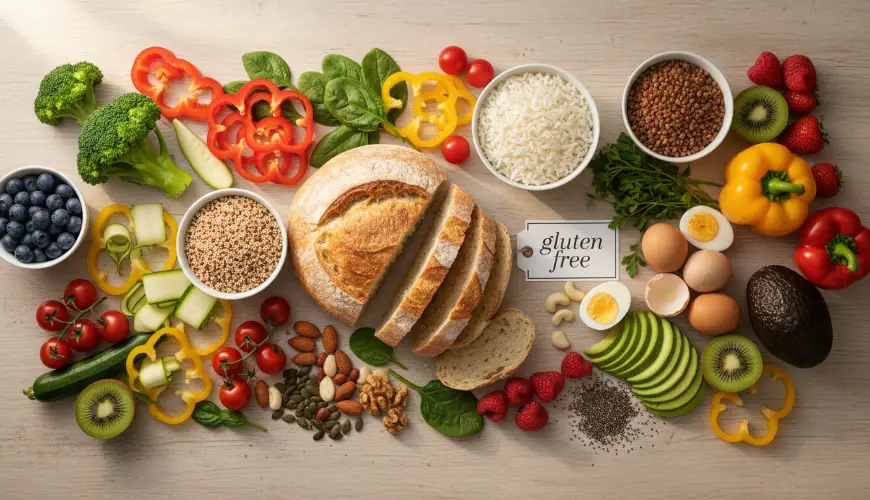
If a person decides or needs to eliminate gluten from their diet, the most important thing is not to panic and not to succumb to the feeling that they'll never be able to eat anything good again. The reality is that a huge number of foods are naturally gluten-free – and these are foods that should form the basis of everyone's diet, whether they eat gluten or not.
Rice, potatoes, corn, buckwheat, millet, amaranth, quinoa – these are all naturally gluten-free side dishes that offer a diverse range of flavors and nutrients. Legumes such as lentils, chickpeas, and beans provide both protein and fiber. Fruits and vegetables are of course gluten-free, as are meat, fish, eggs, and dairy products in their natural form. The problem arises with processed foods, where gluten can hide in the least expected places – in soy sauce, in some spice blends, in deli meats, in packet soups, or even in some medications.
For anyone starting out with a gluten-free diet, it's helpful to keep a few practical tips in mind. First of all, it pays to learn to read labels – in the European Union, the presence of gluten must be clearly indicated on packaging, which makes things considerably easier. It's also good to gradually build a repertoire of favorite recipes that are naturally gluten-free, rather than trying at all costs to replicate your existing meals in a gluten-free version. For example, instead of searching for the perfect gluten-free bread, it may be more enjoyable to discover how delicious freshly cooked buckwheat tastes with sautéed vegetables and quality butter.
Patience is also important. Taste buds adapt, gut microbiota changes, and the body adjusts to the new way of eating. Most people report that after two to three months, a gluten-free diet feels completely natural and cravings for old bread products fade. Markéta from our example says today, two years after her diagnosis, that a gluten-free diet paradoxically opened up a world of foods she would never have otherwise tasted – from Ethiopian injera made with teff flour to Italian risotto, which in its classic form is naturally gluten-free.
For those looking for quality gluten-free products and foods that support a healthy lifestyle, a good starting point might be the offerings of specialized online stores focused on healthy nutrition, where you can find carefully selected products with transparent ingredient lists. The key, however, is always to choose foods with a short and understandable list of ingredients – this applies universally, not just to gluten-free products.
It's also worth mentioning that the social aspect of a gluten-free diet is surprisingly challenging for many people. Declining cake at a celebration, explaining in a restaurant, the feeling of being a "nuisance" – all of this is a real psychological burden. It helps to have understanding people around you and not to be afraid to speak openly about your needs. Celiac disease is not a whim or a fashion fad; it's an autoimmune disease that requires strict treatment.
On the other hand, if a person has no diagnosed issue with gluten and is considering cutting it out purely for preventive reasons or under the influence of a trend, it's worth considering whether their energy and money might be better invested elsewhere. For instance, in an overall improvement of diet quality – more vegetables, fewer ultra-processed foods, regular hydration, and sufficient physical activity. These are changes whose benefits are supported by tens of thousands of studies and that truly benefit everyone, regardless of whether there's wheat bread or buckwheat porridge on the plate.
The decision to cut out gluten should be based on an informed assessment of one's own situation, ideally in collaboration with a doctor or qualified nutritional therapist. If you're troubled by digestive issues, fatigue, or other chronic symptoms, get examined first – and only then change your diet based on the results. Your body will thank you for this approach far more reliably than for blindly following any trend.