

# Try Japanese interval walking and improve your health
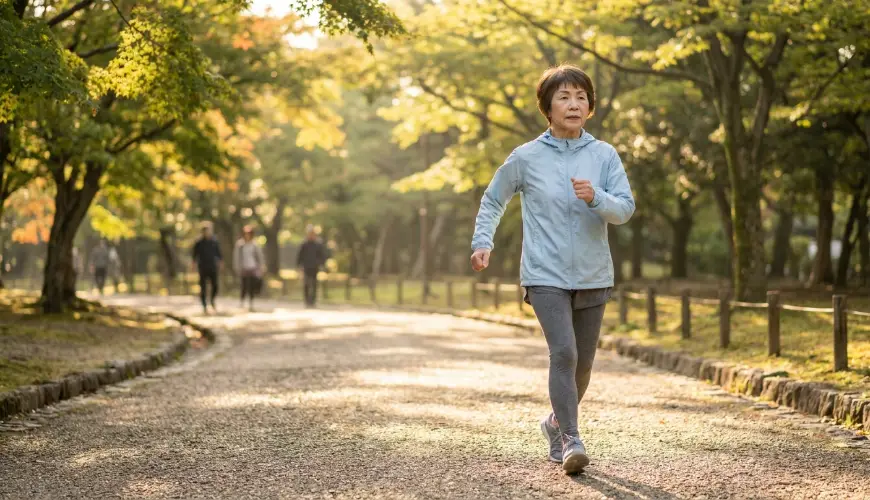
Movement as medicine – this idea is not new, but Japanese scientists have taken it to an entirely new level in recent years. While most people still believe that exhausting gym workouts or daily running are necessary for a healthy heart and blood vessels, research from Japan shows something surprising: walking is enough, but done smartly. The method known as Japanese interval walking, known in English as japanese walking or the 3×3 method, is attracting the attention of experts and laypeople around the world. And the reason is simple – it works.
High blood pressure, or hypertension, affects approximately 1.28 billion adults worldwide according to data from the World Health Organization. In the Czech Republic, it is estimated that hypertension affects roughly one third of the adult population, with many people unaware of their condition. Doctors are increasingly emphasizing that physical activity can be just as effective as medication – if properly dosed. Japanese interval walking is precisely the kind of movement that can fulfill this promise.
Try our natural products


What exactly is Japanese interval walking and how does it work?
The principle of the 3×3 method is, at first glance, surprisingly simple. The entire technique consists of regularly alternating between two walking intensities during a walk – slow, comfortable walking for three minutes and fast, energetic walking also for three minutes. This cycle is repeated at least five times in a row, so one training session lasts a total of thirty minutes. This is where the 3×3 designation comes from – three minutes slow, three minutes fast, with the alternation creating a natural interval.
The method was developed by Japanese physiologist Professor Hiroshi Tanaka and his team from the University of Shizuoka, who have long been researching the effects of physical activity on cardiovascular health. Their studies, published among other places in the medical journal Mayo Clinic Proceedings, demonstrated that regular interval walking over a period of five months led participants to significant reductions in blood pressure, improved fitness, and loss of body fat – all without any change in diet or other lifestyle habits. The results were so convincing that the Japanese Ministry of Health began actively promoting the method as part of national health policy.
But why does alternating pace work better than steady walking? The answer lies in physiology. When a person speeds up their walking, the heart begins to work more intensively, blood vessels dilate, and blood flow increases. Once the pace slows again, the body adjusts and the cardiovascular system gets a moment to recover. This repeated stretching and relaxing of vessel walls acts as a natural workout for the blood vessels – improving their elasticity and ability to respond to changes in pressure. Reduced vessel elasticity is in fact one of the main mechanisms behind the development of hypertension in older people.
It is worth noting that top athletes use a similar principle in so-called HIIT training – high-intensity interval training. Japanese interval walking is essentially its accessible, safe version for the general population, including seniors.
Imagine, for example, Mrs. Hana, a sixty-five-year-old retired teacher from Brno, who decided to make a change after years of a sedentary lifestyle. Jogging seemed too demanding, and the gym didn't appeal to her. On the recommendation of her general practitioner, she began trying Japanese interval walking in her local park. After three months of regular exercise three times a week, her doctor measured her blood pressure at her check-up and found it ten to fifteen millimeters of mercury lower than at her previous visit. "I never believed that ordinary walking could change so much," she told her doctor at the time. Stories like hers are not exceptional – the accessibility and simplicity of the method are its greatest strengths.
Why is Japanese walking suitable for everyone?
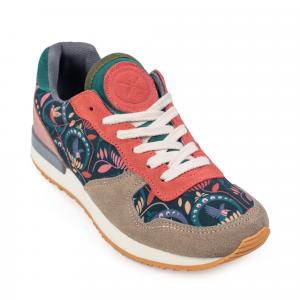
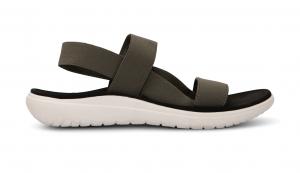
One of the greatest advantages of Japanese interval walking is its absolute accessibility. It requires no equipment, gym membership, or special clothing. All you need is comfortable shoes and a stretch of pavement, park, or forest path. This makes it a method that is realistically achievable for the vast majority of people – regardless of age, physical condition, or financial means.
Research also shows that Japanese interval walking has a positive effect not only on blood pressure, but on a whole range of other health indicators. Regular practice of the method demonstrably lowers blood sugar levels, improves the blood lipid profile, and contributes to the reduction of visceral fat – that is, the dangerous fat stored around internal organs. A study published in the Journal of Applied Physiology also demonstrated that interval walking is significantly more effective in this regard than walking for the same duration at a steady pace.
For seniors, the method has one more key benefit: it improves lower limb muscle strength and balance, thereby reducing the risk of falls – one of the most serious health problems facing the older population. The Japanese research team found that participants over the age of sixty showed a statistically significant improvement in thigh muscle strength after five months of regular interval walking, by approximately twenty percent.
The psychological aspect is also important. Walking as such is one of the few physical activities that does not provoke aversion or fear of injury in most people. Adding the simple interval element – alternating slow and fast pace – enriches this activity without making it unpleasant or difficult. Many people also report that a regular morning or afternoon walk in this rhythm helps them manage stress better and improves the quality of their sleep. These are factors that have a direct impact on blood pressure values.
In terms of frequency, experts recommend performing Japanese interval walking at least three to four times per week. Results typically come gradually – the first noticeable changes in fitness are usually apparent after four to six weeks, while a more significant drop in blood pressure typically manifests after two to three months of regular exercise. Patience, therefore, pays off.
But how can you tell if the walking is being done correctly? During the slow phase, a person should be able to converse comfortably – the pace is relaxed, breathing calm. During the fast phase, on the other hand, they should feel their breathing slightly quickening and their muscles working more intensely, but they should still be able to say a short sentence without becoming breathless. If a person becomes completely out of breath during fast walking or feels chest pain, the pace should be reduced. The basic rule is that the method should be challenging, but not exhausting.
Interestingly, Japanese interval walking has been gaining popularity outside Japan in recent years. In countries such as Finland, Australia, and the United States, community groups are forming to practice this method together in parks and on nature trails. The social dimension of movement plays a significant role – people who exercise in a group or have an exercise partner are statistically much more consistent and persistent than those who exercise alone.
For those who want to monitor their movement in more detail, there is now a wide range of smartwatches and apps that allow you to measure heart rate, distance, and automatically record intervals. Such a technological aid can be a great motivator – seeing your own progress in numbers tends to be encouraging. It is not a requirement, however; the method works equally well without any electronics, relying only on your own sense of effort and a glance at the clock.
Japanese proverbs often emphasize the value of patient, persistent effort. "Nanakorobi yaoki" – fall seven times, get up eight – captures the spirit with which the Japanese approach health care. Japanese interval walking is not a quick fix or a miracle pill. It is a method that requires regularity and determination, but in return offers results that are scientifically supported and sustainably maintainable over the long term.
It is, after all, telling that Japan – a country with one of the highest average life expectancies in the world – should produce such an elegantly simple approach to the prevention of lifestyle diseases. While modern medicine seeks ever more sophisticated pharmacological solutions, Japanese scientists remind us that the human body was made to move, and that it is enough to give that movement the right form.
For anyone looking for an accessible, safe, and scientifically validated way to naturally lower blood pressure and improve overall health, Japanese interval walking is a method that deserves serious attention. Thirty minutes, the right alternation of pace, and regularity – these are the only ingredients this method requires. And the results speak for themselves.