
# How to Recognize Petechiae and When It's Important to See a Doctor About Red Dots on the Skin
Small red dots on the skin that don't cause pain and often appear seemingly out of nowhere – this is a situation that a surprisingly large number of people are familiar with. Some notice them after intense coughing, others after a strenuous workout, and still others in the morning upon waking for no apparent reason. We're talking about petechiae, tiny spots caused by blood leaking from the smallest vessels into the skin. Although they're usually nothing serious, in some cases they can be the first signal that your body deserves closer attention.
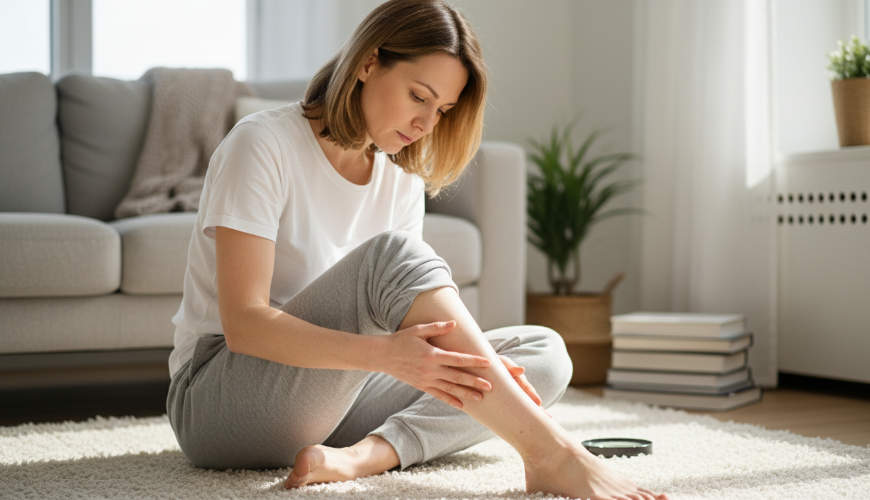
Consider Martina, for example, a forty-year-old teacher who one morning while showering noticed clusters of small red dots on her calves. They didn't hurt, they didn't itch, but they looked concerning. Her first reaction? To search for answers on the internet. But the information she found ranged from harmless explanations to serious diagnoses. In the end, she visited her general practitioner, who after a blood test told her that the cause was likely a mild drop in platelets combined with strenuous exercise the day before. Martina's story illustrates how important it is to not ignore changes on the skin, while at the same time not giving in to unnecessary panic.
What exactly are petechiae from a medical perspective? They are pinpoint hemorrhages under the skin that occur when blood escapes from capillaries – the smallest blood vessels in the human body. Unlike bruises, which are larger and usually result from an impact, petechiae have a diameter of less than two millimeters and resemble tiny red, purple, or brownish dots. The key identifying feature is the so-called diascopy test: if you press glass or a finger against the spot, petechiae don't disappear because the blood is already outside the vessels, directly in the tissue. This distinguishes them from redness caused by dilated blood vessels, which fades under pressure. Anyone can perform this simple test at home, and it's the first step in distinguishing petechiae from other skin manifestations, such as allergic reactions or small angiomas.
Try our natural products


Why Petechiae Develop and What Causes Them
The causes of petechiae are surprisingly diverse, ranging from completely trivial situations to conditions requiring immediate medical care. Among the most common and least concerning are physical exertion and mechanical pressure. Intense coughing, vomiting, intense crying in children, or lifting heavy weights – all of these can cause a temporary increase in pressure in small vessels, which then rupture. In these cases, petechiae typically appear in the area of the face, neck, and upper chest – areas where pressure during exertion is highest. Athletes who engage in strength training or activities with repeated impacts encounter this phenomenon quite frequently.
Another common cause is certain medications. Anticoagulants, or blood-thinning medications such as warfarin or newer direct oral anticoagulants, can increase the tendency for bleeding into the skin. Nonsteroidal anti-inflammatory drugs, such as ibuprofen taken long-term, and some antibiotics, particularly from the penicillin group, have a similar effect. According to information from the American Society of Hematology (ASH), it's important for patients taking these medications to be aware of possible skin manifestations and report them to their doctor, even if they may seem insignificant.
The situation becomes more complex when petechiae are a symptom of a platelet disorder – a condition known as thrombocytopenia. Platelets play a crucial role in the blood clotting process, and when their count drops below a certain threshold, vessels lose the ability to effectively "seal" themselves after minor damage. Thrombocytopenia can be caused by a wide range of factors: autoimmune diseases such as immune thrombocytopenic purpura (ITP), viral infections, deficiency of vitamin B12 or folic acid, liver diseases, and in more serious cases, bone marrow disorders. In children, thrombocytopenia often appears after a viral infection and usually resolves spontaneously within a few weeks.
Among the more serious causes that should be mentioned are vasculitides – inflammatory diseases of blood vessels in which the immune system attacks the walls of blood vessels and causes their weakening. Henoch-Schönlein purpura, now referred to as IgA vasculitis, is a typical example that primarily affects children and manifests as petechiae and purpura on the lower extremities and buttocks. Petechiae can also be a symptom of serious infections, including meningococcal sepsis, which represents an acute life-threatening condition and requires immediate medical attention. This is precisely why doctors emphasize that a combination of petechiae with fever, especially in children, should always be a reason for a prompt visit to the emergency department.
Nutritional deficiencies should also not be overlooked. A deficiency of vitamin C, historically known as scurvy, leads to weakened vessel walls and increased capillary fragility. Although fully developed scurvy occurs rarely in modern society, subclinical vitamin C deficiency is not as uncommon as one might think, particularly among people with very one-sided diets, smokers, or elderly individuals with limited intake of fresh fruits and vegetables. Similarly, vitamin K deficiency, which is essential for the proper function of coagulation factors, can contribute to the development of petechiae.
But how can you tell when petechiae are harmless and when they signal a problem? As a general rule, an isolated occurrence of petechiae following an obvious cause, such as strenuous exercise or intense coughing, usually does not require medical examination, provided the spots disappear on their own within a few days and no new ones appear. Conversely, warning signs include: repeated or widespread occurrence without an obvious cause, concurrent occurrence with fever, fatigue, or other unusual symptoms, easy bruising, bleeding gums, and especially in children, the combination of petechiae with general malaise. As stated by the National Health Service of the United Kingdom (NHS), petechiae combined with fever and neck stiffness are one of the warning signs of meningitis and require immediately calling emergency services.
The diagnostic process usually begins with the general practitioner, who performs a thorough physical examination and takes a medical history. They are interested in when the spots appeared, whether they are accompanied by other symptoms, what medications the patient takes, what illnesses they have had, and whether there is a family history of bleeding disorders. The basic laboratory test is a complete blood count with differential, which reveals any drop in platelets or other abnormalities. Depending on the results, the doctor may order additional tests – coagulation studies, liver function tests, inflammatory markers, or specialized immunological tests. In some cases, a bone marrow biopsy may be necessary, particularly if there is suspicion of a hematological disease.
Try our natural products


Treatment of Petechiae and Care for Skin with Tiny Spots
Treatment of petechiae follows one fundamental principle: the spots themselves are not treated, but rather their cause. If petechiae are the result of mechanical pressure or minor injury, no specific treatment is necessary – the spots will be absorbed on their own within one to two weeks, similar to small bruises. During this process, they may change color from red through purple to yellowish-brown, which is a normal sign of hemoglobin breakdown in the tissue.
In cases where the cause is thrombocytopenia, treatment depends on its origin and severity. For ITP, corticosteroids are often used as first-line treatment to suppress the immune response directed against the body's own platelets. If corticosteroids are ineffective, other options come into play, such as intravenous immunoglobulins, drugs that stimulate platelet production (so-called TPO agonists), or in extreme cases, surgical removal of the spleen – splenectomy. For drug-induced thrombocytopenia, the solution is often straightforward: discontinuing or switching the problematic medication under medical supervision.
If infections are behind the petechiae, whether viral or bacterial, treatment focuses on eliminating the causative agent. Bacterial infections require antibiotics, while viral infections are usually managed symptomatically while waiting for the illness to resolve. For vasculitides and autoimmune diseases, treatment is more complex and involves immunosuppressive therapy managed by a specialist – a rheumatologist or hematologist.
As for home care and prevention, there are several things anyone can do to support the health of their blood vessels and skin. A balanced diet rich in vitamin C – citrus fruits, bell peppers, broccoli, kiwi – helps maintain the integrity of vessel walls. Adequate intake of vitamin K, found in leafy greens such as spinach and kale, supports proper blood clotting function. Regular but moderate exercise strengthens the cardiovascular system, though it's wise to avoid extreme exertion without adequate preparation. Smokers should know that smoking significantly weakens vessel walls and increases the risk of capillary bleeding.
As Sir William Osler, one of the founders of modern medicine, once remarked: "The good physician treats the disease; the great physician treats the patient who has the disease." This quote perfectly captures the approach to petechiae – it's not just about getting rid of dots on the skin, but understanding what the body is telling us through them.
For those interested in naturally strengthening the vascular system, it may be interesting to know that certain natural substances, such as bioflavonoids (rutin, hesperidin) found in citrus fruits and buckwheat, have proven effects on strengthening capillaries. Green tea, berries, and dark chocolate contain antioxidants that protect vessel walls from damage by free radicals. Of course, these approaches complement rather than replace medical care when it is needed.
Petechiae are, in short, a phenomenon that deserves attention but not necessarily panic. Most people will encounter them at least once in their lifetime, and in the majority of cases, it is a temporary and harmless condition. The key is to pay attention to context – when the spots appeared, what preceded them, whether they are accompanied by other symptoms, and whether they recur. The body communicates through various signals, and the ability to recognize these signals and respond to them appropriately is one of the most important aspects of taking care of your own health. If petechiae concern you, a visit to the doctor is always the best choice – because peace of mind, supported by a professional examination, has a value for health that cannot be overestimated.