

What to Use on Children's Skin When You Want to Choose Natural Cosmetics

Children's skin can look perfect, yet be surprisingly demanding. Sometimes, just a few cold days, a change in laundry detergent, or simple drooling during teething can suddenly cause dry spots, redness, or a small rash. Parents often face the question: what belongs on a child's skin to avoid unnecessary burden while keeping it comfortable? And how does natural cosmetics fit into this, promising gentleness but requiring a bit of common sense?
Children's skin is thinner and more sensitive than that of adults, and its protective barrier develops gradually. That's why it's worth thinking of the skin care routine as something that should be simple rather than extensive. Fewer products, clear purpose, reasonable frequency. Natural skincare for children's skin isn't about ten steps, but about selecting a few things that make sense for the specific child, the season, and the situation.
Try our natural products
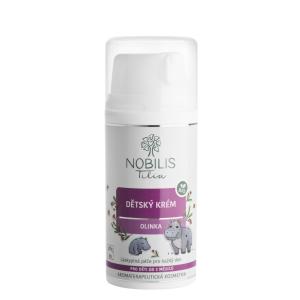
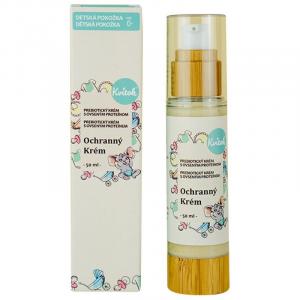
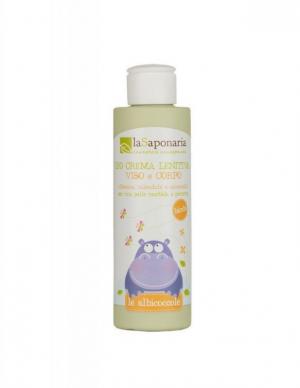
Children's skin is not "little adult skin": why it reacts differently
It's tempting to use "something gentle" from the bathroom for a child, but children's skin behaves differently. It loses moisture more easily, reacts faster to friction (such as from clothing or diapers), and is more sensitive to fragrances or strong degreasing surfactants in cleansing products. An important factor is that young children have a larger surface area to body weight ratio, so what is regularly applied to the skin has a relatively bigger impact.
At the same time, it's good not to succumb to the idea that children's skin always needs something. Often, the gentlest approach respects natural functioning: not drying out the skin unnecessarily, protecting it from extremes, and moisturizing only when it makes sense. In fact, recommendations from professional institutions generally agree that fewer irritating ingredients and less fragrance are usually advantageous for sensitive skin; for basic guidance, you can refer to information about children's skin and eczema on the National Eczema Association website or more general recommendations for baby skincare on the NHS site.
And then there's another thing: children's skin changes. A baby deals with different issues than a schoolchild, skin behaves differently in winter than in summer, and a "miracle" cream can stop working when the water, environment, or even the clothing material changes. It's worth viewing skincare as a flexible system, not a fixed recipe.
What to use on children's skin for babies and older kids: what, when, and how often to use
When considering what to use on children's skin for babies and older kids, it's worth starting with the basics: washing, moisturizing, protection. Most families find that when these three areas are set up reasonably, many minor problems either never appear or quickly subside.
Bathing and washing: more often does not mean better
For babies, it isn't usually necessary to bathe every day "with everything." In a typical routine, a short bath several times a week and washing the face, neck, hands, and bottom as needed is often sufficient. It's important that the water isn't too hot and the bath doesn't last long—prolonged soaking can dry out the skin, especially in winter.
For older children, the frequency naturally increases according to activities, sports, and weather. Even here, a gentle cleansing product doesn't need to be a necessity in every bath. If the child isn't dirty from mud or sunscreen, often just water is enough, and cleansing products can be used only on the areas that sweat the most.
Regarding product choice, fragrance-free natural cosmetics or very gentle cleansing emulsions designed for children are often advantageous for sensitive skin. Natural composition alone isn't a guarantee that the skin will never react (even natural extracts can irritate), but well-formulated products tend to be gentle and free of unnecessary additives. If the child is prone to dryness, a cleansing oil or creamy emulsion often works well, as they don't "strip" the skin as much.
Moisturizing: when it makes sense and when it's unnecessary
Moisturizing is a topic where parents often split into two camps: some moisturize the whole body daily, others almost never. The truth is, a reasonable middle ground is best. If a child's skin is trouble-free, there's no need to make them a "slippery fish" just because it's the norm. However, if the skin is dry, flaky, tight, or has easily irritated areas, regular moisturizing is very practical.
For babies, a simple, well-tolerated balm or cream without fragrance is often suitable. For older children, it's advantageous if the cream spreads well and absorbs quickly—otherwise, skincare becomes a daily struggle. Generally, it's better to apply moisturizer shortly after bathing, while the skin is still slightly damp; this "locks in" hydration. And how often? Sometimes 2–3 times a week is enough, other times (like in winter or for children prone to eczema) daily, or even more frequently on specific areas as needed.
"Less is more" also applies to quantity. A thick layer isn't always beneficial—regularity and the appropriate type of product are more important.
Diaper area: quick response is better than harsh chemicals
For babies, the diaper area is a chapter of its own. Here, it's often less about which cream is used and more about how quickly the skin is kept dry and clean. Gentle washing (or mild fragrance-free wipes), thorough drying, and ideally short "airing" do a lot of good.
A protective cream is most useful when the child is prone to diaper rash, during teething (when stools are more aggressive), or while traveling, when the diaper-changing routine changes. In natural care, barrier creams with zinc or balms with simple compositions are often used. If a rash starts to develop, it's better to respond before the skin "opens" and starts to sting.
Face, cheeks, and around the mouth: an inconspicuous zone that can cause trouble
Anyone who has dealt with red cheeks from frost or irritation around the mouth from drool knows that a child's face is a sensitive zone. In winter, a protective cream for harsh weather helps—ideally one that creates a light film and doesn't contain strong fragrances. During teething and drooling, frequent gentle wiping and a thin layer of protective balm around the mouth work well. It's essential not to overdo the "cleaning": frequent scrubbing can worsen irritation.
Sun: prevention is best with shade and clothing
Sun protection is crucial for children. For babies, it's often recommended to avoid direct sunlight and rely on shade, hats, and light clothing. For older children, sunscreen comes into play—and here natural cosmetics with mineral filters are often considered. The advantage can be gentleness to sensitive skin, though the disadvantage may sometimes be a thicker texture and a white film. In practice, it's worth trying what the child tolerates and what the family will realistically use regularly, as the best sunscreen is the one that doesn't remain forgotten in a bag.
Real example: why sometimes just changing two things is enough
In one common family, dry patches on a three-year-old child's calves repeatedly appeared in the fall. Parents tried a "better" cream, then another one, but the result was the same: a few days of calm and then scratching again. Surprisingly, a simple combination helped: shortening the bath, reducing the foam in the tub, and applying a thicker balm only to problematic areas after bathing. Additionally, they switched to a milder, fragrance-free laundry detergent. Within two weeks, the skin calmed enough that occasional moisturizing was sufficient. It wasn't a miracle, just a return to the idea that children's skin often doesn't need more products, but less irritation.
Skincare tips for children's skin that work without a cluttered shelf
In childcare, it's easy to slide into buying "just in case": a cream for this, oil for that, special soap, foam, spray. However, children's skin usually appreciates calm and consistency. And since the question of "what, when, and how often to use" is constantly revisited in families, a few principles that can be easily adapted are helpful.
First, it's worth monitoring what happens outside the bathroom. Dry air in an overheated apartment can trouble the skin just as much as an unsuitable cream. The same goes for materials—some children react to coarser wool or tight synthetic layers in areas where they sweat. Also important is the "chemistry" around: laundry detergents and fabric softeners that remain on clothing. If the skin is upset without a clear reason, starting here is often surprisingly effective.
Then there's the cosmetics themselves. When choosing, it's worth looking at the composition and asking: is this really necessary? The shorter and more understandable the ingredients list, the easier it is to identify what suits the child. For sensitive children, it's advantageous if the product is fragrance-free and without unnecessarily aggressive cleansing agents. And while natural cosmetics are often a good direction, the simple logic applies: if something repeatedly stings or worsens redness, it's not a "cleansing reaction," but a skin signal.
A useful reminder can also be the simple sentence that dermatologists repeat in various forms: "The skin remembers what we give it every day." And that's the strength of routine—not in occasional rescue operations.
The only list that saves time and nerves
- Gentle washing, not intensifying: shorter bath, lukewarm water, cleansing product only where needed.
- Targeted moisturizing: the whole body only in significant dryness, otherwise mainly problematic areas, ideally after bathing.
- Weather protection: protective cream on the face in winter, shade, clothing, and well-tolerated sunscreen in summer.
- Monitor textiles and laundry: less fragrance, milder products, clothing that "doesn't itch" and breathes.
- Notice triggers: new food, drooling, sweat, chlorinated pool, change in environment—sometimes explains more than another cream.
When some issues recur, it's good not to hesitate to consult a pediatrician or dermatologist, especially if oozing patches, cracks, significant itching, or signs of infection appear. The natural way can be gentle and effective, but it's not a contest to "endure it at home" at all costs.
Ultimately, it shows that the most effective care is realistic care. Children's skin doesn't need a perfect ritual, but constant, gentle attention: a little less hot water, a little less fragrance, a little more protection at the right time. And when you add reasonably chosen natural skincare for children's skin that doesn't overwhelm but supports the natural barrier, most days suddenly become simpler—for both children and parents.