

Why We Are Tired Even When We Sleep Enough, and What Our Body Is Telling Us with This Signal
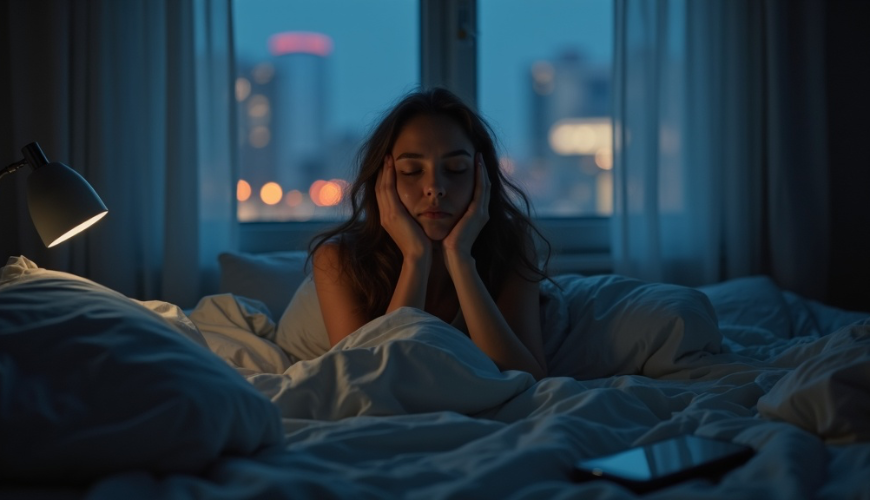
In the morning, the alarm rings, and a person gets out of bed, but instead of the expected lightness, there comes a heavy head and the feeling that the night was too short. Yet, the app shows eight hours of sleep, at the ideal time, without major fluctuations. So, the question returns, which more and more people have been asking in recent years: why are we tired, even when we sleep enough? It is not a whim or laziness. Fatigue is often a signal that the body and mind have been operating for a long time in a mode that outwardly seems "normal," but internally is on the edge.
Moreover, we like to simplify fatigue as just a lack of sleep. However, lack of energy can have surprisingly many causes—from the psyche through daily habits to health factors. And sometimes what sounds paradoxical really happens: sleep doesn't help and isn't enough because the problem doesn't lie in the length of sleep, but in what happens before, during, and especially after waking up.
Try our natural products

Why are we tired, even when we sleep enough: when it’s not about hours, but quality
The number of hours is just one piece of the puzzle. Sleep has several phases, and the body needs them to alternate naturally. If sleep is frequently interrupted (even briefly, perhaps without the person noticing in the morning), they may "collect" eight hours, but the quality will be low. The environment is often the culprit: an overheated bedroom, streetlight, a mobile on the nightstand, or late screen time. Blue light and especially content that gets the mind racing can delay sleep onset and flatten deep sleep. It’s no coincidence that sleep hygiene is increasingly mentioned in expert recommendations—for instance, Sleep Foundation summarizes how small details like regularity or light management can make a big difference.
Another paradox: someone sleeps "enough," but at the wrong time. When the circadian rhythm is disrupted (typically for people who switch schedules, stay up late on weekends, and catch up during the week), the body may behave as if it’s in a permanent jet lag. Morning fatigue then isn’t an exception but a rule. A person may sleep, but at a time when the body should rather be active—and vice versa.
What happens in the evening also plays a role. Alcohol may facilitate falling asleep but often worsens the course of the night and brings a feeling of "broken" sleep in the morning. Similarly, a heavy dinner right before bed or too late caffeine intake. Caffeine is a chapter in itself: for some, it dissipates quickly, for others, it lingers and subtly disrupts deeper sleep phases. The result? The person sleeps, but why sleep doesn’t help becomes clear only in the morning.
Then there are factors that warrant a consultation with a doctor. Snoring and micro-awakenings can be related to sleep apnea—a condition where breathing worsens for a moment and the brain repeatedly "wakes up" to make the body breathe again. Outwardly it may seem like regular snoring, but the impact on energy can be significant. Similarly, some chronic inflammations, thyroid disorders, or anemia can manifest in such a way that sleep doesn’t bring the expected regeneration. If fatigue persists for weeks and other signals are added (shortness of breath, heart palpitations, weight changes, hair loss, unexplainable gloom), it’s fair to give it a medical context and not expect it to "fix over the weekend."
But even when health values are normal and the bedroom is quiet, fatigue may persist. At that point, it often becomes clear that it's not just about the body, but the mind.
Mental fatigue and exhaustion: when the brain never turns off
Mental fatigue and exhaustion don’t just manifest as sadness or anxiety. They often come as fog, distraction, irritability, impaired memory, and the feeling that even small things require disproportionate effort. And this is where one of the biggest misconceptions arises: that sleep will automatically solve exhaustion. Sleep is essential, but not always sufficient. If the nervous system is under long-term stress, the body may "pass out" at night, but the regeneration is shallow. The brain continues in the background—planning, evaluating, replaying conversations, preparing for the next day.
Modern stress often isn't dramatic, but chronic and silent. It’s not about one big event, but rather constant small pressures: notifications, rapid task switching, the feeling of being available, information overload. The brain is designed to focus, then rest. But today, it often jumps between dozens of stimuli without the chance to "settle" into calm. The result is fatigue that can't be slept off.
Interestingly, mental exhaustion often masks as "just laziness." A person stops looking forward to things that used to act as a charger—sports, meetings, reading. Not because they've lost character, but because the capacity is depleted. Expert recommendations for burnout syndrome repeatedly emphasize that its typical sign is the loss of energy and purpose, not necessarily a dramatic collapse. A good contextual guide might be the overview on World Health Organization, where burnout is described as a work phenomenon associated with chronic stress that has not been successfully managed.
Mental fatigue can also reflect what is sometimes called "emotional labor": caring for children, looking after loved ones, complex relationships, constantly keeping the household running. On paper, it doesn’t look like an effort that should exhaust a person, but in reality, it’s continuous management—and the brain counts it.
One real-life example that repeats in various versions: a young woman works part-time, puts her child to bed in the evening, and finally "has a moment for herself" around ten. Instead of resting, she catches up on messages, orders, planning, scrolls through social networks. She falls asleep after midnight, wakes up at seven. On paper, that’s seven hours, sometimes eight, but she’s exhausted in the morning. Not because she’s weak, but because her brain doesn’t have a single part of the day when it truly switches off. She catches up on sleep at night, but not on calm.
"Rest is not just sleep, but also a feeling of safety and space where we don’t have to prove anything." This sentence sounds simple but is surprisingly challenging in practice. When the mind is in performance mode, sleep becomes just another task—and then it’s no wonder morning brings frustration: why sleep doesn’t help and isn’t enough?
Another factor adds to this: movement and being outdoors. It’s not about "fitness" or performance, but biology. Daylight and natural movement help set the rhythm, improve mood, and support deeper sleep. Those who spend entire days indoors often paradoxically sleep worse—and feel more tired in the morning, even if they slept long.
Then there's nutrition. Not as a trendy diet, but as stability. Too many quick sugars, irregularity, and a lack of proteins or fiber can lead to energy fluctuations throughout the day. A person then relies on coffee, something sweet, coffee again—and is overtired by evening. The result is sleep that is more shutting down than regenerating. Lack of energy thus spins in a circle: during the day quick sources, evening exhaustion, restless night, morning fatigue.
When sleep doesn’t help: small changes that bring energy back to everyday life
There is no one-size-fits-all advice because fatigue is often a mix of multiple influences. Still, it’s possible to start with things that are surprisingly effective when combined and sustained for a while. It’s not about perfection, but rather returning to a rhythm the body knows.
It works well to start in the morning, not the evening. Morning light (preferably outside, even when overcast) helps set the biological clock. At the same time, it’s worth monitoring that caffeine doesn’t overshadow true fatigue all day. Coffee can be a pleasant ritual, but if consumed "for survival," it often just masks that the system is overloaded. In the evening, the brain then fails to switch into calm.
For mental fatigue, it’s often important to bring micro-rest into the day. Not another obligation, but rather short pauses without the phone: a few minutes of silence, stretching, a short walk around the block. The brain needs "emptiness" to process stimuli. Without it, internal noise accumulates, and fatigue worsens.
It also helps to simplify the evening. Not in the sense of asceticism, but so that the last hour before sleep isn’t full of decisions. When the evening is always different, the brain stays alert. When consistent, the body gradually learns that calm is coming. Often, it’s enough to dim the lights, put away messages, take a shower, read something light. Some appreciate even small tweaks that calm the environment: airing out, lowering the heating, adding natural textiles that feel good to touch. In an eco-friendly home, there’s also often a focus on ensuring the bedroom isn’t full of irritating scents and synthetic fresheners—sensitive people react worse than expected.
Food and drink are worth shifting from extremes to stability. More regular meals, enough fluids, less alcohol "for shutting down." And when fatigue feels more like inner emptiness than sleepiness, it’s worth checking if the diet lacks basic building blocks: proteins, complex carbohydrates, healthy fats, vegetables. Not due to trends, but because the brain is an energy-intensive organ and needs a constant supply.
If fatigue persists despite lifestyle adjustments, it’s time to stop seeing it as a personal failure and start treating it as information. A general practitioner can check blood counts, iron, thyroid, vitamin D, or other parameters as the situation dictates. Sometimes a clear cause emerges, other times it’s more of a mosaic. In both cases, it holds that long-term fatigue deserves attention because it affects immunity, mood, and relationships.
And perhaps most importantly, change the perspective: fatigue isn’t just an enemy to be overcome. Often, it’s a signal that the body and psyche need a different kind of rest than what longer sleep offers. When more calm, light, movement, and less internal pressure are gradually brought back into the day, energy often starts to appear subtly—first as better concentration in the morning, then as a reduced need for sweets in the afternoon, and finally as the feeling that morning isn’t a battle.
Fatigue that comes even after "proper" eight hours is suspiciously common today. Perhaps that’s why it’s worth stopping asking just "how many hours were slept" and starting to explore what all contributes to that fatigue throughout the day. Sometimes it’s not just the night that needs to be slept off, but an entire life rhythm—and that can be gradually changed, step by small step, which in the end are surprisingly large.