

How to Create a Calming Home Using Light to Enhance Sleep and Reduce Stress
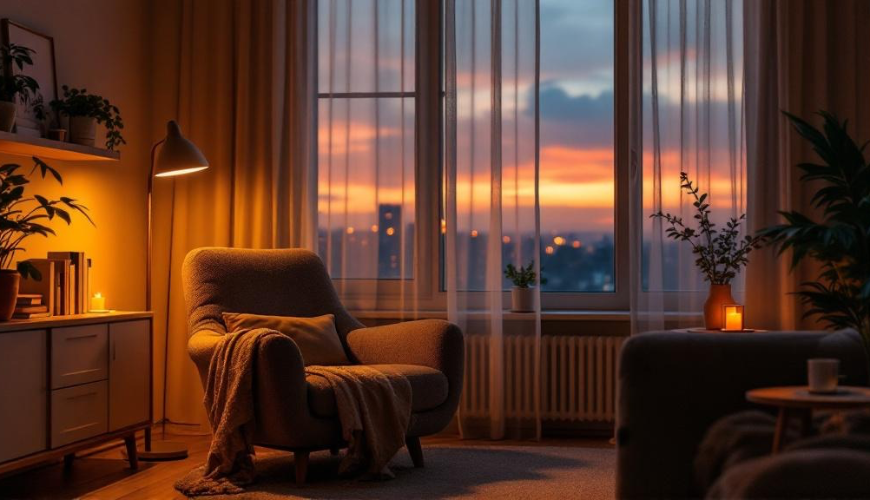
Light is the subtle director of mood in the household. In the morning, it can kickstart energy, while in the evening, it can calm the mind after a long day. Yet, it often receives less attention than the color of the walls or the choice of a sofa. However, working with light is one of the simplest ways to create a calming home using light—without major renovations and without complex rules. It just requires becoming aware of where the light comes from, its color, how it changes throughout the day, and what it does to the body and psyche.
In recent years, there's been increasing discussion about how the environment affects stress and relaxation. It's not just a feeling. Light plays a role in setting circadian rhythms, the internal biological clocks that affect alertness and sleep. This is clearly summarized by the National Institute of General Medical Sciences, which shows that light is one of the main signals for the body to know "what time it is." When the light at home is too harsh, cold, or poorly timed, the mind can remain on alert even when it would prefer to shut down. Conversely, when handled sensitively, it can create a relaxing space at home using light that is unobtrusive yet supportive.
Try our natural products






Why light determines whether you relax at home
Anyone who has ever come home in the evening to an apartment lit by a single strong ceiling "white fluorescent" light knows the difference. The room is bright, but it's hard to relax. Harsh, even, and overhead light can feel uncompromising—like an office or a waiting room. For the brain, this is a signal of activity, not rest. And in a time when working from home is common, the boundary between "being productive" and "relaxing" blurs even more easily.
A calming home isn't created just by silence and tidiness. It is also created by an environment that gives the body gentle cues: now you can slow down. Light is one of the fastest triggers in this regard. It’s not just about intensity, but also about direction, color, and contrast. Calming light is often softer, warmer, and spread across multiple sources. Instead of one "big" light, a combination of smaller lights creates layers—similar to music, where there isn't just one loud note, but an entire spectrum.
It's important to recognize a little psychology: people relax more easily where they don't feel "exposed." Too bright, widespread light can give the impression that everything is on display, that one needs to be on guard. In contrast, a lamp in the corner, under-shelf lighting, or soft wall illumination creates a sense of shelter, depth, and safety. Perhaps that's why people love candles so much—not for the lux, but for the atmosphere that says: there's no rush.
And yes, it can be put simply: stress and relaxation often come down to details. When evening light resembles a morning office, the body remains in "hang in there" mode. When light resembles a sunset, the body more easily switches to "you can relax now" mode.
"Light doesn't just create visibility, but also mood—and mood is often what we seek at home."
How to create a relaxing space at home using light (without major investments)
In practice, it often turns out that the biggest change doesn't come from a new sofa but from an extra lamp. Creating a calming home using light doesn't start with a lighting catalog but with observation. When is it most uncomfortable at home? In the evening in the kitchen? In the winter in the living room? In the workspace where it always feels "a bit off"?
A simple rule works well: the more varied the activities at home (work, cooking, relaxing, reading, evening calm), the more it pays off to have more layers of light. One intensity and one color of light for everything is like wearing one jacket in both summer and winter. Technically, it's not complicated: just divide the light into basic, task, and mood lighting. Then play with it so the home "breathes" according to the time of day.
In a typical apartment, it's often worth starting with the living room—because that's where relaxation and shared time happen. Instead of a single ceiling light, add a floor lamp, a smaller lamp on a sideboard, or soft lighting by the bookshelf. The result is surprisingly quick: the room feels cozier because the light creates shadows and depth. And depth is often synonymous with calm—the space isn't "flat" and tiring for the eyes.
The color of light also plays a significant role. For evening comfort, warmer tones usually work better, as they don't feel as "blue" and harsh. It's not a dogma, but a mood: warm light evokes fire, sunset, and café lamps. Cold light, on the other hand, evokes noon and focus. When the home is lit too coldly in the evening, it can be an unnoticed reason why it's hard to unwind even after a shower and tea. And those with sensitive eyes or who often look at screens will appreciate that warmer light is less "stinging."
Dimmers or at least multiple light circuits work excellently. It doesn't have to be a smart home. Sometimes it's enough to add a lamp to a socket and learn to use it as an evening signal. Home is largely about rituals. And light is a ritual par excellence: it turns on, and the body knows something is changing.
There's also one often underestimated factor: glare and reflection. When light shines directly into the eyes or reflects off shiny surfaces, one can feel tense without knowing why. It's helpful to choose shades that soften the light and think about where to direct the lamp. Sometimes simply turning a floor lamp towards the wall can transform "unpleasant" light into pleasant indirect illumination.
What about windows? Daylight is a strong ally. Clean windows, light curtains, and the ability to regulate light during the day (for example, with blinds or a curtain that can be partially drawn) are small things that make a big difference. Too harsh midday sun can be as exhausting as winter gloom. Working with light means knowing how to let it in but also how to soften it.
A realistic example shows how quickly the atmosphere can change: in a panel apartment where the living room was also used as a "home office," the only light source for a long time was a ceiling fixture. It was hard to relax in it in the evening because the room was either bright or dark. After adding two lamps—one floor lamp in the corner and one small one on a shelf—and replacing one bulb with a warmer one, the living room became a space where one could truly unwind after work. Not because the furniture changed, but because what the eyes perceive as the "tempo" of the room changed.
If it's helpful to have a simple orientation at hand, a single short checklist can serve more as inspiration than obligation:
- Prefer warmer and softer light in the evening, ideally from multiple smaller sources instead of one ceiling fixture.
- Illuminate workspaces purposefully, so you don't have to light up the whole room "fully" when focusing.
- Limit glare and reflections (shades, indirect light, suitable lamp orientation).
- Utilize daylight but know how to soften it with curtains or blinds when it is too harsh.
Light as a silent helper against stress: small changes, big impact
When we talk about "light and stress," many people think of screens. They are certainly part of it. An evening full of bluish light from a phone or laptop can make falling asleep more difficult because the body receives the signal that it's still daytime. About how light affects sleep and internal clocks, you can read, for example, in the popular overview by the Sleep Foundation, which clearly explains why evening light is so important. Yet, home stress often doesn't just come from the phone—it also arises from an environment that is "overlit" or depressingly dark, making it hard for a person to breathe deeply.
Especially in winter, it's worth considering how light supports mood throughout the day. When it's dim outside in the afternoon, the home can feel tired. In such moments, it helps to add light, but not necessarily bright. More like light that resembles a natural day: diffused, even, without unpleasant shadows in areas where one moves. In the kitchen, brighter task lighting is practical, but in the dining area, a softer lamp can make dinner an event, not just another task.
Similarly, the bedroom. This is often the last room where "performance" lighting should be. Yet, sometimes a strong ceiling bulb hangs there, turning it more into a dressing room than a place for calm. When only a lamp with warmer light is used in the bedroom in the evening, the atmosphere changes immediately. And one starts associating the bedroom with relaxation, not catching up on tasks.
The transition between day and evening is also important. A calming home isn't about turning off the lights and lighting a candle at six o'clock. It's more about gradual dimming. The body likes things to happen smoothly. When evening light gradually softens—perhaps by turning off the ceiling light and leaving just lamps—the brain receives a clear message: the pace is slowing down. And that's precisely what's often missing in times of constant notifications.
Sometimes it's worth looking at the colors and materials in the interior because light behaves differently on them. Shiny white surfaces reflect light more sharply, while natural materials can soften it. Textiles, wood, or matte surfaces often feel calmer—not just visually but also because they don't "bounce" light back so harshly. It's here that light naturally meets sustainable living: natural materials and thoughtful lighting go hand in hand, creating an environment that doesn't feel cold or sterile.
And what about a children's room or a space where one relaxes—perhaps reading, doing yoga, or just sitting quietly? There, light that is stable, doesn't flicker, and doesn't glare is suitable. For evening reading, it's pleasant to have light directed at the book, but not so sharp that it "cuts" into the eyes. For relaxation, indirect light that illuminates the wall or corner of the room and creates a sense of softness works well.
Perhaps the most interesting thing about all this is how quickly the change can be felt. A relaxing space at home using light doesn't take weeks to develop. It often manifests in one evening: less tension in the shoulders, less need to "get something done," an easier transition to relaxation. And when combined with small habits—dimming in the evening, letting in daylight in the morning, lighting only where needed for work—light becomes a silent helper that reduces pressure without drawing attention to itself.
In the end, it's not about having designer lamps or perfectly coordinated fixtures at home. It's about light serving people, not the other way around. To support the natural rhythm of the day, help distinguish work from rest, and make home a place where one can truly exhale. Isn't that one of the most practical answers to what "feeling good at home" means today? Working with light is a subtle yet effective way to give everyday life softer edges.