
Perineal massage can be a gentle ritual that supports the relaxation of the pelvis before childbirth
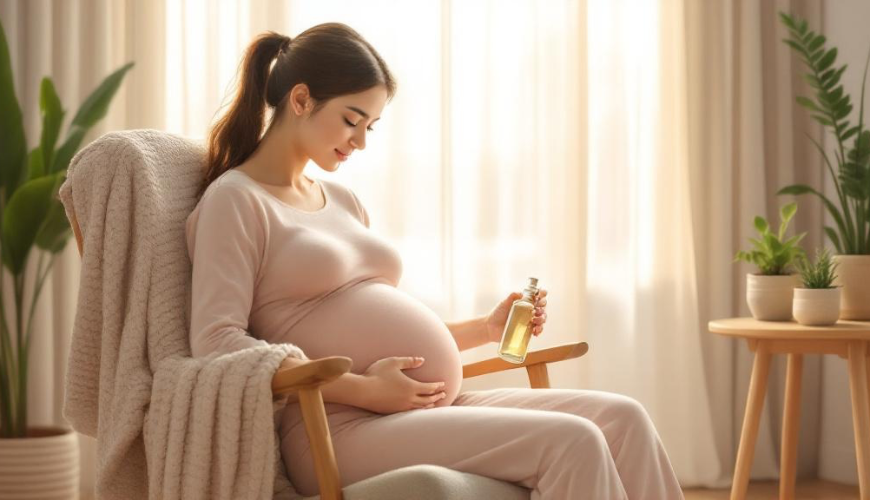
The topic of perineal massage has come to the forefront in recent years, not only in maternity hospitals but also in everyday conversations among expectant parents. And it's no wonder: it's a simple, easy habit that can help prepare the perineum for the significant strain during vaginal delivery. However, there are many uncertainties surrounding it – when perineal massage really makes sense, when to start perineal massage before delivery, the exact procedure, which oil for perineal massage to choose, and what to expect if it's not "pleasant" at first.
Perineal massage is not a miraculous technique that will "solve" childbirth. It's more of a quiet, regular preparation of the tissues, similar to how one gradually warms up before sports. The perineum is not just "the skin between," but a functional area composed of skin, connective tissue, and pelvic floor muscles. Their flexibility and ability to relax play a significant role during childbirth.
What is the perineum and why focus on perineal massage
The perineum is the technical term for the perineal area – the tissue between the vaginal opening and the anus. In everyday life, one hardly notices it, but during pregnancy and childbirth, it becomes a key area. As the baby’s head and shoulders pass through, the perineum is significantly stretched, and sometimes tearing can occur. In some places, episiotomy is still routinely performed, while elsewhere, there is a move away from it, focusing instead on gentle delivery, positions, breath work, and preparation of tissues before birth.
Perineal massage is often recommended as a way to gradually increase the flexibility of tissues and "teach" the body to relax in an area that tends to reflexively tighten under stress. It's also sometimes said to help reduce the risk of perineal injury or at least its extent. To be factual, the results of studies are not the same for everyone, and it always depends on many factors (birth process, position, baby’s size, management of the second stage of labor). Nonetheless, perineal massage is often cited as a useful step, especially for first-time mothers.
Those seeking authoritative sources can refer to information from the British NHS on perineal massage: https://www.nhs.uk/pregnancy/labour-and-birth/preparing-for-the-birth/perineal-massage/ – the advantage is that it's a practically written text without fear-mongering or exaggerated promises.
The psychological aspect is also important: regular contact with one's own body, conscious breathing, and working with pelvic tension can surprisingly help with how a woman feels at the end of pregnancy. "It's not just about the tissue, but also about trust," midwives often say. And trust that the body can open is crucial for many.
When to start perineal massage before delivery
One of the most common questions is: when to incorporate perineal massage so it makes sense and isn't unnecessarily early. It is most commonly recommended to start around the 34th to 36th week of pregnancy, when the body is naturally preparing for birth and tissues begin to become more elastic under the influence of hormones. Recommendations often suggest that the period of when to start perineal massage before delivery should ideally be about a month to six weeks before the expected due date.
Some women start earlier and find it suits them, while others get to it in the last weeks – and that's fine too. Regularity makes more sense than perfection. If the massage is done twice and then not at all, the effect will logically be less than if it becomes a short ritual several times a week.
About 3-4 times a week for 5-10 minutes is often recommended, but there's no need to stress over numbers. The body can provide clear feedback. If the area is hypersensitive, irritated, or burning occurs, it's better to reduce, take a break, or discuss it with a gynecologist or midwife. Caution is also advised during recurrent vaginal infections, active herpes, or any bleeding – in such cases, massage is usually not recommended without consultation.
In real life, it often looks like perineal massage is "planned" for the evening – and then fatigue sets in, an older child gets sick, or work runs late. One expectant mother simply described it: "The hardest part was finding peace and privacy. But when it worked after a shower, suddenly it wasn't another chore, but a moment to breathe out." This moment is important: perineal massage can function as a signal to the body that it's safe to relax.
How to perform perineal massage: a simple process that makes sense
The question of how to perform perineal massage sounds practical, but often there is uncertainty behind it: what exactly to do, where to press, how to recognize the correct intensity. The good news is that the goal isn't to "overpower" the tissue with force. On the contrary – it's about gentle, gradual stretching and getting the perineum used to pressure and pull similar to that during childbirth.
Before starting, it's nice to take a warm shower or apply a warm compress. Heat increases blood flow to the tissues and softens them, making the massage easier. It's practical to have short nails and find a position where relaxation is possible – some choose a semi-sitting position supported by pillows, others a squat with support or one leg on the edge of the tub. There is no "one correct" option. The key is to be able to breathe into the abdomen and not strain the back.
The procedure is often described like this: thumbs (or one thumb) are gently inserted about 2–3 cm into the vagina, while the fingers remain outside. Then, with gentle pressure downwards (towards the anus) and to the sides, a feeling of a gentle "U" is created. The tissue is held in a comfortable stretch, breathing is maintained, and one waits for the tension to ease a bit. Some also add gentle massaging of the vaginal entrance edges, as if in small circles.
Intensity is important. The massage may be uncomfortable, sometimes even slightly burning, because it involves a sensitive area. However, it should not be sharp, stabbing, or outright painful. If the body instinctively "retreats," tightens the buttocks, or holds the breath, it's usually a sign to ease off. In practice, a simple rule helps: pressure should be such that it allows keeping a calm breath and a relaxed jaw. It sounds strange, but the jaw and pelvic floor often react together – when the face tightens, the pelvis does too.
The massage can be performed by the woman herself or by a partner, if both find it comfortable. Sometimes a partner has the advantage of a better angle, allowing the woman to focus more on breathing, but sensitivity and communication are necessary. Simple phrases like "it's fine like this" or "it's too much now" suffice.
And one more thing that's often overlooked: perineal massage is not a test of endurance. If one doesn’t feel like doing it on a particular day, that’s okay. More important than perfect performance is to avoid it becoming a stressor. Childbirth itself brings enough pressure – and preparation should rather provide relief.
Which oil to choose for perineal massage to be gentle on the skin
Choosing a product is a chapter in itself because the skin and mucous membranes in intimate areas can be sensitive. When considering, which oil for perineal massage, it pays to adhere to a few simple principles: the oil should be pure, gentle, without unnecessary fragrances, and ideally of organic quality. Intimate tissues are not the place for synthetic scents or harsh preservatives.
Commonly used is almond oil (gentle, well-tolerated), or blends specifically designed for perineal massage. Some people opt for olive oil, but not everyone likes its smell and "heaviness." On the other hand, essential oils may sound appealing, but caution is advised during pregnancy and in intimate areas – some can irritate. If burning, redness, or itching occurs after using the oil, it's better to discontinue use.
In an ecologically minded household, it makes sense to choose an oil of quality that respects both the body and nature: gentle composition, reasonable packaging, transparent origin. Whatever product is selected, a simple rule applies: less is sometimes more. Just a few drops are enough, the goal is slipperiness and comfort, not "drenching" the entire area.
Small details that make a big difference
Perineal massage is often described as a technique, but in reality, it consists of small things: light, warmth, peace, breath. When in a rush, the body tightens. When a safe space is created, it relaxes. And that's the principle that comes in handy during childbirth as well.
Sometimes, connecting the massage with a simple visualization helps: during inhalation, the pelvic floor area gently "expands," during exhalation, it relaxes. It's not esotericism, but rather working with the nervous system. The body learns that pressure in this area doesn't have to mean danger.
At the same time, having realistic expectations is beneficial. Perineal massage doesn't guarantee a tear-free delivery, just like regular walks don't guarantee one will never be out of breath. However, it may increase the chance that the tissue will be more flexible and that the woman will have better awareness of what's happening in the pelvis. And that's not insignificant.
If gentle care at the end of pregnancy is added – adequate hydration, appropriate movement, conscious pelvic floor relaxation, and good communication with the birth team – it forms a whole that makes sense. Childbirth is largely about cooperation: body, mind, and environment.
Finally, a simple question can change perspective: What if preparing for childbirth wasn't mainly about "enduring," but about learning to let go? Perineal massage can be one of the subtle ways to try this – calmly, without performance anxiety, respecting one's own pace, and knowing that even a few minutes of care several times a week can make a surprisingly big difference at the end of pregnancy.