

Passion fruit is an exotic fruit that surprises with its taste, and that's why it's worth getting to
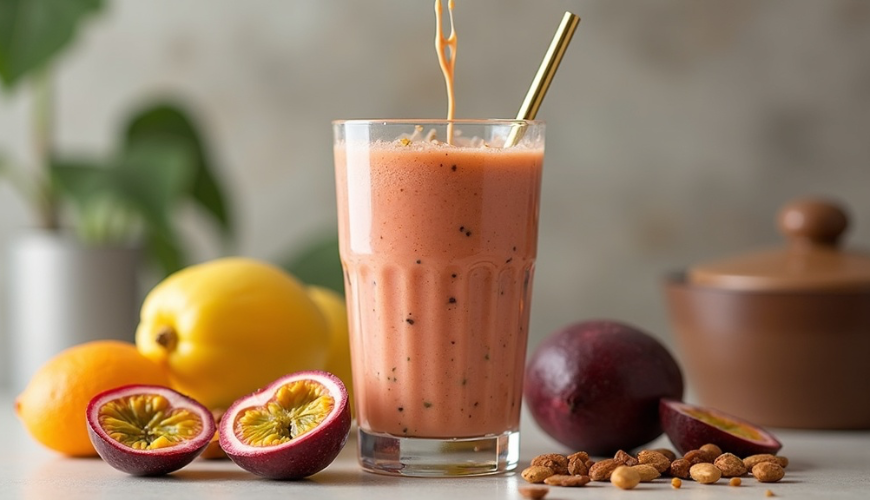
Passion fruit has several names in Czech – it's often referred to as marakuja or edible passionflower (passion fruit) – and it almost always provokes the same reaction: surprise. Not only because of its scent, which is strong and "tropical" even in winter, but mainly because of how it looks when cut open. Inside, it hides juicy pulp full of seeds that resemble citrus caviar. And one quickly asks: what exactly is passion fruit – a fruit to be eaten with a spoon, an ingredient for desserts, or a small miracle for health?
In reality, it is all of these. Passion fruit is a fruit from the passionflower family, most commonly found in purple or yellow varieties. The fruit can be smooth, but it is often sold slightly wrinkled – which is paradoxically a good sign. Riper passion fruit tends to have a more intense aroma and sweeter taste (although it always remains pleasantly tart). In the kitchen, it acts as a natural "flavor enhancer": just a few spoonfuls can transform plain yogurt or water with ice into something entirely different.
Try our natural products





Passion Fruit: What It Is and How to Tell If It's Ripe
For those seeing passion fruit for the first time, there can be hesitation about whether it's ready to eat. For purple fruits, color and surface are good indicators: as it ripens, the skin darkens and slightly wrinkles. A smooth, hard passion fruit is often still unripe – the taste can be sharper and the aroma weaker. Yellow passion fruit is usually larger, generally more acidic, and notably juicy, which is why it's often used in drinks and sorbets.
Naturally, the question of storage arises. If the fruit is still firm, it can ripen for a few days at room temperature. Once ripe, it's worth placing it in the refrigerator, where it will last longer. Then comes the easiest part: cut, smell, and taste.
It may seem trivial, but it's worth saying out loud: passion fruit is a fruit that is mostly not eaten "crispy" like an apple. It is eaten more like a natural pudding – with a spoon. And that's what makes it a great ally for quick, healthy snacks.
Health Benefits of Passion Fruit: Why to Include It More Often
When talking about the health benefits of passion fruit, it's not just a trend. It's a fruit that naturally offers a combination of fiber, vitamins, and antioxidants, and it has a strong flavor, so often just a small amount is enough to avoid the need for added sugar.
Passion fruit is known for containing vitamin C, which is associated with normal immune function and protection of cells from oxidative stress. It also contains other plant compounds (polyphenols and carotenoids), often mentioned in scientific literature in the context of antioxidants. A reasonable introduction to the topic can be found in the overview of vitamin C on the National Institutes of Health pages or a more general context on fruit and health on the WHO website, which highlights the importance of fruits and vegetables in the diet.
A significant advantage of passion fruit is also fiber. It's important for digestion and the feeling of fullness, which is useful when looking for a snack that doesn't "disappear" easily. Fiber is often lacking in the diet, especially when quick, industrially processed foods prevail. Passion fruit can be added to yogurt, porridge, or smoothies with little effort – and even small changes add up throughout the day.
And then there's another benefit that's hard to measure but easy to recognize: passion fruit can enhance the taste of healthy foods. When a spoonful of honey and the pulp from one passion fruit is added to plain yogurt, it becomes a dessert that tastes café-quality. Often, it's the taste and aroma that determine whether one sticks with a healthier option.
"Sometimes, one strong flavor is enough to stop the body from seeking sweetness elsewhere." This statement is surprisingly often confirmed in practice – and passion fruit is precisely the type of ingredient that can satisfy sweet cravings without a heap of sugar.
A Real-Life Example: Passion Fruit as a Rescue from "Afternoon Slump"
In an ordinary workday, it happens subtly. Around three in the afternoon, fatigue sets in, coffee no longer helps, and the craving for something sweet grows. In one office, they solved this easily: they started stocking the fridge with plain yogurt, some fruit, and occasionally passion fruit. Someone would cut the fruit, add it to the yogurt, and sprinkle it with a handful of nuts. Within a week, this option was automatically chosen over cookies. Not because anyone banned them, but because it simply tasted better and didn't cause the typical "sugar crash."
In this case, passion fruit acts as a small trick: it provides a strong flavor, so there's no need to sweeten as much, and it also gives the feeling that the food is special, not just a duty.
How to Properly Eat Passion Fruit and Use It in the Kitchen
The most common question is surprisingly practical: how to properly eat passion fruit? The simplest way is to cut it in half and scoop out the pulp with a spoon. The seeds are edible – they crunch and are a pleasant part of the texture for many people. If someone dislikes the seeds, the pulp can be strained through a fine sieve, resulting in a smooth juice or puree, which is excellent for creams, glazes, and drinks.
Important detail: the skin is usually not eaten. It's hard and not meant for consumption (although some types of passionflower are used differently, the commonly sold passion fruit is intended to be eaten only the inside).
And how to use passion fruit so it doesn't remain just a one-time tasting experience? It's good to think of it as an ingredient with three strong points: aroma, tartness, and color. This makes it usable similarly to lemon, but with a tropical character. It works great in places where one would otherwise use citrus or jam.
Passion fruit suits sweet dishes but surprisingly can also enliven savory combinations. In modern cuisine, it appears in dressings, marinades, or as part of sauces for roasted vegetables. Its tartness can "lift" the flavor like vinegar, just more gently and fragrantly.
Tips and Recipes with Passion Fruit That Are Easy to Include in Your Week
To prevent passion fruit from remaining an exotic decoration, having a few simple ideas on hand helps. Most of them take two minutes, no complicated baking or special equipment.
- Yogurt parfait with passion fruit: plain yogurt or coconut yogurt, pulp from 1–2 passion fruits, a handful of nuts, and a few slices of banana. If desired, add a spoonful of honey or maple syrup, but often it's not necessary.
- Overnight oats "tropical style": mix passion fruit into finished oats, add mango or pineapple (even frozen), and sprinkle with coconut. Passion fruit adds a tartness that balances the oats.
- Quick lemonade: pulp from passion fruit, water (sparkling or still), ice, a few mint leaves. If passion fruit is more tart, a drop of syrup or a bit of honey suffices. In summer, it tastes like a homemade "mocktail" without the extras.
- Salad dressing: olive oil, passion fruit pulp, a pinch of salt, and optionally a teaspoon of Dijon mustard. Suitable for salads with avocado, roasted pumpkin, or goat cheese.
- Dessert glaze: strained passion fruit mixed with a bit of honey or blended with banana. Great on cream cheese, pancakes, or cheesecake.
Note that in all cases, passion fruit functions as a flavor accent. It's not a fruit that needs to be eaten in pounds to make sense. On the contrary – often, one fruit is enough to elevate the entire dish.
When Passion Fruit Tastes Best and What It Pairs Well With
The taste of passion fruit is distinct but also surprisingly versatile. It pairs well with both dairy and plant-based bases (yogurt, cream cheese, coconut cream), with chocolate (especially dark), with mango, banana, and citrus. When combined with something sweeter, its tartness helps balance it out. And when combined with something neutral, like water or plain yogurt, it becomes the main star.
It's also worth knowing that passion fruit can be used even when it's not entirely "perfect." If the flavor is too sharp, it can be softened with banana or a bit of honey. If it's less intense, it can be enhanced with a drop of lemon or mixed with other aromatic fruits.
And what about freezing? The pulp can be frozen without issue – ideally in portions (such as in an ice tray). This is practical when more fruits are bought at once or when one doesn't want to deal with fruit ripening faster than it can be eaten.
A Small "Kitchen" Warning: It Stains and Sticks, but It's Worth It
Passion fruit is juicy, and the seeds like to scatter, so a cutting board and spoon, or a bowl to scrape the pulp into, is helpful during preparation. Those making lemonade or dessert for guests will appreciate one simple thing: passion fruit looks impressive on its own. A few spoonfuls on top of cream create an impression without needing to add sugar or artificial sprinkles.
This is its charm for a household trying to live a bit more sustainably: when an ingredient tastes strong and looks good, people are less likely to reach for ready-made products with long ingredient lists. And that is often the path to a simpler, more natural diet.
Thus, passion fruit is not just an exotic fruit "to try," but a practical ingredient that can be used again and again – in breakfasts, snacks, drinks, and light desserts. It's enough to know that one can recognize ripeness by scent and slightly wrinkled skin, that the seeds are edible, and that even one passion fruit can turn an ordinary meal into something to look forward to. And isn't that ultimately what most people need from healthier habits – for them to make sense and also be enjoyable?