

How to Deal with Odor from Waste Without Aggressive Chemicals When You Want a Gentle and Long-Term S
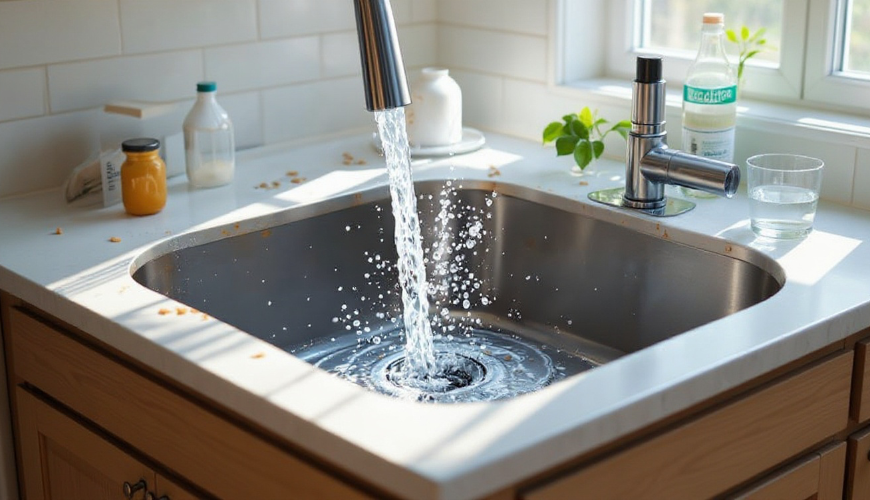
An unpleasant odor that starts to stealthily creep from the kitchen or bathroom can ruin the impression of an otherwise perfectly clean apartment. It often comes in waves: sometimes it's just a light "whiff," other times the smell from the sink or bathroom and WC drain odor strikes the nose immediately upon entering the home. And one might wonder: where does it come from when cleaning is done regularly? The good news is that in most cases, it's not a mystery or a "bad apartment," but a combination of deposits, bacteria, and minor operational details that can be addressed more gently than with aggressive chemicals.
When searching for how to eliminate drain odor and how to get rid of drain odor long-term, it's beneficial to understand what's happening in the pipes. The drain isn't a sterile tube through which only water flows. It's an environment where grease, food remnants, soap, hair, and minor debris accumulate. Gradually, a thin film forms, known as biofilm, where microorganisms multiply. During the decomposition of organic residues, these microorganisms produce gases – and these are responsible for the typical "sewer" smell. Add to this a drying siphon, poor ventilation of the drain, or a minor leak, and you have a problem that keeps recurring. And importantly: it's often not about one miraculous dose of cleaner, but rather a proper routine and a few simple steps.
Why Drains Smell and Why It Often Manifests in the Bathroom or Sink
Drain odor typically has a few very specific causes. In the kitchen, the main culprits are grease and organic residues. Even if a plate is "licked" with a sponge before washing, microscopic particles end up in the drain, which stick to the walls of the pipes when combined with fat. Fat also solidifies, catching more debris and creating ideal conditions for bacteria. This is why the smell from the sink often worsens after cooking, washing pans, or when pouring leftover sauce into the drain.
In the bathroom and WC, soap, cosmetic residues, skin oils, and especially hair play a role. The siphon under the sink or shower can be partially clogged, causing water to drain slowly – and once water stands, the decomposition process accelerates. Bathroom and WC drain odor sometimes appears even in apartments where no one has lived for a while. The reason is simple: the siphon (water seal) dries out and ceases to act as a barrier against gases from the sewer. Just a few days of non-use and the "water stopper" is gone.
Additionally, there's sometimes a detail that's easily overlooked: the overflow in the sink. The small hole under the rim of the basin is a great safety feature but also a place where moisture and deposits accumulate. If only the "visible" part of the sink is cleaned, the overflow is often full of biofilm, emitting an unpleasant odor that seems to come directly from the drain.
Then there's another situation that can surprise: the odor appears after renovation, replacing a faucet, or after a plumber's intervention. Sometimes it's enough for the siphon not to be properly tightened, the gasket to not fit, or for a part of the pipe to shift during installation. A leak doesn't necessarily mean water is flowing – just a microscopic gap through which gases escape. If the odor can't be "cleaned" even after repeated flushing, it's good to check this possibility too.
How to Ecologically Get Rid of Drain Odor: Gentle Methods That Also Work Long-Term
When addressing how to ecologically get rid of drain odor, it's useful to distinguish between two things: quick relief and long-term prevention. Quick relief means removing the current source of odor (biofilm, deposits, residues). Prevention means not allowing it to form again to the extent that it becomes noticeable.
Very often, simple mechanics and hot water help. Not as a one-time "attack," but as a habit. In the kitchen, it pays off to occasionally flush the drain with really hot water (not boiling, if there are plastic parts in the system to avoid deformation). The purpose is to dissolve some of the grease and wash away softer deposits before they become a resilient build-up.
To this, the classic household duo of baking soda and vinegar is added. It's fair to say it's not magic that "eats" everything. But as a gentle aid for disrupting odor and loosening lighter deposits, it works well, especially if used wisely and regularly. The process is usually simple: pour a reasonable amount of baking soda into the drain, pour vinegar over it, let it sit for a while, and then thoroughly flush with warm water. The last step is crucial – without flushing, the loosened dirt may just move a bit further.
Even more effective than the "chemical reaction" is targeted cleaning of places that are usually ignored. In the kitchen sink, it's the strainer and the area right beneath it. In the bathroom, it's the siphon and the overflow in the sink. The overflow can be gently cleaned with a narrow brush (there are even special brushes for straws or narrow bottles that work excellently) and warm water with detergent. Often, this is where the odor originates, masquerading as "sewer," but in reality, it's just a neglected corner of ceramics.
In households aiming to go further, enzymatic and microbiological drain cleaners make sense. These aren't aggressive lyes but products that help decompose organic residues in the pipes. The advantage is that they are usually gentler on materials and home treatment plants and septic tanks (if someone has them), and with regular use, they help limit biofilm formation – precisely what most often creates odor. For an ecologically oriented household, it's often the most practical path: fewer extreme interventions, more continuous care.
A real-life example repeating in many apartments: a family in a block of flats begins to notice bathroom drain odor, mainly in the morning and after returning from the weekend. They try "everything possible," but the most helpful is a simple combination of three steps: pour water into a rarely used drain (like a guest shower), clean the overflow in the sink, and once a week perform a gentle flush of the drain with warm water followed by an enzymatic product overnight. In two weeks, the problem is gone. Not because the drain "miraculously repaired," but because the biofilm was removed from where it was clinging, and the water seal in the siphon was restored.
And what about the WC? If the odor is in the toilet space, but the bowl is clean, the suspicion usually falls on the drain pipe, gasket, or water drying in the siphon (for a rarely used toilet). Sometimes even what sounds banal helps: check if there's enough water in the bowl after flushing and if the level "disappears" too quickly. When the level changes, it might be an issue with the gasket or sewer venting, which is a job for a plumber. A simple rule applies: if the odor persists despite cleaning and returns in the same waves, it's better to look for the cause in the construction rather than in dirt.
"Cleanliness of a household isn't just about fragrance, but about what's happening in places that aren't visible." This sentence sounds almost like a cliché, but for drains, it holds literally.
To increase credibility and for those who want verified information: the principle of the water seal in a siphon and the reasons why a drain might smell (including drying and venting issues) are well summarized by professional sources. Practical basics can be found in materials from the American agency EPA on household waste management and hygiene (https://www.epa.gov) and generally in recommendations from installation and siphon manufacturers; in the Czech environment, methodologies and articles from water companies and plumbing associations often help, highlighting the role of the siphon and venting.
What to Do When the Odor Keeps Returning: Details That Matter
Sometimes, despite efforts, cleaning, flushing, how to get rid of drain odor turns into an endless series. In such moments, it's worth checking a few "silent saboteurs" of everyday operations.
Firstly: what actually flows into the drain. In the kitchen, a common problem is pouring frying oil or leftover greasy broths into the sink. Even small amounts, repeated often, can create a build-up. A simple habit helps: wipe the fat with paper, discard leftovers into bio-waste or mixed waste depending on the type, and then rinse. Similarly, coffee grounds – some people pour them into the sink "because they're natural." Yet, in the pipes, they act as a fine sediment that likes to catch in the bends of the siphon.
Secondly: strainers and traps. In both the sink and shower, it's a small item with a big effect. It catches residues before they reach places where they decompose. And it's also one of the most ecological steps, as it reduces the need for any products.
Thirdly: water in the siphon. If there's a drain in the home that's used only occasionally (typically a shower in a second bathroom, a sink in a workshop, a floor drain in the laundry), just running water for a moment once a week or two refills the siphon. With floor drains, a small drop of vegetable oil on the water surface is sometimes recommended to slow evaporation – just carefully and in minimal amounts, so it doesn't become another source of build-up. It's more of an emergency aid where water hasn't flowed for a long time.
Fourthly: overflow and rubber seals. If the odor resembles mustiness and persists even after flushing the drain, the culprits are often the rubber seal, the area under the outlet cap, or the overflow. Build-up stays there even in households that otherwise clean diligently. Cleaning is usually a matter of minutes but needs to be targeted.
Fifthly: when a "bigger intervention" is needed, it's worth starting mechanically. A rubber plunger, a simple spring cleaner, or disassembling the siphon (where it's easy and safe) often does more than another dose of a product. An ecological approach isn't about never using any product but about choosing the least burdensome solution that actually removes the cause.
If only one practical image remains: a drain is like a small river that occasionally needs a "flow" and sometimes even a clearing of the banks. When neglected, it starts accumulating what should be draining away, so it's no surprise when an unpleasant odor arises. However, once a few simple habits are combined – a strainer, occasional hot flush, cleaned overflow, and a gentle enzymatic helper – drain odor usually stops being a topic discussed at home late at night. And suddenly, the apartment smells nice not because it's drowned in perfume, but because there's simply no source for the odor.