

Syrniki are delicate cottage cheese pancakes that you will love for breakfast or as a snack.
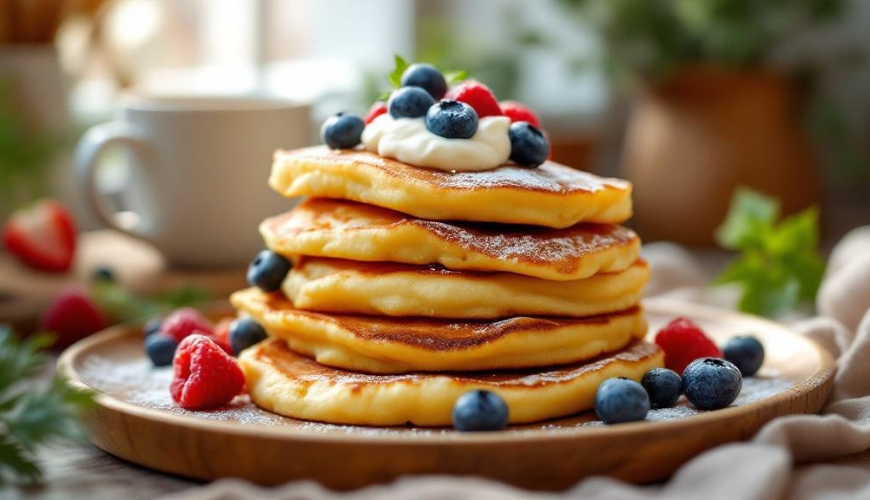
Anyone who has traveled in Eastern Europe or simply enjoys trying new breakfast classics has probably encountered the name. Syrniki (sometimes spelled syrniky in Czech) are delicate curd pancakes that resemble a cross between pancakes and small hand-held dumplings, and they taste so good that one easily returns to them. They are not a trendy Instagram novelty but a traditional dish passed down through generations. Perhaps that's why they are regaining popularity today: they are simple, filling, versatile, and surprisingly light when made correctly.
In Czech, they are often referred to as curd pancakes, although syrniki have their own personality. They are not as "dough-centric" as classic pancakes—their base is curd. This makes them moist inside, with a gently browned surface, and they work well both sweet with fruit and with less sweet accompaniments like yogurt or sour cream. And when you want to lighten the frying, there's even a baked syrniki variant, perfect for a regular morning when you don't feel like standing at the stove.
What are syrniki and how do they differ from regular pancakes
The question "what are syrniki" seems simple, but the answer has a few interesting details. Syrniki mainly come from Ukrainian and Russian cuisines, and their name is related to the word for curd (in some languages, curd is called "syr"). So they are not cheese pancakes in our sense but curd pancakes. Traditionally, they are made from curd, eggs, a little flour (or semolina), and a sweetener. The dough is denser than pancake batter, shaped into small patties and then coated in flour to help them cook better and hold their shape.
At first glance, a comparison with Czech curd pancakes comes to mind, but the difference is mainly in the ratio of ingredients. In syrniki, the curd is the star, and the flour is more of a binder. This gives them a higher protein content, makes them more filling, and gives them a "milkier" taste. They are also sensitive to the quality and consistency of the curd: if it's too wet, the dough sticks and falls apart. If it's too dry, the resulting pancakes can be crumbly. A well-chosen curd is half the success.
Where syrniki truly shine is at a simple breakfast. Imagine a regular morning: it's gray outside, you're in a hurry at home, and there's leftover curd in the fridge that was supposed to end up in a cake. Instead of complicated baking, just a few minutes and warm pancakes with fruit are on the table. Kids grab them by hand, adults enjoy them with coffee—and an ordinary day becomes suddenly more bearable. That's the magic of syrniki: they don't require a special occasion, but they can create one.
From a nutritional point of view, syrniki can easily be shifted towards a "cleaner" version. Instead of white sugar, you can use less sweetener or opt for fruit, reduce the flour to a minimum, and replace frying with baking. And because they are usually served with fruit, yogurt, or extra curd, they naturally link to a sustainable approach: seasonal fruit, local dairy products, minimal packaging, and no unnecessary ready-made products.
If you're interested in what constitutes a healthy diet and why it's worth keeping an eye on added sugars, a good starting point is the recommendations of trusted institutions, such as the World Health Organization (WHO) on the intake of free sugars: https://www.who.int/news-room/fact-sheets/detail/healthy-diet. It's not about turning syrniki into a diet project, but rather a pleasant reminder that a sweet breakfast can also be sensible.
Syrniki recipe: a simple base that can be varied
The good news is that the recipe for syrniki is no alchemy. Once you get the consistency right, the rest is just a matter of taste. In practice, two things are most often addressed: what kind of curd to use and how much flour to add. The general rule is that the drier and denser the curd, the less flour is needed. And the less flour, the more "syrniki-like" the result will be—moist, curd-like, and delicate.
The basic ingredients are surprisingly short, which is actually an advantage: you know exactly what you're eating. Sometimes a pinch of salt is added to the dough (it makes sense even in sweet dishes), as well as vanilla or lemon zest. Some swear by using semolina instead of part of the flour because it absorbs moisture and helps the dough hold together. And if you want to achieve a really fine texture, the curd can be briefly mixed or strained to remove lumps.
Basic recipe for syrniki (for about 10–12 smaller patties)
- 500 g curd (preferably full-fat and drier)
- 1–2 eggs (depending on size and consistency of the curd)
- 2–4 tablespoons of plain flour for the dough (as needed)
- 1–2 tablespoons of sugar or other sweetener (can be reduced)
- vanilla or lemon zest (optional)
- a pinch of salt
- flour for coating and shaping
- fat for frying (if made on the stove)
The process is simple: mix the curd with the egg, sugar, salt, and any flavoring. Gradually add the flour—the goal is a dough that holds its shape but isn't "dumpling-like". With wet or lightly floured hands, shape small patties, flatten them, and lightly coat in flour. Then it's time for frying or baking.
On the stove, syrniki are cooked on medium heat so they have time to heat through inside without burning the surface. It often helps to give them color on both sides first and then "finish" them under a lid for a minute or two. The result should be golden on the outside, moist and curd-like inside—not runny, but not dry either.
And now a little tip that saves nerves in real life: if the dough keeps sticking and falling apart, there's no need to add flour by the handful. Putting it in the fridge for 10–15 minutes to firm up, or adding a tablespoon of semolina and letting it swell for a while, can make a big difference.
What to serve syrniki with? Traditionally with sour cream and jam, but they also work great with plain yogurt, curd, honey, cinnamon, fresh fruit, or fruit sauce. For a less sweet version, you can reduce the sugar in the dough and build the flavor on fruit—like blueberries briefly heated in a pan. In such moments, it's worth remembering the simple rule: less is often more, especially when the base is high quality.
"The best recipe is the one you can repeat even on a Monday morning," is sometimes said in the kitchen with a touch of irony—and syrniki fit this category perfectly.
Baked syrniki: when you want less fat and more convenience
The baked syrniki variant is ideal for those who don't want to watch a pan or want to reduce frying. The taste will be slightly different: less "fried", more delicate and curd-like. But that may be just what someone prefers, especially when syrniki are served with fruit and a creamier accompaniment.
The process is essentially the same as for frying, but the syrniki are arranged on a baking sheet with parchment paper. It's often recommended to lightly brush them with melted butter or oil so the surface doesn't dry out and gains color. Bake at about 180–200 °C, depending on the oven and the size of the patties, for about 15–25 minutes. Halfway through, you can carefully turn them, but it's not always necessary—it depends on how much of a golden surface you want.
The big advantage of baking is consistency: when the dough is made correctly, syrniki behave predictably in the oven. They can also be prepared in larger quantities, making them suitable for a weekend breakfast for the family or a brunch, where plates rotate at the table and no one wants to wait for the next batch to finish frying.
In real household operations, the question often arises of what to do with leftovers. And here syrniki are surprisingly practical: they keep in the fridge and can be briefly reheated the next day on the stove, in the oven, or dry on a non-stick pan. Some even enjoy them cold, perhaps with yogurt in a lunch box. Such food has a special charm—it's not a one-time meal, it can adapt to the day.
And one more detail worth mentioning: the baked version tempts you to make syrniki "too healthy" and remove everything that holds the structure. But even here, a little flour or semolina has its purpose. The result shouldn't be crumbling curd on a sheet but a patty that holds its shape and can be eaten with a fork or by hand.
When someone asks whether stove-top curd pancakes or baked syrniki are better, the answer is surprisingly simple: it depends on your mood and time. The stove offers more pronounced browning and a "dessert-like" impression, while the oven offers peace and simplicity. And both paths lead to a breakfast that doesn't rely on artificial flavors but on plain curd, egg, and a few basic ingredients.
In a time when quick meals that don't overwhelm the kitchen with packaging and ready-made products are often sought, syrniki feel like a little return to normalcy. Just buy quality curd, complement it with seasonal fruit, and instead of complicated sweets, you get something that pleases both the palate and the sense that real food is being cooked at home. And isn't that exactly what you expect from a good breakfast? Simplicity that works.