

# Why a Cold Shower in the Morning is Better Than Coffee ## Introduction Many of us cannot imagine
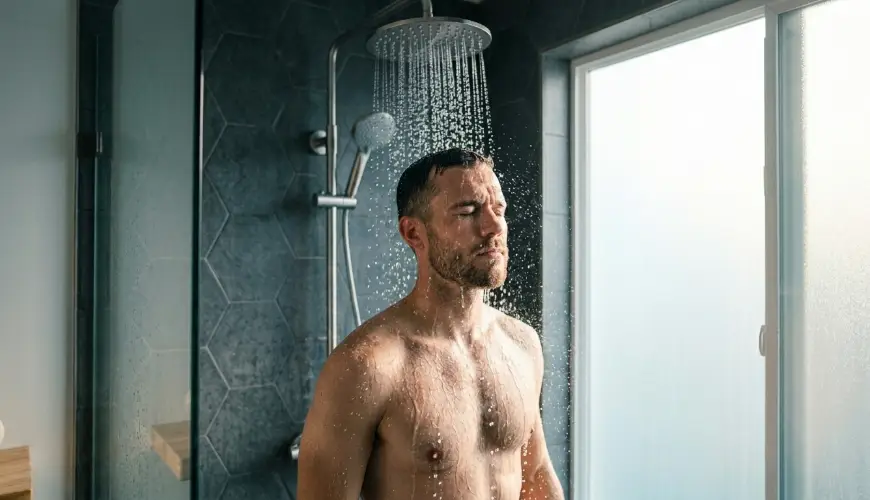
Every morning, millions of people automatically reach for a cup of coffee, as if it were impossible to start the day without it. Caffeine has become a ritual without which many of us can't imagine a functioning morning. But what if there were an alternative that wakes the body up faster, more sustainably, and without the risk of addiction or an afternoon energy crash? A cold shower in the morning sounds like a punishment, but science and the experiences of thousands of people around the world suggest something different – namely that it is one of the most powerful tools for kick-starting the day available to us.
Try our natural products


What happens in the body when cold water hits you
The moment cold water touches the skin, the body reacts immediately. Breathing speeds up, the heart starts beating faster, and the brain is flooded with noradrenaline – a substance that plays a key role in attention, focus, and overall alertness. This is no mysticism or fashionable trend, but a well-documented physiological response. Research published in the scientific journal PLOS ONE showed that people who regularly finished their showers with cold water exhibited significantly lower rates of work absenteeism and reported a greater sense of vitality throughout the day.
Coffee works differently. Caffeine blocks receptors for adenosine – a substance that induces sleepiness – thereby temporarily suppressing fatigue. The problem is that adenosine accumulates in the meantime, and once the caffeine wears off, fatigue returns, often stronger than before. A cold shower, by contrast, consumes no "energy reserves" and does not manipulate the brain's chemical environment in a way that leads to dependence or an afternoon crash. It activates the body naturally, through the nervous system, and the effect persists without an unpleasant "crash."
Interestingly, cold water also stimulates dopamine production – the neurotransmitter associated with motivation, reward, and a sense of well-being. Some studies suggest that brief exposure to cold water can increase dopamine levels by hundreds of percent, with this effect persisting long after the shower ends. This explains why many regular "cold shower" enthusiasts describe a feeling of euphoria and mental clarity that lasts for hours.
Cold showers also have a very tangible effect on immunity. Repeated exposure of the body to cold trains the immune system to be more reactive – the body learns to mobilize white blood cells more quickly. This effect was also confirmed by the famous Wim Hof experiment, involving the Dutch athlete nicknamed "Iceman," whose method – which includes cold exposure – has entered serious scientific research at Radboud University. The results showed that trained individuals were able to consciously influence their immune response – something previously considered impossible.
How to actually get used to a cold shower in the morning
The theory is appealing, but the reality of stepping under ice-cold water in the morning is off-putting for most people. And that is understandable. The body has a natural aversion to cold, and if someone tries to switch from a hot shower to a cold one overnight, the likely result is stress and a quick abandonment of the effort. The key is gradualness and patience.
The most sensible approach is to start with a contrast shower – that is, a combination of warm and cold water. The entire shower can be taken normally, with only the last thirty seconds switched to cold water. This final shock is unpleasant but manageable. After a week or two, the body begins to adjust and the psychological barrier gradually diminishes. The cold phase can then be extended – first to one minute, then to two, until cold water becomes a natural part of the morning routine.
It is also important to set the right expectations. The first five to ten seconds are always the hardest – this is the moment when the brain sends alarm signals and the body instinctively wants to retreat. If a person gets through this phase, the remaining time under cold water is surprisingly bearable, and afterwards comes an intense feeling of satisfaction. This act of overcoming oneself also has a psychological dimension: every morning that a person forces themselves to do something uncomfortable, they strengthen their mental resilience and self-confidence.
A useful example comes from people who work in demanding professions with irregular sleep – such as paramedics or doctors on night shifts. Many of them describe how a morning cold shower helped them replace their third or fourth cup of coffee a day, because it provided comparable alertness without the unwanted effects of excessive caffeine, such as trembling hands, nervousness, or sleep problems.
Preparing the environment properly can also help. Having a quality towel on hand, comfortable clothing, and perhaps some favourite music playing in the bathroom significantly reduces psychological resistance. The body learns through associations – if the entire morning routine is pleasant and predictable, the cold shower becomes a natural part of it rather than an obstacle.
As Andrew Huberman, neuroscientist at Stanford University and populariser of human performance research, once noted: "Deliberate cold exposure is one of the most effective ways to increase baseline levels of dopamine and noradrenaline – substances that are essential for focus, mood, and resilience." Huberman regularly discusses this topic on his Huberman Lab podcast, where he cites specific studies and recommends practical protocols for beginners and advanced practitioners alike.
It is worth noting that cold showers are not necessarily a year-round practice reserved only for cold-hardened individuals or performance athletes. It is an accessible practice that requires no special equipment, club membership, or financial investment. All it takes is a tap with temperature control and the willingness to endure discomfort for a period shorter than waiting for a coffee machine to heat up.
Cold showers and long-term health benefits
Beyond the immediate wake-up effect, regular morning cold showers offer a range of long-term benefits worth noting. One of the most significant is the impact on mental health. There is evidence suggesting that regular hydrotherapy – the therapeutic use of water at different temperatures – may help alleviate symptoms of depression. A study from Virginia Commonwealth University proposed that cold showers could function as a complementary therapy due to their effects on the nervous system and neurotransmitter levels.
Skin and hair also benefit from regular contact with cold water. While hot water opens pores and strips the skin of its natural oils, cold water closes pores, helping to maintain the skin's natural protective film and reducing the risk of irritation. Hair tends to be shinier and less prone to breakage after a cold shower, as the hair cuticles close and the surface of the hair shaft is smoothed.
From a physical fitness perspective, the effect on muscle recovery also plays a role. Athletes around the world use ice baths as a standard part of their recovery protocol. A morning cold shower does not have as intense an effect as an ice bath, but regular exposure to cold water helps reduce inflammation and speeds up the recovery of muscle tissue after exertion.
The metabolic aspect is also noteworthy. The body burns extra calories in cold water as it works to maintain a stable body temperature by activating brown adipose tissue – so-called brown fat. This type of fat is metabolically active, and its stimulation through regular cold exposure may contribute to a better metabolism and body weight regulation. This is of course a supplementary effect, not a replacement for exercise or a balanced diet, but it makes sense as part of a healthy lifestyle.
Transitioning from a morning coffee to a cold shower – or at least combining the two – is ultimately a decision about how a person wants to treat their own body and energy. Coffee remains a beloved ritual for many, and there is no reason to abandon it entirely. The question, however, is whether it makes sense to rely exclusively on external chemical stimulation when the body has its own natural wake-up mechanisms that simply need to be activated. A cold shower triggers these mechanisms reliably, quickly, and without side effects – and that is an argument that deserves at least one try.