

# What Do Endocrine Disruptors in Cosmetics Hide?
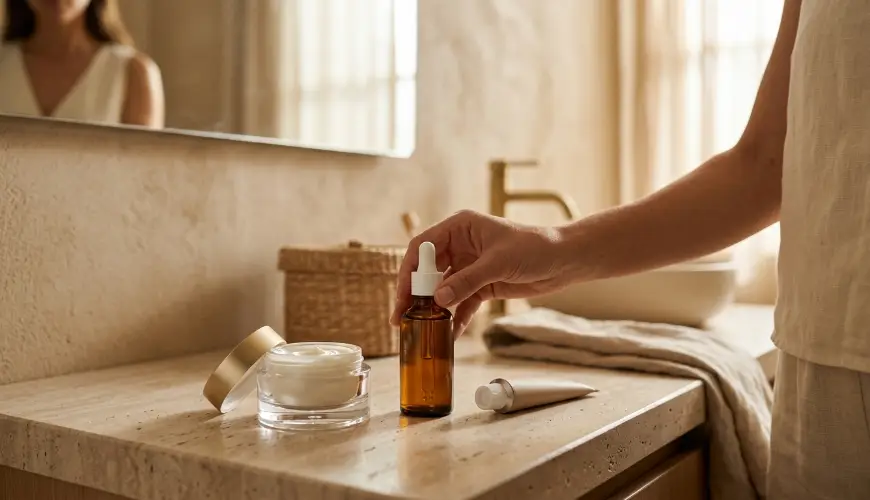
Every morning, most of us apply dozens of different substances to our skin – face cream, deodorant, shampoo, toothpaste, make-up. Few people realise that some of these products may contain compounds that quietly interfere with one of the most sensitive systems in the human body – the hormonal system. Endocrine disruptors in cosmetics are a topic that scientists have been monitoring for several decades, yet it is surprisingly rarely discussed in everyday life. It is time to change that.
The endocrine system functions as a sophisticated communication network. Hormones – chemical messengers – travel through the bloodstream and regulate everything from metabolism and mood to reproduction. The problem arises when foreign molecules infiltrate this system, mimicking, blocking, or otherwise disrupting the natural function of hormones. These substances are called endocrine disruptors, or hormonal disruptors. And cosmetics are one of the most common sources of their intake into the body – daily, repeatedly, throughout a lifetime.
The World Health Organization (WHO) has repeatedly warned in its reports that exposure to endocrine disruptors may be associated with a wide range of health problems: from fertility disorders and thyroid disease to certain types of hormonally driven cancers. The most vulnerable group is not adults, but pregnant women, infants, and children, whose hormonal systems are still developing.
Try our natural products
Which substances are the real problem?
When people hear "chemicals in cosmetics", many imagine a vague threat without a concrete face. In reality, however, there are well-documented groups of substances whose presence in cosmetic products raises legitimate concerns. Knowing their names is the first step towards enabling consumers to read the ingredients on a label and make an informed decision.
Parabens are perhaps the best-known representatives of endocrine disruptors in cosmetics. They are used as preservatives in creams, shampoos, conditioners, and make-up, as they effectively prevent the growth of bacteria and moulds. Their names on labels are easy to recognise: methylparaben, ethylparaben, propylparaben, butylparaben. Research published in the scientific journal Journal of Applied Toxicology, for example, has shown that parabens mimic the activity of oestrogen in the body, with butylparaben and propylparaben exhibiting the strongest oestrogenic activity. The European Union has banned or restricted the use of certain parabens (particularly isobutylparaben and isopropylparaben), but methylparaben and ethylparaben remain permitted and are widely used.
An equally controversial group is phthalates. These substances appear in cosmetics most commonly as plasticisers and fragrance fixatives – and this is precisely why they are so difficult to identify on labels. Manufacturers are not required to disclose the composition of fragrance mixtures, meaning phthalates can hide behind the collective designation "parfum" or "fragrance". Diethyl phthalate (DEP), the most widespread in cosmetics, has been classified as less risky than its relatives (such as DEHP, which is banned in the EU), yet some studies suggest its negative impact on the reproductive system, particularly in men.
Another substance worth discussing is bisphenol A (BPA). Although BPA is primarily associated with plastics, it can also be found in cosmetic packaging and certain formulations. It is a substance with proven oestrogenic activity, which has been banned in the European Union across a wide range of products intended for children. Research shows that BPA penetrates the skin, making its presence in cosmetics far from negligible.
A special chapter concerns UV filters, specifically organic compounds such as benzophenone-3 (oxybenzone), 4-methylbenzylidene camphor (4-MBC), and octinoxate. These substances are added to sunscreens, but also to many daily creams with SPF protection, lipsticks, and make-up products. Studies by the National Institutes of Health (NIH) in the USA have shown that oxybenzone is absorbed into the bloodstream in measurable concentrations after application to the skin. Animal studies further suggest its ability to disrupt thyroid function and reproductive hormones. The state of Hawaii banned sunscreens containing oxybenzone and octinoxate to protect marine ecosystems – and this decision alone says a great deal about the potential of these substances to affect living organisms.
Nor can triclosan be overlooked – an antibacterial substance that until recently was found in toothpastes, soaps, and deodorants. In the USA, the Food and Drug Administration (FDA) banned it in 2017 from hand-washing products, though it may still be present in certain other products. Triclosan has repeatedly been linked to disruption of thyroid function and has demonstrated the ability to influence hormone levels under laboratory conditions.
Finally, there is the group of substances known as synthetic musks (such as galaxolide or tonalide), used as fragrance components in perfumes, laundry products, and cosmetics. These substances accumulate in fatty tissue and breast milk, with research suggesting their potential to disrupt hormonal balance. A real-world example is the situation in Scandinavian countries, where regulatory authorities began monitoring these substances as part of chemical surveillance in the human body – and the results showed their presence in virtually all tested individuals regardless of age.
How to make sense of it all and what to do about it?
Reading the ingredients of a cosmetic product can be as comprehensible to an uninformed consumer as reading an ancient text. Nevertheless, there are simple tools and approaches that can significantly ease the situation.
The European cosmetic ingredients database CosIng, managed by the European Commission, allows users to search for any substance contained in cosmetics and find out whether it is subject to any restrictions. Equally useful is the app and website INCI Beauty, which analyses the composition of cosmetics entered by the user and flags potentially problematic substances. These tools are not perfect, and the scientific debate on safe exposure limits is ongoing, but they serve reliably as a first point of reference.
What does this look like in practice? Consider a family with a young child. The parents use a baby shampoo, body lotion, and sunscreen for the child – products that at first glance appear designed for the most vulnerable. Yet a simple search of the ingredients on the above-mentioned platforms may reveal that some of these products contain parabens or organic UV filters. This is not a catastrophe, but information that enables different choices to be made.
"Safety does not mean zero risk. It means an informed decision," says a toxicologist and author of a book on chemicals in everyday life.
When choosing cosmetics, it pays to focus on products certified to ecological standards such as COSMOS Organic, NATRUE, or Ecocert. These certifications are not a guarantee of absolute safety, but their standards explicitly exclude a wide range of synthetic preservatives, fragrance components, and other potentially problematic substances. Certified natural and ecological cosmetics thus represent a practical solution for those who do not want to spend hours studying INCI names.
It is also worth noting that "natural" does not automatically mean "safe" and "synthetic" does not automatically mean "harmful". Some natural essential oils can be allergenic, while many synthetic substances are well-studied and safe. The key is not blind trust in one camp or the other, but critical thinking supported by available data.
The cumulative effect of exposure also plays an important role. A single application of a cream containing a paraben will produce no measurable effect. The problem arises when a person uses ten different products containing the same or similar substances every day, over the course of years or decades. It is precisely this cumulative, chronic intake that concerns scientists most – and which is simultaneously the most difficult to measure in classical toxicological studies, which typically test the effects of individual substances in isolation.
The scientific community is aware of this problem. The concept of the "cocktail effect" describes a situation in which a combination of several substances with low individual toxicity can have a synergistic effect significantly exceeding the sum of their individual impacts. Research by the European Chemicals Agency (ECHA) in this area is ongoing, and its findings are gradually being reflected in legislation.
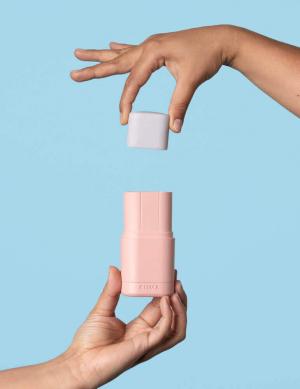
Consumers who wish to minimise their exposure to endocrine disruptors in cosmetics can start simply: by simplifying their cosmetic routine. Fewer products means fewer potential sources of problematic substances. Replacing a synthetic deodorant with a natural alternative, choosing a sunscreen with mineral UV filters (zinc oxide, titanium dioxide) instead of organic ones, or opting for certified natural cosmetics where possible – these are steps that require neither great effort nor dramatic lifestyle changes.
Endocrine disruptors in cosmetics are not a bogeyman designed to cause panic. They are a call for greater attention and awareness – and a reminder that what we apply to our skin every day is far from as neutral as it might seem. Science in this field is advancing rapidly, regulations are tightening, and the market for safer cosmetics is growing. Consumers today have more tools than ever before – and that is good news.