

Somatic Movement as a Path to Healing Trauma
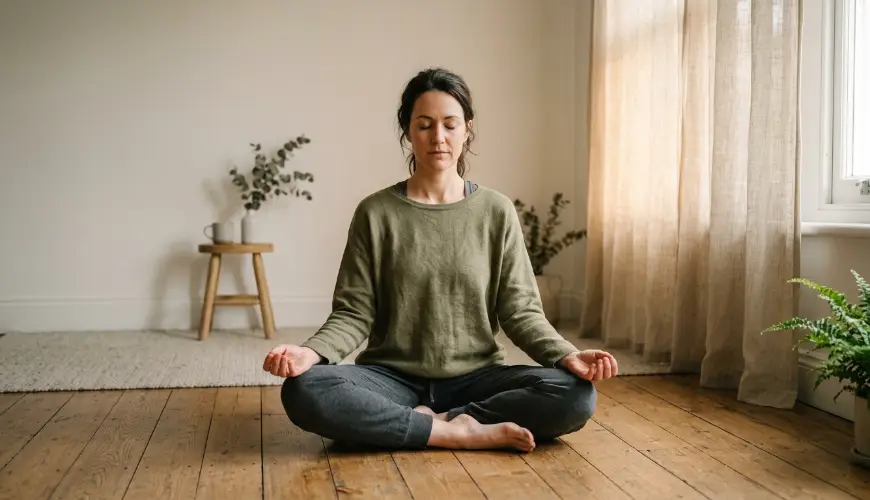
There is a peculiar paradox in how modern society approaches mental health. For years, it was assumed that trauma is a matter of the mind – something to be resolved through words, memories, and conversations on a therapist's couch. Yet the human body has its own memory. And it is precisely this bodily memory that may hold the key to deeper healing than psychotherapy alone can offer. Somatic movement – an approach that has been gaining increasing attention from both professionals and the general public in recent years – brings with it a simple yet revolutionary idea: trauma is not stored only in the mind, but throughout the entire body, and movement can help release it.
The word "somatic" comes from the Greek "soma," meaning body. Somatic approaches to movement and therapy focus on the inner experience of movement – on what a person feels inside, rather than on how the movement looks from the outside. It is therefore not exercise in the conventional sense, but rather a conscious listening to one's own body and its signals. This approach sits at the intersection of physiotherapy, psychology, and meditative practices, offering a path to healing for those who have found that traditional methods fall short.
Try our natural products






What happens in the body during trauma
To understand why somatic movement works, it is first important to understand what trauma does to the body. Psychiatrist and researcher Bessel van der Kolk, author of the groundbreaking book The Body Keeps the Score, spent decades studying how traumatic experiences leave an imprint on the nervous system. His conclusion is unequivocal: traumatised people have an impaired ability to remain in the present moment, because their body continues to respond to past threat as if it were happening right now.
When a person experiences a threat, the autonomic nervous system triggers the "fight or flight" response. The body prepares for action – muscles tense, breathing quickens, the heart begins to beat faster. If, however, no successful action takes place – for instance, because the person was helpless or paralysed by fear – this energy remains "trapped" in the body. The nervous system becomes stuck in a state of high alert, which manifests as chronic tension, anxiety, sleep difficulties, or a sense of disconnection from one's own body. These findings are also confirmed by research from the National Institute of Mental Health (NIMH), which shows that post-traumatic stress disorder has demonstrable physiological effects on both the brain and body.
Somatic movement enters this process precisely where traditional therapy reaches its limits. Verbal processing of trauma is valuable, but sometimes insufficient – particularly when the trauma occurred at a time when the individual did not yet have language, or when it was so intense that the brain "stored" it beyond the reach of conscious memory.
Imagine a woman – let us call her Jana – who survived a serious car accident. She has undergone years of psychotherapy, speaks about the accident without visible distress, and has processed it intellectually. Yet every time she gets into a car, her chest tightens, her shoulders rise towards her ears, and her breath stops. The body remembers what the mind considers resolved. And it is for Jana – and thousands of similar stories – that somatic movement may be the missing piece of the puzzle.
What somatic movement looks like in practice
Somatic movement encompasses a wide range of approaches and methods that share one thing in common: an emphasis on the conscious experience of bodily sensations. These include Somatic Experiencing, developed by Peter Levine, the Feldenkrais Method, Body-Mind Centering, and various forms of somatic yoga. Each of these approaches has its own specifics, but all share a fundamental principle – movement as a means of communicating with the nervous system.
In practice, a somatic session can appear quite understated. A therapist or instructor guides the participant through slow, conscious movements, continually inviting them to notice what is happening inside their body. What does the belly feel like? Where is there tension? What happens when we slow the movement down? These seemingly simple questions open a path to deep layers of bodily memory. The goal is not to perform the movement "correctly," but to truly experience it.
Peter Levine, a pioneer of somatic work with trauma, puts it this way: "Trauma is not in the event itself, but in the nervous system." This statement captures precisely why it is not enough to talk about what happened – one must work directly with how the body continues to respond to it.
An important component of somatic movement is also what is known as titration – a very gradual and careful approach towards uncomfortable sensations, without the person becoming overwhelmed by their intensity. Rather than plunging into the centre of pain, one moves along its edges, where it is still safe. This approach allows the nervous system to slowly recalibrate without reliving the trauma at full intensity. Research published in the academic journal Frontiers in Psychology confirms that somatically oriented interventions can significantly reduce symptoms of post-traumatic stress disorder and improve overall nervous system regulation.
Somatic movement requires no special equipment or physical fitness. It is accessible to people of all ages and physical conditions. It can take place in a therapeutic setting with a professional, in group classes, or – after sufficient training – independently at home. This accessibility is one of its greatest strengths.
Why conscious movement is more than just exercise
In today's world, where gyms are on every corner and apps promise a perfect body in eight weeks, it is easy to forget that movement has a far deeper dimension than merely burning calories or building muscle mass. Somatic movement is a reminder that the body is not a machine to be optimised, but a living organism that needs to be heard.
This shift in perspective has far-reaching consequences. People who begin practising somatic movement often describe starting to notice signals they previously overlooked – chronic pains that turn out to be emotionally conditioned, tension in the jaw caused by suppressed anger, or a feeling of heaviness in the chest connected to grief. The body speaks constantly; somatic movement teaches us to listen.
Interestingly, this approach resonates with ancient traditions as well. Yoga, tai chi, qigong, and various forms of ritual dance have for millennia been ways in which different cultures worked with the body as a whole – physical, emotional, and spiritual. Modern science is now producing evidence that confirms these intuitive insights. A study published in the Journal of Traumatic Stress, for example, showed that yoga focused on bodily awareness significantly helps women suffering from chronic post-traumatic stress.
For those seeking an entry point into somatic movement, several options exist:
- Somatic Experiencing – individual therapeutic work focused on releasing traumatic energy from the nervous system
- The Feldenkrais Method – conscious movement guided towards relearning movement patterns and increasing bodily awareness
- Somatic yoga – a form of yoga placing emphasis on inner experience rather than outer form
- Body-Mind Centering – an integrative approach connecting movement, anatomy, and developmental psychology
- TRE (Tension & Trauma Releasing Exercises) – exercises that induce the body's natural trembling as a means of releasing tension
Each of these approaches offers a different path towards the same goal: restoring the natural flow within the body and releasing what has become stuck within it.
It is understandable that some people approach somatic movement with scepticism. It can seem too "alternative" or difficult to grasp for those accustomed to concrete, measurable results. Yet the evidence is accumulating. Neuroscience over the past twenty years has produced compelling findings about how closely the body and mind are interconnected, how trauma alters the structure of the brain, and how movement and breathing can influence these changes. Somatic movement is thus ceasing to be a fringe alternative and is becoming a recognised component of a comprehensive approach to mental health.
For anyone who feels trapped in old patterns – whether chronic stress, anxiety, unexplained physical pain, or a sense of disconnection from their own body – it is worth pausing to ask: what would happen if I began to listen to what my body is telling me? Perhaps the answer is closer than it seems – hidden within slow, conscious movement that need not be perfect, only present.