

# Weighted Blanket and Its Effect on Sleep and Stress
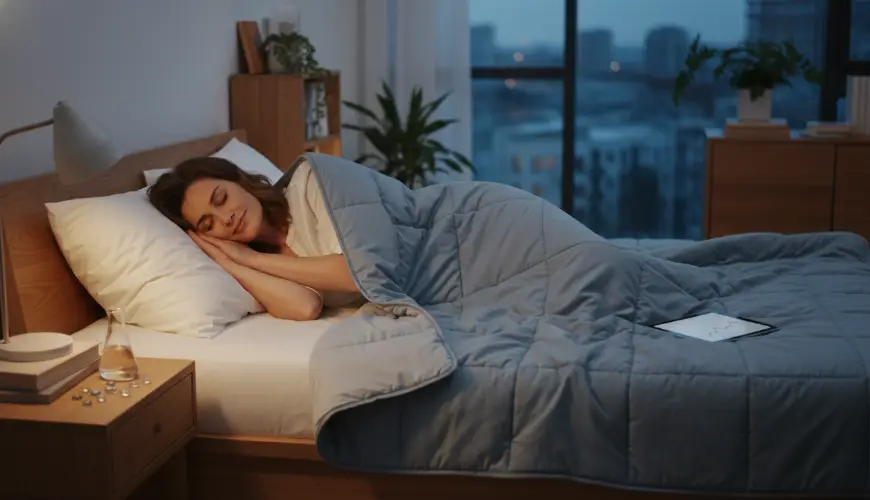
Maybe you've heard about it from a friend, came across it in an article about sleep hygiene, or saw a therapist recommend it on a television programme. The weighted blanket – sometimes also called a therapeutic or heavy blanket – has become one of the most discussed aids for better sleep and mental wellbeing in recent years. Yet many questions still surround it: how does it actually work, who does it help, and is it just a passing trend, or is there real science behind it?
The answers are surprisingly interesting and reach deep into the fields of neuroscience and physiotherapy. The weighted blanket is no newcomer of recent years – its roots lie in therapeutic practice, where similar principles were used with children with sensory processing disorders as far back as the 1980s. At that time, occupational therapist Temple Grandin, who herself has autism, described the calming effect of deep pressure on the nervous system. Today, these insights are available to anyone looking for a natural way to calm their mind and body.
Try our natural products


How a weighted blanket works and what happens in the body
The principle behind the weighted blanket rests on something experts call Deep Pressure Stimulation (abbreviated as DPS). This refers to even, gentle pressure distributed across the entire body – similar to the sensation of a hug, being firmly wrapped in a blanket, or the pressure of a massage. This pressure activates the parasympathetic nervous system, the part of our nervous system responsible for the state of rest and recovery, also known as "rest and digest" (as opposed to the stress response of "fight or flight").
Research shows that deep pressure stimulation can increase levels of serotonin and dopamine – neurotransmitters associated with feelings of wellbeing, contentment, and joy – while simultaneously reducing levels of cortisol, the stress hormone. A study published in the Journal of Sleep Medicine & Disorders demonstrated that participants sleeping under a weighted blanket showed lower levels of insomnia, felt more rested in the morning, and reported significantly lower levels of anxiety. These are not negligible results – especially at a time when problems with sleep and stress affect an enormous number of people across all age groups.
The blanket itself works thanks to its contents. Inside, small glass beads or plastic pellets are evenly distributed, ensuring an even distribution of weight across the entire surface. The resulting pressure does not act at a single point but across a broad area, which is key to achieving the therapeutic effect. A quality weighted blanket should not feel like an oppressive burden – the right sensation is more like a firm, soothing embrace.
The choice of the correct blanket weight also plays an important role. The general recommendation is that the blanket should weigh approximately 10% of the user's body weight, or somewhat more according to personal preference. For an adult weighing 70 kilograms, a blanket weighing approximately 7 kilograms would therefore be appropriate. A blanket that is too light will not provide sufficient stimulation, while one that is too heavy may feel uncomfortable or even provoke feelings of anxiety. For children and older individuals, consultation with a specialist is always recommended before selecting an appropriate weight.
Who the weighted blanket helps and for which conditions
The therapeutic use of weighted blankets is surprisingly broad. They are most commonly encountered in the context of sleep disorders, anxiety, and stress – and these are also the areas that are best scientifically researched. Anyone suffering from chronic insomnia knows how exhausting it is to lie awake at night with racing thoughts. The sensation of the blanket's weight can in such a moment function as a kind of "safety signal" for the nervous system, which stops being on alert and allows the body to relax.
Take as an example thirty-year-old Markéta, a project manager from Brno, who had long struggled with insomnia caused by work-related stress. Following a recommendation from her physiotherapist, she began using a weighted blanket weighing 7 kilograms. "At first it felt heavy and strange," she described her experience, "but after a week I noticed that I was falling asleep more quickly and didn't feel so worn out in the morning." Her story is far from exceptional – thousands of people who have tried a weighted blanket share similar experiences.
Beyond insomnia and anxiety, weighted blankets have also proven effective when working with attention deficit hyperactivity disorder (ADHD). A study published in the American Journal of Occupational Therapy found that children with ADHD who used weighted blankets showed improved ability to concentrate and lower levels of impulsivity. Occupational therapists also use these blankets with children with sensory processing disorders, Asperger's syndrome, or autism – precisely because deep pressure stimulation helps regulate an overstimulated nervous system.
Weighted blankets are also finding application among people suffering from post-traumatic stress disorder (PTSD), depression, or chronic pain. They are not a miracle cure – no serious professional presents them as such. They are rather a complementary tool that can support treatment and naturally improve everyday wellbeing. As American therapist and author of books on sensory integration Jean Ayres puts it: "A nervous system that receives the right inputs can better regulate itself."
Weighted blankets are also popular among people without any diagnosed condition – simply among those who want to sleep better, reduce everyday stress, or allow themselves a moment of genuine rest. In today's era of constant availability, notifications, and information overload, this is actually an understandable desire shared by most of us.
What to watch out for and how to choose the right one
Choosing a weighted blanket is not complicated, but it is worth taking a moment to consider it carefully. Beyond the weight already mentioned, the material from which the blanket is made also plays a role. Available on the market are versions made from cotton, bamboo, micro-fleece, or cooling fabrics suitable for the summer months. Cotton and bamboo variants are popular for their breathability and pleasant feel, while cooling materials are appreciated by those who tend to overheat at night.
The quality of the construction is also important – specifically the way in which the filling beads are divided into individual pockets. A quality blanket has small, firmly stitched pockets that prevent the filling from shifting and ensure an even distribution of weight. If the beads accumulate in one place, the blanket loses its therapeutic effect and may be more uncomfortable than calming.
When choosing, it is also worth considering whether you will use the blanket exclusively for sleeping or also for relaxing during the day – for example, when reading, watching television, or working from home. For daytime use, lighter variants or smaller sizes that cover only part of the body are also suitable. Many people use a weighted blanket as part of their evening routine: an hour before bed, they drape it over themselves while reading or meditating, gradually signalling to the body that it is time to slow down.
As for blanket care, most quality products are machine washable, although for heavier variants (over 9 kilograms), it is better to use an industrial washing machine at a laundrette to avoid damaging the home appliance. Manufacturers generally recommend washing at lower temperatures and drying naturally or on a low heat setting in a tumble dryer.
There are also groups for whom a weighted blanket is not suitable or requires special caution. Weighted blankets are not recommended at all for children under two years of age – there is a risk of suffocation. Caution is also necessary for people with claustrophobia, respiratory problems, circulatory disorders, or pregnant women. In the case of any doubts, it is always best to consult a doctor or therapist.
Weighted therapy – that is, the targeted use of deep pressure principles within the context of treatment – is today a recognised part of occupational therapy and sensory integration. If you are interested in exploring the topic further, the American Occupational Therapy Association (AOTA) offers extensive resources and research dedicated to sensory regulation and therapeutic approaches that include working with weighted aids.
It is fascinating how a simple principle – even pressure on the body – can have such a profound effect on our mental and physical health. Perhaps that is why weighted blankets have crossed the boundaries of therapy rooms and become part of the everyday lives of people seeking natural and gentle ways to care for their health. This is not a revolution or a miracle – it is a return to something very fundamental: the feeling of safety, warmth, and embrace that our nervous system has known from the very first moments of life.