

# Seasonal Rituals for the Household

When we think about how our grandparents ran their households, we discover something surprising. Their year didn't just have four seasons – it had four entirely different regimes of caring for the home, the body, and the soul. Spring deep cleaning, summer herb drying in the sunshine, autumn canning, and winter sitting by the stove with a cup of tea. All of these weren't just practical necessities but rituals that gave the year its rhythm and life its meaning. And it's precisely today, in an age when most of us move between a computer screen and a phone screen, that we're returning to these seasonal household rituals with renewed urgency. Not out of nostalgia, but out of a need to slow down, take a breath, and feel truly at home in our homes.
The concept of seasonal household care is no passing trend. It's a deeply rooted human need to align our living space with the natural cycle. Psychologists at Cornell University found in one of their studies that the environment we live in has a direct and measurable impact on our mood, productivity, and sleep quality. And when we realize that the average Czech person spends over 90% of their time indoors, it starts to make sense why it's worth giving our homes attention that goes beyond routine cleaning.
Try our natural products
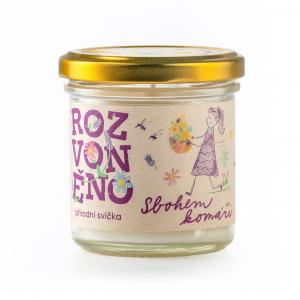



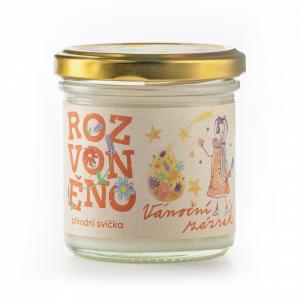

Spring household detox: more than just cleaning
Spring is a time of awakening. Snow melts, days grow longer, and with the first rays of sunlight piercing through the window, you suddenly notice the dust on the shelves, the yellowed curtains, and the pile of things in the corner of the living room that you successfully ignored all winter. A spring household detox is much more than just pulling out the vacuum and a rag. It's an opportunity for a reset – both physical and mental.
You can start simply, with sorting. Marie Kondo, the Japanese author and home organization specialist, popularized the question: "Does this item bring me joy?" Even though her method may not suit everyone, the basic principle is universal – surround yourself only with what you truly need or what brings you happiness. In practice, this might mean taking one weekend and going room by room. Not with the goal of throwing away as much as possible, but with the goal of becoming aware of what you actually own and whether it aligns with how you want to live. Clothes nobody has worn for two years, kitchen utensils in the back corner of a cabinet, old magazines – all of these are candidates for departure. And it doesn't have to mean the trash bin; charitable organizations, neighborhood swaps, or second-hand shops give things a second life.
After sorting comes deep cleaning with an emphasis on ecology. Chemical cleaning products full of synthetic fragrances and aggressive substances are now being replaced by natural alternatives – baking soda, vinegar, lemon juice, or Castile soap can handle the vast majority of household grime. And it's not just about the ecological aspect. As the U.S. Environmental Protection Agency (EPA) states, common household cleaning products are among the main sources of indoor air pollution, which can be two to five times worse than outdoor air. Switching to natural products is therefore a step not only toward a cleaner home but also toward a healthier environment for the whole family.
But the spring detox doesn't end with cleaning. It's the ideal time to swap winter textiles for lighter versions – replace heavy curtains with airier ones, switch flannel bedding for cotton or linen, and let fresh air flow into the apartment. Plants on the windowsill, which merely survived through the winter, deserve repotting in fresh substrate and perhaps some new companions. Houseplants like pothos, spider plants, or aloe vera not only beautify a space but, according to NASA research, also help filter the air of common pollutants.
One specific example says it all: the Novák family from Brno decided three years ago to establish a tradition of a spring family detox. Every year in March, they set aside an entire weekend during which they go through the apartment together; each family member, including the children, chooses one area they're "responsible for," and at the end of the weekend, they all go together to donate unneeded items to the local charity shop. "The children learned that things have value even after we stop needing them," Mrs. Nováková describes. "And that feeling of lightness after a weekend like that is priceless."
Spring is simply an opportunity to shed the old and make room for the new. Both literally and figuratively. Psychologists speak of the so-called "clean desk effect" – when our space is tidy and organized, the mind calms down and focuses better. A spring household detox can thus be the first step toward a more productive and satisfying spring.
As the days grow longer and warm summer arrives, the household naturally transitions into a mode of open windows, balcony grilling, and drying laundry in the sun. But as soon as the first leaves begin to turn gold and mornings bring the first frosts, it's time for an entirely different kind of home transformation.
Autumn coziness and winter hygge: how to create a home you want to return to
Autumn holds a special place in Czech culture. It's a time of harvest, All Souls' Day, the first hot teas, and that specific feeling when you come home from a cold, damp afternoon and smell cinnamon and baked apples. Autumn coziness isn't just an aesthetic matter – it's the conscious creation of a space that offers shelter and warmth at a time when nature is settling down to rest.
Practically, it starts with textiles. Light summer throws give way to warm woolen blankets, pillows get covers in earthy tones – ochre, brick, moss green. Candles, ideally made from soy or beeswax without synthetic fragrances, become an important source of both light and atmosphere. And this is where it's worth mentioning that candle quality truly matters. Cheap paraffin candles release substances when burning that, according to studies, can irritate the respiratory tract, while natural alternatives burn cleaner and often last longer.
Autumn is also the ideal time to reassess how the household functions in terms of energy and heating. Checking window seals, replacing ventilation filters, or perhaps getting a quality humidifier – these are all steps that will show up in both comfort and energy bills. And if someone is considering a more ecological approach to heating, autumn is the right moment to start looking for solutions, whether it's programmable thermostats, insulation, or simply the habit of ventilating briefly and intensively rather than leaving windows open for extended periods.
With the arrival of winter, the concept of coziness deepens into what the Danes call hygge (pronounced approximately "hoo-ga"). This Danish phenomenon, which has become a global concept, isn't just about candles and warm socks, though those undoubtedly belong to it. Hygge is a philosophy of presence, gratitude, and simple joys. As Meik Wiking, director of the Happiness Research Institute in Copenhagen and author of The Little Book of Hygge, wrote: "Hygge is about atmosphere and experience, not about things. It's about being with the people we love. About the feeling of home. About the feeling of safety."
In practice, this means consciously creating moments of calm and connection. A winter evening spent at the table with family over homemade soup and fresh bread, with the television off and phones set aside – that's hygge in its purest form. But it can also be a Saturday afternoon with a book and a mug of cocoa while snow falls outside the window. Or baking Christmas cookies together, where the process matters more than the result.
Winter household rituals have their practical side too. It's a time when it pays to invest in quality lighting. Short days and long evenings mean that artificial light plays a key role in how we feel at home. Cold fluorescent tubes and harsh ceiling lights are replaced by warm tones from table lamps, string lights, and candles. The Scandinavian approach to lighting, which favors multiple smaller sources of warm light distributed around the room instead of one central fixture, can transform even the most austere apartment-block flat into a cozy refuge.
Interestingly, this approach also has scientific backing. Research published in the Journal of Environmental Psychology shows that warm, dimmed lighting lowers cortisol levels (the stress hormone) and promotes relaxation, while cool, bright light stimulates alertness. Conscious work with light in the home is therefore not just a matter of aesthetics but a genuine tool for supporting mental well-being, especially during the winter months when many people suffer from seasonal depression.
The winter period is also an opportunity to focus on scents in the home. Essential oils such as orange, cinnamon, clove, or cedar can transform the atmosphere of an entire apartment. A diffuser with quality essential oils is an investment that pays back many times over – not only in pleasant fragrance but also in the therapeutic effects that aromatherapy offers. Lavender for calming before sleep, eucalyptus for colds, citrus for boosting mood on dark January days.
And then there's one more aspect of winter rituals that deserves attention: conscious slowing down. In a culture that celebrates productivity and constant motion, winter is a natural invitation to rest. Nature sleeps, days are short, the body craves warmth and quiet. Rather than fighting this natural rhythm, it makes sense to embrace it. Winter months can be a time for projects that require patience and focus – handicrafts, reading, cooking more complex recipes, journal writing, or planning spring flower beds.
This entire cycle of seasonal rituals has one more dimension – perhaps the most important one. It teaches us to perceive time as cyclical, not linear. We're not on an endless straight line heading somewhere forward; we're part of a circle that repeats, yet is slightly different each time. The spring detox frees us from the old, autumn coziness teaches us gratitude for what we have, and winter hygge reminds us that happiness is often hidden in the simplest things – in the warmth of home, in the company of loved ones, and in a cup of tea prepared with love.
There's no need to start with big changes. This weekend, just light a candle, make yourself a favorite drink, and pause for a moment. Look around and ask yourself: what would my home need to better match what I'm experiencing right now? The answer to that question is the first step toward a household that isn't just a place where we reside, but a place where we truly live.