

# Oxalates in Smoothies That Nobody Talks About
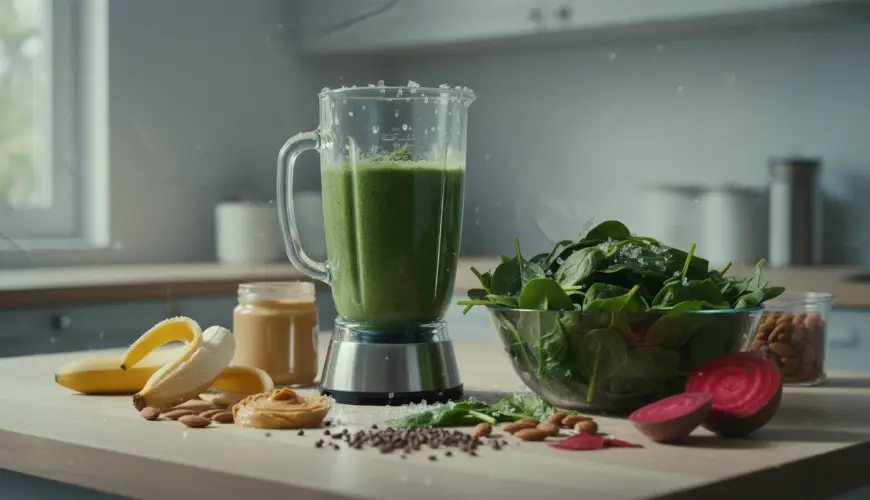
Every morning, millions of people around the world turn on their blenders to prepare their favorite green drink. A handful of spinach, half a banana, a splash of almond milk, and a teaspoon of peanut butter – a recipe that regularly appears on social media as the foundation of a healthy lifestyle. But what if this seemingly perfect ritual is actually doing more harm than good for some people? The answer lies in an inconspicuous chemical compound that most of us have never heard of: oxalic acid, or more specifically, oxalates.
The topic of oxalate burden has been coming to the forefront of nutritional research in recent years, and an increasing number of experts are pointing out that mindlessly consuming large amounts of oxalate-rich foods can have genuinely unpleasant health consequences for certain groups of people. This isn't fearmongering or a trendy diet fad – it's biochemistry that's worth understanding.
Try our natural products




What exactly are oxalates and why should we care
Oxalic acid is a naturally occurring organic compound found in a wide range of plant-based foods. In small amounts, it's completely harmless – the human body actually produces it on its own as a byproduct of metabolism. The problem arises when dietary oxalate intake increases significantly and the body can no longer efficiently process and excrete them. Oxalates have one unpleasant property: they readily bind to minerals, especially calcium, forming insoluble crystals. It is precisely these crystals – calcium oxalate – that are the main component of the most common type of kidney stones, which according to the National Kidney Foundation affect approximately one in ten people during their lifetime.
And this is where we get to the heart of the problem with green smoothies. Spinach is one of the foods with the highest oxalate content of all – according to data from the Harvard T.H. Chan School of Public Health database, half a cup of cooked spinach contains approximately 755 milligrams of oxalates. For comparison: the recommended daily oxalate intake for people prone to kidney stone formation is below 40 to 50 milligrams. A single serving of a spinach smoothie can therefore exceed this threshold fifteen times or more. And when we consider that we often add other oxalate-rich ingredients to the blender – almonds, cocoa, beets, rhubarb, or sweet potatoes – the numbers quickly become alarming.
But hold on, it's not just about kidney stones. Newer research suggests that chronically high oxalate burden can affect other body systems as well. Oxalate crystals can deposit in various tissues – in joints, blood vessels, bones, the thyroid gland, and even the brain. Sally K. Norton, one of the leading popularizers of the topic and author of the book Toxic Superfoods, repeatedly emphasizes in her lectures: "The problem isn't that spinach is a bad food. The problem is the quantity and frequency with which modern health trends recommend consuming it." And it is precisely this shift in quantity – from an occasional side dish to a daily dietary staple – that deserves attention.
Let's consider a specific example. Markéta, a forty-year-old teacher from Brno, decided three years ago to fundamentally change her diet. She started every day with a green smoothie breakfast – a large handful of fresh spinach, half an avocado, a handful of almonds, a teaspoon of cocoa powder, and a bit of honey. She felt great, had more energy, and lost a few kilograms. After several months, however, she began experiencing unpleasant pain in her side that gradually worsened. A visit to a urologist revealed a calcium oxalate kidney stone. The doctor asked about her eating habits, and when he heard about the daily spinach smoothie, the diagnosis made perfect sense. Markéta's story is not unique – thousands of people share similar experiences on patient forums around the world, and doctors specializing in urology confirm that over the past decade they have observed an increase in the incidence of oxalate kidney stones that correlates with the popularity of green smoothies and raw food diets.
Of course, it would be an oversimplification to claim that spinach is dangerous for everyone. Most healthy people with well-functioning kidneys and a balanced diet can handle a moderate amount of oxalates without any problems. The body has several mechanisms for dealing with them – some are broken down in the digestive tract by the intestinal bacterium Oxalobacter formigenes, some bind to calcium directly in the gut and are excreted in stool, and the rest are processed by the kidneys. Problems arise when one of these protective mechanisms fails or when oxalate intake is so high that the system simply can't keep up.
So who is most at risk? Primarily people with a personal or family history of kidney stones, individuals with chronic intestinal diseases such as Crohn's disease or celiac disease (where fat and calcium absorption is impaired, which paradoxically increases oxalate absorption), people who have undergone bariatric surgery, those with disrupted gut microflora, and those who have a genetic predisposition to so-called primary hyperoxaluria. But even in otherwise healthy people, long-term high oxalate intake can lead to more subtle problems – from joint pain to chronic fatigue to issues with mineral balance, because oxalates "steal" calcium, iron, magnesium, and zinc from the body by binding to them and preventing their absorption.
How to reduce oxalate burden without giving up vegetables
The good news is that the solution definitely does not lie in stopping eating vegetables. It lies in a smarter approach to food selection and preparation. First and foremost, it's useful to know that not all leafy greens are equal when it comes to oxalates. While spinach and Swiss chard are among the absolute champions in oxalate content, other types of greens – such as curly kale, arugula, lamb's lettuce, or romaine lettuce – contain significantly fewer oxalates while offering comparable amounts of vitamins and minerals. A simple swap of spinach for kale in a morning smoothie can reduce oxalate burden by more than 90 percent without changing the nutritional profile of the drink.
Another effective measure is cooking. Boiling vegetables in water and then draining the water can reduce oxalate content by 30 to 50 percent, because oxalic acid is water-soluble. This is precisely why cooked spinach as an occasional side dish is substantially less problematic than a daily raw smoothie, where oxalates are consumed at full strength and in concentrated form. Incidentally, traditional cuisines around the world intuitively work with principles that modern nutritional science is only now discovering – spinach is traditionally served in Indian cuisine with paneer (a cheese rich in calcium), and in Italian cuisine with ricotta or Parmesan. And indeed, combining oxalate-rich foods with an adequate source of calcium is one of the most effective ways to minimize oxalate absorption. Calcium binds to oxalates directly in the gut, and the resulting insoluble complex is excreted without burdening the kidneys.
Other practical strategies include adequate fluid intake – especially plain water – which helps dilute oxalates in urine and reduces the risk of crystallization. Mayo Clinic recommends that people prone to kidney stone formation drink enough fluids so that daily urine volume exceeds two liters. Also important is citrate intake – for example, in the form of fresh lemon juice added to water – because citrate prevents the crystallization of calcium oxalate in the kidneys.
It's also worth mentioning the question of the gut microbiome. The bacterium Oxalobacter formigenes, which naturally colonizes the human gut, is specialized in breaking down oxalates. Unfortunately, repeated courses of antibiotics, which are common in modern society, can destroy this bacterium and thereby significantly reduce the body's ability to process dietary oxalates. This is yet another reason why caring for gut microflora health – through fermented foods, probiotics, and a varied diet rich in fiber – is so important not only for digestion but also for the prevention of oxalate-related problems.
It's also helpful to have an overview of which foods are among the greatest sources of oxalates so that their intake can be consciously regulated. Foods with a high oxalate content include spinach, rhubarb, beets (especially the leaves), Swiss chard, almonds, cashew nuts, cocoa and chocolate, soy products, sweet potatoes, and black tea. This doesn't mean that one should completely avoid these foods – it simply means they shouldn't become the dominant component of one's daily diet, especially if consumed raw and in large quantities.
And this is precisely where the paradox of modern health trends lies. Social media and wellness influencers convince us that the more green smoothies, the better. A kind of equation emerges: green = healthy, and the greener, the healthier. But nutrition is far more complex than simple equations. Every food contains hundreds of different substances, and their impact on health depends on context – on the overall composition of the diet, on individual health status, on genetic makeup, on the state of the gut microbiome, and on many other factors. The principle of "more is always better" simply doesn't apply in nutrition.
As Paracelsus aptly noted back in the 16th century: "The dose alone makes the poison." This ancient wisdom applies even to seemingly the healthiest foods. Spinach is undoubtedly a nutritionally valuable vegetable – it's rich in iron, folic acid, vitamin K, lutein, and a range of other beneficial substances. But as with everything in life, moderation and method of consumption matter here too.
For most people, the best strategy will be variety and moderation. Rotate different types of leafy greens, occasionally cook spinach instead of blending it raw, combine it with calcium-rich foods, drink plenty of fluids, and don't succumb to pressure to consume one "superfood" in enormous doses day after day. And for those who have personal experience with kidney stones or belong to a risk group, it's definitely worthwhile to consult with a doctor or nutritional therapist who can help design a dietary plan tailored to individual needs.
Green smoothies don't have to disappear from the menu – they just need to be prepared more smartly. Swap spinach for kale, add a spoonful of quality yogurt for calcium, squeeze half a lemon for citrate, and above all remember that a truly healthy diet isn't the most extreme one, but the most balanced one. Sometimes the healthiest thing we can do for our bodies is simply to slow down a little and think about what we're actually putting into the blender.