

# How to Properly Combine Foods for Better Digestion
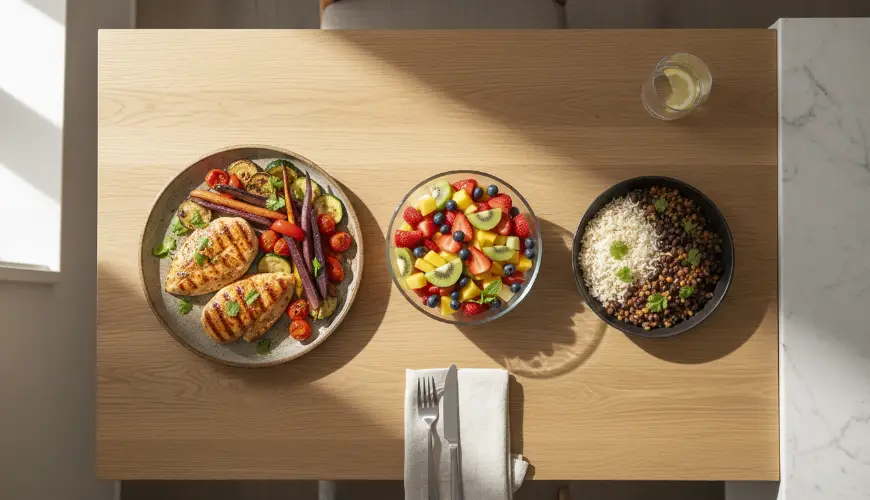
Few people realize that it's not just about what we eat, but also about what we eat it with. You can have the highest quality ingredients on your plate, but if you combine them poorly, your body will struggle with them. Bloating after an otherwise healthy lunch, a feeling of heaviness after a fruit dessert, or fatigue after a hearty portion – these can all be signals that proper food combining deserves more attention than most people give it.
The idea that the way we combine food affects the quality of digestion is nothing new. It dates back at least to the principles of Ayurvedic medicine, which has been dealing with this topic for thousands of years, and in modern times it was popularized by American physician William Howard Hay at the beginning of the 20th century. Today, nutritional therapists and gastroenterologists are returning to it, albeit with an important caveat – not everything that is traditionally said about food combining is supported by scientific studies. Nevertheless, there are a number of principles that are physiologically grounded and truly work in practice. And that's exactly what this article is about.
Try our natural products






Why It Matters How We Combine Foods
The human digestive system is a sophisticated mechanism that uses different enzymes and different levels of acidity for different types of nutrients. Proteins are broken down primarily in the acidic environment of the stomach with the help of the enzyme pepsin, while starches begin their breakdown journey already in the mouth thanks to the enzyme amylase, which works best in an alkaline environment. When a large piece of meat and a large portion of white bread meet on the same plate, the body finds itself in a situation where it must simultaneously create conditions for two opposing chemical reactions. The result is usually slower digestion, fermentation in the digestive tract, and uncomfortable sensations that people often attribute to a specific food, even though the problem lies in its combination with something else.
Of course, it's important not to have exaggerated expectations. The human body is extraordinarily adaptable, and a healthy digestive system can handle quite a lot. But in a time when chronic digestive problems affect up to 40 percent of the world's population according to estimates by the World Gastroenterology Organisation (WGO), it's worth looking for ways to make the digestive tract's job easier, not harder. And mindful food combining is one of the simplest steps a person can take without having to eliminate anything from their diet.
Imagine a common situation: a colleague at the office has grilled chicken steak with rice for lunch, along with a glass of orange juice and a few pieces of melon for dessert. Each of these items is perfectly fine on its own. But together? The acidic juice slows down starch digestion, the fruit in a stomach full of proteins and carbohydrates can't move through quickly and starts to ferment, and the result is afternoon bloating and drowsiness, which the colleague explains away as "probably just too much food." Yet the problem wasn't the quantity, but the combination.
This example nicely illustrates one of the most frequently cited principles of proper food combining – fruit is best eaten on its own, ideally on an empty stomach or at least with sufficient time between it and other food. Fruit digests very quickly, usually within twenty to thirty minutes, and if slowly digestible proteins or fats stand in its way, it stays in the stomach longer than it should and begins to ferment. This is precisely where that unpleasant bloating comes from, which people mistakenly associate with fruit itself and prefer to stop eating it altogether. Yet all it takes is changing the timing.
Equally interesting is the relationship between proteins and starches. As already mentioned, digesting them simultaneously places increased demands on the body. This doesn't mean a person can never have meat with potatoes – it would be naive to claim that one such meal will cause health problems. But if someone regularly suffers from a feeling of heaviness after eating, it may be useful to try combining proteins with vegetables rather than starchy side dishes and observe whether anything changes. Many people report significant improvement after just a few days of such an experiment.
Vegetables are a true universal player in this regard. Non-starchy vegetables – such as broccoli, zucchini, leafy salads, cucumbers, peppers, or tomatoes – can be excellently combined with practically anything. Whether you add them to fish, legumes, or pasta, you're not making the digestive system's job harder; on the contrary, you're helping it thanks to their fiber and enzyme content. It's no coincidence that traditional cuisines around the world intuitively build on the principle of "main component plus vegetables" – from the Mediterranean diet through Asian cuisine to the Czech vegetable side dishes that our grandmothers prepared with every meal.
Speaking of traditional cuisines, it's worth mentioning that fermented foods are another excellent digestive aid, regardless of what you combine them with. Sauerkraut, kimchi, kefir, kombucha, or unpasteurized yogurt contain beneficial bacteria that support gut microbiome health. According to research published in the journal Cell in 2021, a diet rich in fermented foods led to a demonstrable increase in gut bacteria diversity and a reduction in inflammatory markers. Adding a small portion of fermented food to a main course is therefore a simple way to support digestion.
Practical Tips That Work in Everyday Life
Theory is one thing, but how do you transfer all of this into practice without turning meals into a stressful math problem? The key is not to focus on perfection, but on a few simple rules that are easy to remember and gradually implement.
First, start your meal with lighter components and progress to heavier ones. If you're planning a multi-course lunch, a salad or soup at the beginning makes sense not only from a social convention standpoint but also from a digestive one. Light, watery foods move through quickly and prepare the digestive tract for more demanding work.
Second, drink in moderation during meals. Large amounts of liquid during a meal dilute gastric juices and slow digestion. This doesn't mean you can't have a glass of water with lunch – but washing down every bite with half a liter of soda really isn't ideal. It's better to drink approximately thirty minutes before a meal or an hour after it.
Third, take your time with meals. Thorough chewing isn't just advice from a children's handbook – it's a crucial step in the digestive process. In the mouth, food is not only mechanically broken down but also mixed with saliva containing digestive enzymes. Those who eat in a hurry and swallow large bites are depriving their stomach of valuable preliminary work.
And finally, don't underestimate the power of simplicity. The fewer different types of food on one plate, the more easily the body can handle them. This doesn't mean eating boringly – it means, for example, choosing three or four quality ingredients that go well together instead of seven different ones in a single meal. As the French gastronome Jean Anthelme Brillat-Savarin said: "Tell me what you eat, and I will tell you who you are." Today we might add: tell me how you combine it, and I'll tell you how you feel.
It's also worth mentioning that there are foods that naturally support digestion and are worth incorporating into your diet regularly. Ginger stimulates the production of gastric juices and speeds up stomach emptying, as confirmed by, among others, a review study in the journal Food Science & Nutrition. Fennel and mint help relax the smooth muscles of the digestive tract and alleviate cramps. A small amount of apple cider vinegar before a meal can support the production of stomach acids in people who don't produce enough. And the already mentioned fermented foods are essentially natural probiotics.
The entire concept of proper food combining has yet another dimension that is discussed less but is no less important – the impact on nutrient absorption. Some combinations not only facilitate digestion but directly increase the amount of vitamins and minerals the body can obtain from food. A classic example is vitamin C and iron: plant-based iron from legumes or spinach is absorbed significantly better when supplemented with a source of vitamin C, such as bell pepper or lemon juice. Conversely, calcium and iron compete with each other for absorption, so washing down a spinach salad with a glass of milk isn't the most fortunate choice from a nutritional standpoint.
Similarly, fats help the absorption of fat-soluble vitamins – A, D, E, and K. Carrots without a drop of oil or butter may taste fine, but the body will only utilize a small portion of the beta-carotene from them. Just add a little quality olive oil or a few nuts and absorption increases manifold. These are small details that require no extra effort but can have a real impact on how much nutrition you actually get from your food.
In closing, it's fair to say that the topic of food combining has its enthusiasts and skeptics alike. Some experts point out that the human body is flexible enough to handle practically any combination, and that strict rules can lead to orthorexia in more sensitive individuals – an unhealthy obsession with healthy eating. And they're right that no rule should be a source of stress. The best approach is experimental: try implementing some principles, observe your own body, and keep what works. Because at the end of the day, it's not about perfection, but about feeling good after a meal – full of energy instead of full of heaviness. And that's a goal that's definitely worth a little attention on your plate.