

# Why Are You Afraid of Making Phone Calls and How to Overcome It
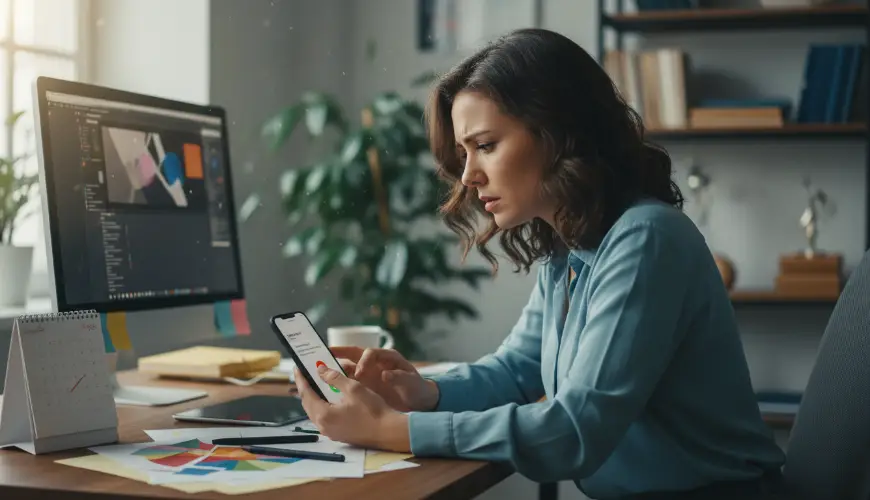
The phone rings and your heart starts pounding. Your hand reaches for the mobile, but instead of answering the call, your thumb instinctively heads for the red button. Sound familiar? If so, you're definitely not alone. In an era when most communication happens through text messages, emails, and chat apps, making phone calls has become a source of genuine stress for a surprisingly large number of people. And it's not just about being introverted or lazy – phone anxiety is a real psychological phenomenon that can complicate everyday life more than it might seem at first glance.
Take Lucie, for example, a thirty-year-old graphic designer from Brno. She excels at her job, communicates with clients via email, and is professional and confident in meetings. But when she needs to call her insurance company or make a doctor's appointment, she puts it off for days, sometimes even weeks. "I know it's absurd," she says. "The call would take two minutes, but I think about it all day in advance. What if they ask me a question I don't know the answer to? What if I stumble over my words?" Lucie's story is not unique. Surveys repeatedly show that younger generations in particular perceive phone calls as unpleasant and stressful, even in situations that are objectively completely mundane.
But why are so many people actually afraid of making phone calls? The answer is more complex than it might seem, reaching deep into how the human psyche works, how our environment shapes us, and how dramatically the way we communicate with each other has changed over the past two decades.
Try our natural products




Why so many people are afraid of making phone calls
The roots of phone anxiety are often linked to broader social anxiety, meaning the fear of being judged and negatively evaluated by others. Phone calls have several specific characteristics that distinguish them from other forms of communication – and it is precisely these characteristics that can trigger a stress response in more sensitive individuals.
First, a phone call happens in real time. Unlike an email or a WhatsApp message, you don't have time to think through your response, rephrase a sentence, or delete what you've written. Every word is immediate and irreversible. Second, phone calls lack visual feedback. You can't see the other person's facial expression; you don't know whether they're smiling, nodding, or frowning. The brain therefore has to work with incomplete information, which naturally increases uncertainty. Third, a phone call is to some extent a "performance" – especially if you're calling in the presence of other people who can hear your side of the conversation. This adds another layer of pressure.
Psychologist and anxiety disorders researcher Amy Przeworski from Case Western Reserve University aptly described in one of her texts that phone anxiety is actually a form of social phobia focused on a specific situation. A person doesn't have to be afraid of social interactions in general, but the specific conditions of a phone call – the absence of visual contact, the inability to control the pace of the conversation, and the fear of silence – can trigger a disproportionate anxiety response.
On top of all this, there is a generational factor. People who grew up with smartphones and text-based communication simply don't have as much experience with phone calls as their parents' generation. And what a person doesn't do often naturally feels uncomfortable. This creates a vicious cycle: the more you avoid phone calls, the greater the anxiety you feel during them, and the greater the anxiety you feel, the more you avoid them. The British organisation Anxiety UK points out in its materials that avoidance behaviour is one of the main factors that maintain and deepen anxiety over the long term.
It's important to distinguish between ordinary discomfort and genuine anxiety. For most people, phone calls simply aren't pleasant – and that's perfectly normal. The problem arises when the fear of a phone call starts affecting quality of life. When someone puts off important matters because of it, avoids professional opportunities, or neglects healthcare because they can't bring themselves to call the doctor's office. In such cases, it's no longer just a preference but an obstacle worth addressing.
Interestingly, phone anxiety doesn't only affect people who are otherwise anxious. It also affects people who are perfectly fine in person, enjoy public speaking, and have no problem giving presentations in front of dozens of colleagues. The specificity of a phone call as a communication channel simply creates unique conditions that can make even an otherwise confident person nervous. As American psychologist Guy Winch, author of Emotional First Aid, noted: "Phone anxiety isn't about not being able to talk. It's about the brain perceiving a phone call as a situation with a high degree of uncertainty – and uncertainty is exactly what feeds anxiety."
Perfectionism also plays a role. People who set high standards for themselves tend to perceive every call as a test. They must sound smart, professional; they mustn't hesitate, mustn't say "um." This internal pressure paradoxically increases the likelihood that exactly that will happen – and the negative experience then confirms the original fears. It's a classic example of a self-fulfilling prophecy.
How to overcome phone anxiety
The good news is that phone anxiety is definitely not something a person has to live with forever. There is a whole range of approaches that help – from simple practical tricks to deeper psychological work. And most of them don't require anything dramatic, just a little patience and willingness to step outside your comfort zone.
Gradual exposure is one of the most effective tools. The principle is simple: you start with small, low-stress calls and gradually work your way up to more challenging ones. You might start by calling a restaurant and asking about their opening hours. Then try ordering food over the phone. Then call a government office with a simple question. Each successful call is a small victory that sends the brain a signal: "See? We survived. It wasn't that bad." Cognitive behavioural therapy, which is considered the gold standard in treating anxiety disorders, is built on precisely this principle. According to the National Institute of Mental Health (NIMH), gradual exposure is one of the best-supported methods for overcoming specific phobias and anxieties.
Another useful strategy is preparing before the call. This doesn't mean you have to write out an entire script word for word – that could actually increase anxiety, because a real call will never follow a prepared script. It's enough to jot down three things on paper or in your phone's notes: why you're calling, what information you need to convey, and what questions you want to ask. This simple structure gives the brain a sense of control, which is key to managing anxiety.
Changing your perspective also helps. People with phone anxiety tend to overestimate how much the other person notices their nervousness. In reality, the person on the other end of the line is usually focused on the content of the call, not on whether the caller sounds a bit uncertain. The receptionist at the doctor's office handles dozens of calls a day and probably won't remember five minutes later that you stuttered a little at the beginning. This cognitive reframing – realising that our fears are disproportionate to reality – is one of the fundamental pillars of managing anxiety.
Physical stress management techniques are another helpful tool. Before a stressful call, a few deep breaths can help – specifically the technique where you inhale for four seconds, hold your breath for four seconds, and exhale for eight seconds. This method activates the parasympathetic nervous system and physiologically reduces the stress response. Some people also find that walking around the room or gesticulating while on the phone helps – body movement releases tension and paradoxically gives the voice a more natural and confident tone.
A practical trick worth mentioning that may sound trivial but works: smile while you're on the phone. Smiling changes the quality of your voice and simultaneously sends the brain a signal that the situation is not threatening. It's a small thing, but many people confirm that it genuinely helps them feel more relaxed during a call.
But what if the anxiety persists despite all attempts at self-help? In that case, it's definitely worth seeking professional help. Cognitive behavioural therapy (CBT) is exceptionally effective in treating social anxiety, including phone anxiety. A therapist will help identify the specific thought patterns that maintain the anxiety and work through them systematically. In the Czech Republic, CBT is available both through clinical psychologists and at specialised centres for treating anxiety disorders.
There's no need to be ashamed of phone anxiety or to trivialise it. We live in an era that prioritises text-based communication and pushes phone calls to the sidelines – so it's entirely logical that a certain discomfort has built up around them. At the same time, the ability to pick up the phone and make a call remains irreplaceable in many situations. Whether it's dealing with urgent matters, building professional relationships, or simply the fact that calling your grandmother is still nicer than sending her an emoji.
Let's return to Lucie from Brno. After several months of working with a therapist and gradually exposing herself to phone calls, she now says that while phoning is still not her favourite activity, it has stopped controlling her life. "The biggest breakthrough was when I realised that the call doesn't have to be perfect. It just needs to serve its purpose." And that is precisely the crux of the whole matter. A phone call isn't an exam, it's not a stage performance, and nobody is grading you on it. It's simply a tool – and like any tool, you get better at using it by actually using it. Every phone you pick up is a step in the right direction, even if your hands are shaking while you do it.