

# How Hormonal Changes Affect Hair Quality
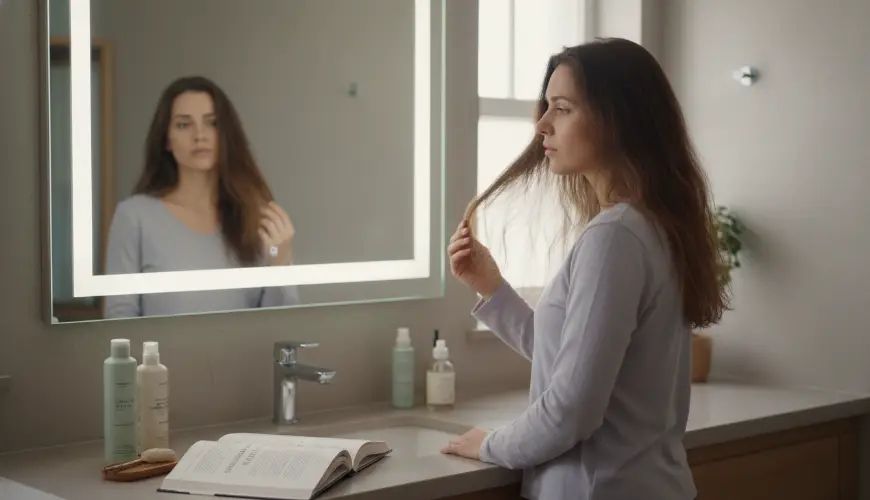
Every woman knows the feeling. One day she looks in the mirror and notices that her hair no longer has the shine it once did, her nails break more easily, and her skin looks different than it did a few years ago. Most of us chalk it up to stress, weather, or the wrong skincare products. But the real culprit is often hidden much deeper – in our hormones. Hormonal changes affect the quality of hair, nails, and skin at every age, and understanding this mechanism is the first step toward being able to do something about it.
Hormones are essentially chemical messengers that control nearly every process in the body. From metabolism to mood to skin regeneration and hair growth. When their levels change – whether during puberty, pregnancy, times of stress, or menopause – it very often shows up in our appearance. This isn't as superficial a topic as it might seem. The condition of hair, nails, and skin is actually one of the most reliable indicators of overall health. As dermatologist Dr. Whitney Bowe, author of The Beauty of Dirty Skin, says: "Skin is a mirror of what's happening inside the body."
So let's take a look at exactly how hormones affect our beauty and health during different stages of life and what we can do at each phase to look and feel our best.
Try our natural products
Puberty, adulthood, and motherhood: the first major hormonal waves
The hormonal rollercoaster begins in full force during puberty. A sharp rise in sex hormones, particularly estrogens and androgens, triggers a whole range of changes. Increased sebum production leads to oily skin and often acne, which plagues most teenagers. Hair can paradoxically be in the best condition of one's life during this period – estrogen promotes its growth and shine – but at the same time, problems with an oily scalp may appear. Nails tend to be fairly strong during puberty because the body is at full regenerative capacity, but the unbalanced diet typical of teenagers (lack of zinc, iron, and biotin) can make them brittle.
Once the hormonal storm of puberty settles down, a period of relative stability follows, though it's interrupted by a number of other events. One of the most significant is contraception. Hormonal contraception can have a surprisingly strong effect on hair, nails, and skin – for some women it helps clear up acne and improves hair quality, while for others it causes thinning hair or increased skin pigmentation. It depends on the type of preparation and individual sensitivity. According to the American Academy of Dermatology, some progestins in contraception can have androgenic effects, which leads to hair loss in sensitive women.
And then comes pregnancy – a time when many women experience the most beautiful hair and skin of their lives. High estrogen levels extend the growth phase of hair, so less hair falls out and the mane appears thicker and healthier. Skin often takes on a characteristic "glow," although some women instead struggle with melasma (dark patches) or pregnancy acne. Nails may grow faster, but in some women they become more brittle.
The real shock, however, comes after delivery. When estrogen levels drop sharply, the body tries to catch up on what it "postponed" during pregnancy. The result is so-called postpartum hair loss, which affects up to 50% of women and typically sets in three to six months after giving birth. It's a physiological process that is temporary, but very stressful for many new mothers. Imagine a situation where a woman is caring for a newborn, sleeping three hours a day, and on top of that her hair is falling out in clumps. It's no wonder this can trigger anxiety. It's important to know that this condition usually resolves within a year and that proper nutrition rich in iron, zinc, biotin, and omega-3 fatty acids can significantly speed up recovery.
So what should you do during this stage of life? The foundation is a varied and balanced diet. The body needs enough protein, which is the building block of keratin – the protein that makes up hair and nails. B vitamins, vitamin D, and antioxidants are also important. Quality dietary supplements can be a helpful aid, especially during periods of increased demand such as pregnancy or breastfeeding. It's also worth paying attention to the composition of cosmetics – aggressive sulfates in shampoos and drying skin products can further damage hormonally weakened skin and hair.
The thirties, forties, and menopause: when the rules change
Around the age of thirty, a gradual, initially almost imperceptible decline in the production of certain key hormones begins. Levels of estrogen, progesterone, and growth hormone slowly decrease, which shows in the quality of collagen in the skin, the speed of hair growth, and the strength of nails. Skin loses its elasticity, the first fine wrinkles appear, and the skin's natural hydration begins to decline. Hair may gradually thin, especially along the part line and at the crown of the head.
In the forties, these processes accelerate. Perimenopause – the period preceding menopause – can last several years and is accompanied by fluctuating hormone levels that manifest as irregular cycles, but also more pronounced changes in skin and hair. Some women notice for the first time during this period that their hair is losing volume, that unwanted facial hair is appearing (a consequence of the relative excess of androgens as estrogen declines), or that their skin reacts differently to cosmetics they've been using for years.
Menopause itself represents a fundamental hormonal turning point. According to a study published in the journal Maturitas, collagen content in the skin drops by up to 30% in the first five years after menopause. That's a huge number, which explains why many women perceive this period as the moment when their skin changes dramatically. The skin becomes thinner, drier, and more prone to irritation. Hair loses pigment (graying is, of course, also a hormonally driven process), but also density and texture. Nails tend to be brittle, dry, and often split.
But take note – it's not just about women. Men also go through hormonal changes, albeit less dramatic ones. The gradual decline in testosterone, sometimes referred to as andropause, can lead to thinning hair, drier skin, and slower regeneration. Androgenic alopecia, or hormonally driven hair loss, affects up to 70% of men over the course of their lives and is directly linked to the effect of dihydrotestosterone (DHT) on hair follicles.
What can you do during this stage of life? The key is a combination of internal and external care. From the inside, dietary supplements containing collagen, hyaluronic acid, biotin, zinc, and antioxidants such as vitamins C and E can help. A diet rich in phytoestrogens – plant-based substances with a mild estrogenic effect found, for example, in soy, flaxseeds, or chickpeas – can help alleviate some of the effects of hormonal decline. From the outside, it's important to switch to gentler, more nourishing cosmetics. Skin during menopause needs intensive hydration, protection from UV radiation (which accelerates collagen breakdown), and products with retinol, niacinamide, or peptides that support skin renewal.
For hair, gentle handling is more important than ever. Limiting heat styling, using sulfate-free shampoos, and regularly treating the scalp can significantly slow hair loss. Some women have had good experiences with products containing caffeine or minoxidil, which stimulate hair follicles, but it's always advisable to discuss these options with a dermatologist.
The role of the thyroid gland, which produces hormones essential for the metabolism of the entire body, should not be overlooked either. Thyroid disorders, whether hypothyroidism or hyperthyroidism, very often manifest precisely in the quality of hair, nails, and skin. Dry, brittle hair, fragile nails, and pale, dry skin can be the first signs of an underactive thyroid. If you notice these changes and can't explain them by other causes, it's worth having your TSH and other thyroid hormone levels checked.
An equally important role is played by cortisol – the stress hormone. Chronic stress keeps cortisol levels permanently elevated, which disrupts the body's regenerative processes, impairs sleep quality (and it's precisely during sleep that the body regenerates the most), and can lead to inflammation that shows up on the skin in the form of acne, eczema, or premature aging. It's no coincidence that after a period of intense stress – whether it's work overload, divorce, or the loss of a loved one – people often notice a significant deterioration in the condition of their hair and skin. This type of hair loss is called telogen effluvium and is a direct consequence of hormonal imbalance caused by stress.
A practical example: Jana, a forty-five-year-old teacher from Brno, noticed after a demanding school year that her hair had thinned significantly and her nails were breaking at every opportunity. Her doctor discovered mild hypothyroidism and a vitamin D deficiency – problems that, combined with perimenopause and chronic stress, manifested precisely in her appearance. After starting treatment, adjusting her diet, and incorporating relaxation techniques, her condition improved significantly within a few months. Jana's story shows how important it is not to look for solutions only in cosmetics, but to approach the problem holistically.
And that is perhaps the most important message of this entire topic. The beauty of hair, nails, and skin isn't just a matter of the right cream or shampoo – it's a reflection of overall health and hormonal balance. Self-care should therefore start from within: with quality nutrition, adequate sleep, exercise, stress management, and targeted dietary supplements when needed. External care is an important complement, but on its own it's not enough.
Anyone who wants to give their hair, nails, and skin the best should approach self-care as an investment in their own health. Natural cosmetics free of unnecessary chemicals, dietary supplements with proven formulations, and a mindful approach to lifestyle – these are tools that work at every age. And perhaps now is the right time to start listening to your body more closely, because it's telling us more through its signals than we usually realize.