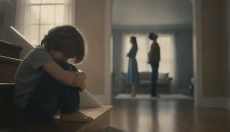

Voluntary childlessness is a legitimate choice
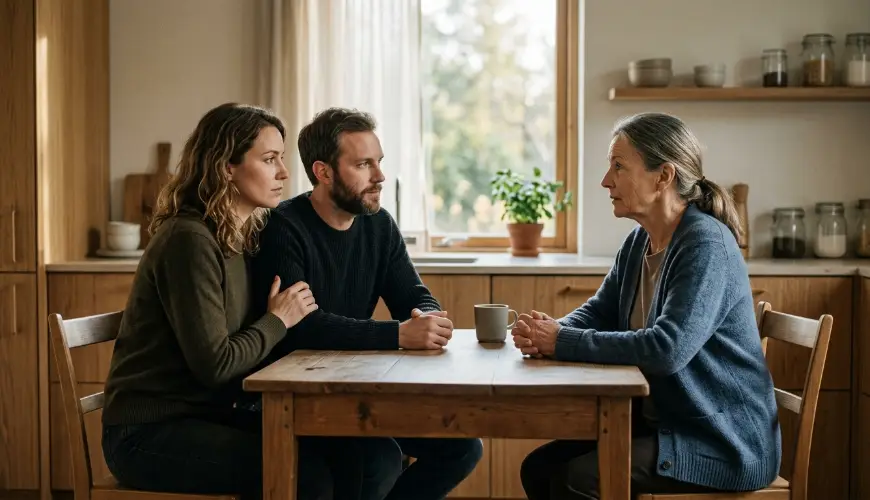
The decision not to have children is among the most private ones a person can make in life. And yet few decisions attract such a volume of questions, comments, and unsolicited advice from those around us. Voluntary childlessness – referred to in English as being childfree – has become an increasingly discussed topic in recent years, not only in the media, but above all in living rooms and around family tables throughout the world.
People who consciously decide not to raise children face a specific social challenge: how to talk about their decision with those closest to them without causing lasting tension, guilt, or unnecessary conflict. The path to understanding is not always straightforward, but it is possible.
Try our natural products





Why the conversation with family is so complicated
Before we even get to the practical side of things, it is important to understand why a conversation about voluntary childlessness tends to be so emotionally demanding. Family – especially parents and grandparents – grew up in an era when having children was considered a natural and self-evident step in life. For many of them, the idea of grandchildren or great-grandchildren is deeply tied to their own identity, to a sense of family continuity and meaning. When an adult child announces that they do not plan to take this path, it can evoke a sense of loss in the parents – or even personal failure – even though, rationally speaking, it is someone else's decision.
According to research by sociologists, including studies published by the Pew Research Center, the proportion of adults who consciously choose a life without children is growing. In the United States, for example, in 2021 nearly 44 percent of childless adults between the ages of 18 and 49 said they would probably never have children – and cited as their primary reason simply not wanting them. A similar trend is evident in Europe, including the Czech Republic, where the average age of first-time mothers has been rising steadily and the number of voluntarily childless couples is growing.
But statistics alone will not convince family members. A conversation about the childfree lifestyle requires empathy, patience, and good preparation – on both sides of the table.
Let us imagine a concrete situation: Tereza and Marek are a couple in their thirties. Both have stable jobs, their own apartment, and a happy relationship. They have decided not to have children – not because it would not be possible, but simply because they do not want to. Tereza values her career, travel, and personal freedom. Marek finds fulfilment in music and volunteering. Their life is full and meaningful. Yet every family holiday is coloured by the question: "So when are you two finally going to...?" Marek's grandmother cried when she found out. Tereza's mother was silent for an entire weekend. How should one proceed in such a situation?
How to talk about the decision – and what to say
The key to a successful conversation with family lies in timing, tone, and clarity of message. There is no need to wait for the perfect moment – it will likely never come – but it is sensible to choose a calm time when no one is tired, tense, or in a hurry. A Christmas dinner or a family celebration is definitely not the right setting for such an announcement.
Straightforwardness pays off more in this case than careful hints. If someone says things like "we're not thinking about children yet" or "we'll see in time," they leave room for hope that may prove false for the family. A clear, calm formulation – such as "we have decided we don't want children, and it is a considered decision" – may provoke a stronger initial reaction, but in the long run it is fairer to everyone involved.
It is also important not to enter the conversation defensively. A defensive stance paradoxically raises more questions and doubts than if one speaks calmly and with confidence. There is no need to apologise, justify oneself, or explain every detail of one's thinking. A decision about one's own life does not require the approval of others – but it deserves respect. As psychologist and author of books on conscious life choices Bella DePaulo says: "Every person has the right to define a meaningful life on their own terms – and that definition need not include children."
At the same time, it is fair to give family members space to process the news. Reactions such as shock, sadness, or disappointment are not necessarily expressions of ill will – they are expressions of people grieving over an image of the future that will not come to pass. Giving them time, not demanding immediate acceptance, and being prepared for the conversation to need to happen more than once is all part of the process.
In practical terms, the following may help:
- Choose a calm, private setting free from distractions and time pressure
- Speak as a couple if possible, so it is clear this is a shared decision
- Be prepared for questions – and for the fact that not all of them will be pleasant
- Respond to emotions without matching them with emotions – a calm voice is the most powerful tool
- Give the family time and return to the topic after a few weeks, once the first wave of reactions has subsided
It is not unusual for the first conversation to go worse than one might hope. But it is precisely this repeated, patient dialogue that tends to lead to mutual understanding in the end – even if not always to full acceptance.
Childfree does not mean selfish
One of the most common arguments that childfree people hear from family is the accusation of selfishness. "Who will take care of you when you're old?" or "You'll miss out on the greatest joy in life" – these are phrases many know all too well. It is important neither to dismiss these arguments nor to leave them unanswered.
The decision not to have children is not selfishness – it is a conscious choice that can be just as valuable and fulfilling as motherhood or fatherhood. People living a childfree lifestyle are often deeply engaged in their communities, care for elderly relatives, volunteer, or contribute through their work to the broader good of society. A meaningful life takes many forms.
It is also worth noting that having children with the aim of securing care in old age is, from an ethical standpoint, at least a debatable argument. Children are not an insurance policy or an investment – they are independent beings with their own lives and plans. This idea is worth raising in a conversation with family, not as an accusation, but with calm openness.
Tereza from our example ultimately managed her conversation with her mother on the third attempt – the first two ended in tears and someone leaving the room. The third took place during a walk, without time pressure, and her mother truly listened for the first time. She did not accept it immediately, but she said: "I understand that's how you feel. Give me time." And that was enough.
Such stories are not exceptional. Experts in family communication, including those working within the American Psychological Association, repeatedly emphasise that the key to bridging generational differences in values is not persuasion, but listening and respect – on both sides.
Voluntary childlessness is today a legitimate life path, chosen by an increasing number of people across generations, cultures, and social groups. It is not a trend that can be ignored, nor a decision that deserves condemnation. It is a personal choice that – like any other – requires courage to voice and patience for those around us to understand.
And perhaps it is precisely this courage – to say aloud what one truly wants from life – that is the most important step. Not so that family will agree. But so that relationships can stand on truth rather than silence.