
# What to Do with Things That Can't Be Thrown Away or Donated ## ♻️ Recycling and Collection Points
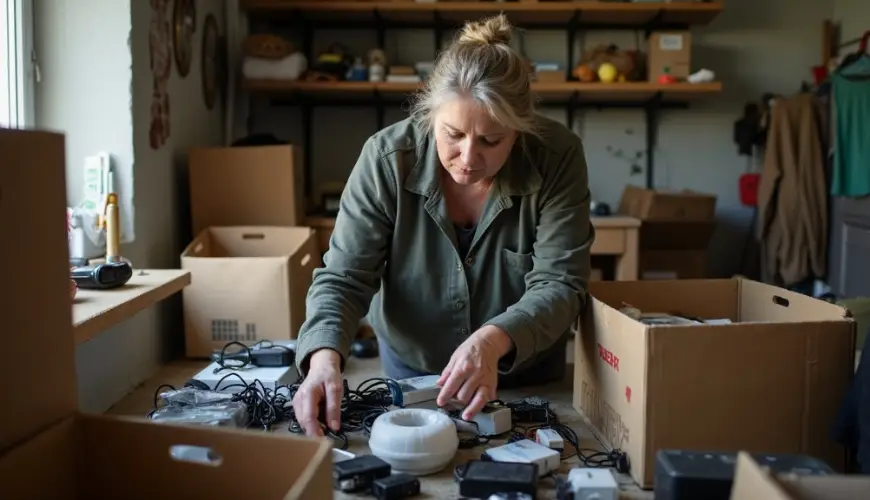
We all know the feeling. We're standing in the middle of a room full of things we've finally decided to sort through, and suddenly we come across a group of items we simply don't know what to do with. An old television, batteries from a long-forgotten remote control, a broken chair with sentimental value, medication left behind by a deceased relative, or a three-quarter-full tin of paint from the basement. They can't be thrown away – either because it would be ecologically irresponsible, or because the law prohibits placing them in regular municipal waste. They can't be donated either, because they're broken, outdated, or otherwise unusable. So what do we do with them?
This question troubles far more households than might initially appear. Yet an answer exists – it's just that few people know it in full. Properly handling problematic items is not just a matter of ecology, but also of personal responsibility and a practical approach to the home.
Try our natural products

Why are some things so hard to get rid of?
The problem lies in the fact that modern homes are full of items made from composite materials, containing hazardous components, or with very specific life cycles. For decades, manufacturers designed products with performance and cost in mind first, rather than what would happen to them at the end of their useful life. The result is things like electronics containing lead, mercury, or cadmium; medications with chemical compounds that must not enter the soil or groundwater; or batteries containing acids and heavy metals.
But the problem isn't only ecological. Many items carry emotional weight – family photos stored on media that can no longer be played, furniture inherited from grandparents that is too damaged to donate but too precious to throw away. Or things we simply don't know how to categorise: an old mobile phone that doesn't work but contains family photos. A broken pram that can't be sold because it no longer meets current safety standards. Stocks of household chemicals whose composition we're uncertain about.
Whether the reason is emotional or ecological, the result is the same: things stay at home, accumulating in basements and attics, becoming a source of stress. According to estimates by the European Environment Agency, the average European household produces over 500 kilograms of waste per year, with a significant portion belonging to special categories that cannot be disposed of in the usual way.
The good news is that for almost every type of problematic item, a solution exists. You just need to know where to look.
Electrical appliances and electronic waste
Electronics are probably the most common category of items people don't know what to do with. An old laptop, a broken hairdryer, a faulty microwave, or surplus chargers – all of these fall into the category of so-called electrical equipment, or e-waste. In the Czech Republic, there is a legal obligation to hand in electrical appliances at designated collection points, rather than disposing of them in bins or rubbish containers.
Collection points for electrical appliances are more accessible today than most people realise. Every electronics retailer with a sales floor larger than 400 square metres is legally required to accept used electrical equipment back without any purchase obligation. You can therefore walk into any large electronics store and hand in even non-functioning devices. In addition, there are recycling centres that accept electrical appliances free of charge, and some municipalities also run mobile collection services.
A special subcategory consists of small electronics containing batteries – such as watches, calculators, or remote controls. These are best handed in whole, as separating the battery from such a device is unnecessarily complicated and increases the risk of damage.
Medications, chemicals, and hazardous waste
Expired medications are another typical example of items that cannot be thrown into regular waste. They contain pharmaceutical compounds that do not break down naturally in soil or water and can contaminate entire ecosystems. The correct place to hand in medications is a pharmacy – and this applies to both over-the-counter and prescription drugs, whether expired or not. Pharmacies are legally required to accept medications and ensure their safe disposal.
The same applies to household chemicals. Leftover cleaning products, thinners, paints, or pesticides belong at a recycling centre in the hazardous waste section. They should never end up in the drain or in a regular bin. If you're unsure whether your local recycling centre accepts a particular substance, most municipalities operate a telephone helpline or a web form where this information can easily be verified.
Motor oils, car batteries, and tyres are other typical examples. Special collection containers for motor oils can be found at petrol stations or car repair shops. Car batteries are accepted back by automotive parts retailers, and tyre retailers and tyre service centres are legally required to take back tyres.
Items with emotional value that cannot be donated or sold
This is perhaps the most complex category. Physically functional items that nobody wants – because they are too specific, too damaged, or too old. For example, a collection of VHS tapes with family recordings. Or old furniture so heavily affected by woodworm that no charity will accept it. Or a set of dining crockery inherited from a grandmother that is complete but entirely unsuitable for a modern home.
Consider the situation of Martina from Brno, who inherited the entire contents of her parents' basement after they moved to a smaller flat. Among the items were an old record player without a needle, twenty-year-old skis, a box of postcards, and several lamps with cracked shades. None of it was in a condition that a charity would accept. Martina's solution? A combination of approaches – she offered the record player in a local Facebook group for retro technology enthusiasts and it was gone within two hours. She took the skis to a recycling centre, which passed them on to a local youth ski club. She digitised the postcards and donated the physical originals to the local archive. She dismantled the lamps – functional metal parts went to a scrap metal dealer, and the rest went to the recycling centre.
This example illustrates an important point: the solution is rarely a single universal one, but a combination of several approaches can resolve even a seemingly unsolvable situation.
Digitisation is a key tool for items with emotional value. Family photographs, slides, VHS videotapes, audio cassettes – all of these can be digitised today at a reasonable cost. There are specialist companies and volunteer centres that focus on this area. After digitisation, the physical carrier is still waste, but the emotional content is preserved.
Specific materials and lesser-known options
There are categories of items whose recycling or collection options people are almost entirely unaware of. Textiles in too poor a condition to be donated – torn, soiled, or otherwise damaged – are accepted by textile collection bins or recycling facilities, where they go on to be industrially processed into cleaning rags or insulation materials. Clothing that is too worn out to be a charitable donation therefore certainly does not belong in the rubbish bin.
Light bulbs are another example. Standard incandescent bulbs can be disposed of in general waste, but compact fluorescent energy-saving bulbs and LED bulbs contain hazardous substances and belong in electrical equipment collection points. The same applies to batteries – these must not go into municipal waste and are accepted at virtually all electronics shops, drugstores, and supermarkets, where special containers are provided for this purpose.
Building materials such as leftover tiles, bricks, or insulation are accepted at recycling centres. Sometimes neighbours or people on classified ad websites will be glad to have them – the quantity left over from your bathroom renovation may be exactly what someone else is looking for for a small repair job.
An interesting option for items in borderline condition are so-called repair cafés – volunteer gatherings where experienced repairers help fix things that would otherwise end up as waste. In the Czech Republic, a network of these venues operates in larger cities, and their popularity is growing. You bring a broken appliance or a torn garment and leave with a functioning item – free of charge.
Various sharing platforms and communities also play a significant role. Groups such as "Giving Away for Free" on social networks operate on the principle that even something you consider unnecessary or in imperfect condition may be a treasure for someone else. People offer everything from old furniture to surplus building materials and garden produce. As one popular motto of these communities goes: "One person's rubbish is another person's treasure."
For items that cannot be repaired or recycled in any other way, there is yet another option – creative repurposing, or upcycling. Old wood from furniture can be transformed into a decorative shelf. A broken ceramic mug becomes an original plant pot. Fabric offcuts can serve as cushion stuffing. Upcycling is not just a fashionable trend – it is a practical way to extend the life of materials while creating something new. Inspiration can be found on platforms such as Pinterest or in communities focused on sustainable living.
The key lesson from everything outlined above is that virtually no item need end up in landfill or illegally discarded in nature. A combination of recycling centres, specialist collection facilities, pharmacies, repair shops, digitisation services, community groups, and a creative mindset covers the vast majority of items that households don't know what to do with. All it takes is a little patience, a willingness to search, and an awareness that proper disposal of items is part of a responsible approach to life – just like sorting waste or choosing sustainable products when shopping.