

Simple meals from young vegetables for spring days
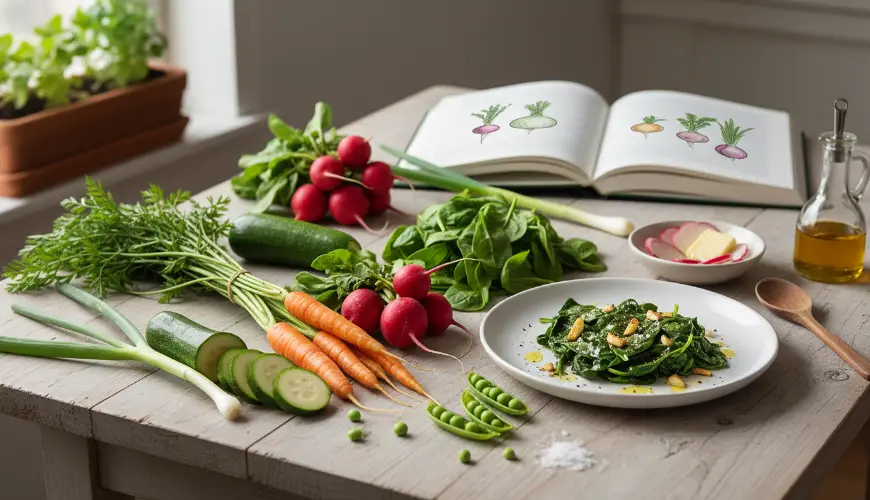
When the first bunches of young carrots, crisp radishes, and tender spinach leaves appear at the markets in spring, it's a signal that nature is offering the very best it can. Young vegetables are something entirely different from their autumn or winter counterparts – they're more delicate, sweeter, full of water and vitamins, and yet they need only minimal preparation to shine on the plate. It's precisely simplicity that is the key to truly enjoying the spring harvest. No complicated sauces, no long roasting. Just a few quality ingredients, a bit of imagination, and a willingness to experiment.
This entire article is about why simple approaches to cooking young vegetables work best and how to get the most flavor and health benefits from them. You'll find practical tips, tried-and-true recipes, and inspiration for everyday cooking that might make you see spring vegetables with entirely new eyes.
Try our natural products





Why young vegetables deserve a minimalist approach
The difference between young spring carrots and the ones we buy in the winter months isn't just in the name. Young vegetables contain more water, have a more delicate cellular structure, and often a higher concentration of certain vitamins, especially vitamin C and beta-carotene. According to information published by the World Health Organization, increased intake of fresh vegetables is one of the most effective ways to support overall health and reduce the risk of chronic diseases. And it's precisely in spring that we have a unique opportunity to follow this advice in the most natural way possible.
But here's where a paradox arises that many home cooks encounter. The higher the quality of the ingredient, the less you should do with it – and yet people tend to overcook young vegetables, drown them in heavy sauces, or process them in ways that suppress their natural flavor. Yet so little is needed. Young peas eaten raw straight from the pod, baby spinach just lightly wilted in a pan with a touch of garlic, radishes sliced into thin rounds and served with quality butter and a pinch of sea salt. These are moments when food needs nothing more.
Interestingly, this minimalist approach to cooking vegetables is by no means a new trend. French cuisine has practiced it for centuries under the term cuisine du marché – cooking from whatever the market currently offers. The famous Julia Child once said: "You don't have to cook fancy or complicated masterpieces – just good food from fresh ingredients." And that is precisely the philosophy that suits young vegetables perfectly.
In practical terms, this means that when you bring home a bunch of young carrots, you don't need to search for a complicated recipe. Just rinse them, lightly scrape them (or not even that, if they're truly fresh and organic), boil them for two to three minutes in salted water or quickly sear them in a pan with a bit of olive oil, and you have a side dish that surpasses anything from the supermarket in flavor. The key is not to go past the point where the vegetables lose their crispness – and with it, most of what makes them exceptional.
A similar approach applies to young zucchini, which in spring are still tiny and incredibly delicate. Just slice them into rounds, lightly salt them, let them rest for fifteen minutes, and then quickly grill them or sear them in a hot pan. No heavy cheese coating, no stuffing with ground meat. Just vegetables, heat, and a few drops of lemon juice at the end.
And what about young garlic? That green, juicy kind with a gentle spiciness that has nothing in common with the aggressive aroma of dry winter bulbs. Young garlic can be sliced into salads, added to pasta in the final seconds of cooking, or simply rubbed on toasted bread and drizzled with olive oil. It's a dish that anyone can prepare, yet it can surprise with its depth of flavor.
When we look at it from a nutritional standpoint, quick and gentle processing of young vegetables has yet another crucial benefit. Vitamin C, which is abundant in fresh spring vegetables, is extremely sensitive to heat and prolonged cooking. Studies published in the scientific journal Journal of Food Science repeatedly confirm that brief cooking, blanching, or eating raw preserves significantly more nutrients than traditional long cooking methods. In other words – the simpler the preparation, the healthier the food. That's an argument that speaks for itself.
But let's take a look at specific recipes and tips that you can start using the very next time you return from a farmers' market or from your own garden with an armful of spring harvest.
Recipes and tips that work in practice
One of the simplest and at the same time most satisfying dishes made from young vegetables is a spring salad with radishes, young peas, and an herb dressing. Imagine a bowl full of crisp lettuce – romaine or oak leaf, perhaps – to which you add thin slices of radishes, a handful of freshly shelled peas, a few mint leaves, and a simple dressing of olive oil, lemon juice, a teaspoon of honey, and a pinch of salt. The entire preparation takes literally five minutes, and the result is fresh, colorful, and full of life. Those who want to add a bit of heartiness can complement the salad with a piece of fresh goat cheese or a handful of toasted walnuts.
Another recipe that deserves attention is a quick risotto with young spinach and green asparagus. Asparagus is one of the most characteristic spring ingredients, and in combination with spinach, it creates a deep green, creamy risotto that looks and tastes like it came from a restaurant. The procedure is classic – sauté the onion, add arborio rice, gradually add broth – but the magic lies in adding the asparagus, cut into pieces, about five minutes before the end of cooking and tossing in the spinach at the very last moment so it just barely wilts. Finish with a bit of Parmesan, a drizzle of quality olive oil, and you have a dish that is simple yet elegant.
For those who prefer quick meals without unnecessary time standing at the stove, an excellent choice is toasted spring bread with young garlic, baby tomatoes, and arugula. Simply toast a slice of quality sourdough bread, rub it with half a young garlic clove, add halved baby tomatoes, a handful of arugula, drizzle with oil, and sprinkle with flakes of sea salt. It's a variation on Italian bruschetta, but with a spring touch that makes all the difference.
If you're looking for something warm yet light, try a spring soup made from young carrots and pea pods. Sauté chopped spring onion in a bit of butter, add young carrots sliced into rounds and shelled peas, pour in a light vegetable broth, and cook only long enough for the vegetables to soften while still retaining their color and shape. You don't need to blend it – it's precisely that rustic, chunk-studded consistency that makes the soup authentic. Finish with fresh dill or parsley and serve with bread.
One practical tip worth mentioning concerns buying and storing young vegetables. Farmers' markets are the ideal place to find them, because there the produce is usually harvested that day or the day before. In supermarkets, young vegetables often travel a long way and lose precisely the qualities we want them for. If you don't have access to a farmers' market, it's worth looking into local vegetable box programs or community-supported agriculture, where vegetables are delivered directly from the grower.
As for storage, most young vegetables last only a few days in the refrigerator before they start losing their freshness. Store radishes and carrots without their tops, because the greens draw moisture out of them. Wrap spinach and salad leaves in a damp cloth and place them in a sealed container. Peas are best consumed on the day of purchase, because their sugars quickly convert to starch and they lose their characteristic sweetness.
And then there's one more thing that is often forgotten – the tops and greens we commonly throw away are often edible and delicious. Carrot tops can be used in pesto instead of basil, radish greens are excellent in soups, and young fennel fronds have a lovely fragrance and work well as a garnish or as an ingredient in salads. This approach not only saves money but is also in line with the philosophy of sustainable cooking, which aims to minimize food waste.
An interesting real-life story comes from the experience of Martina from Brno, who two years ago decided that for the entire spring she would cook exclusively from what she found at the Saturday farmers' market at Zelný rynk. "The first two weeks were hard because I was used to planning meals in advance and then shopping from a list," she describes. "But gradually I discovered that when I let myself be guided by what's fresh and beautiful at the moment, I enjoy cooking much more. And the meals are simpler but taste better than anything I used to cook following complicated recipes." Her favorite spring dish became simple pasta with blanched asparagus, lemon, and pecorino – a meal that's on the table in fifteen minutes.
Stories like these show that simple cooking with young vegetables isn't about restriction but about liberation. Liberation from the need to follow complicated recipes, from long lists of ingredients, from hours spent in the kitchen. It's about letting the ingredient speak for itself and just helping it a little on its journey from field to plate.
The next time you're walking past a stand with bunches of young vegetables in spring, try picking up something you don't usually buy. Maybe that strange kohlrabi that looks like a little spaceship, or a bunch of chard with rainbow-colored stems. Peel it, taste it raw, and only then decide what to do with it. You might discover that the best recipe is actually no recipe at all – just fresh vegetables, good oil, a pinch of salt, and the desire to truly savor spring.