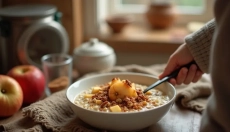

Seasonal eating makes sense because it encourages a diverse diet and saves money.
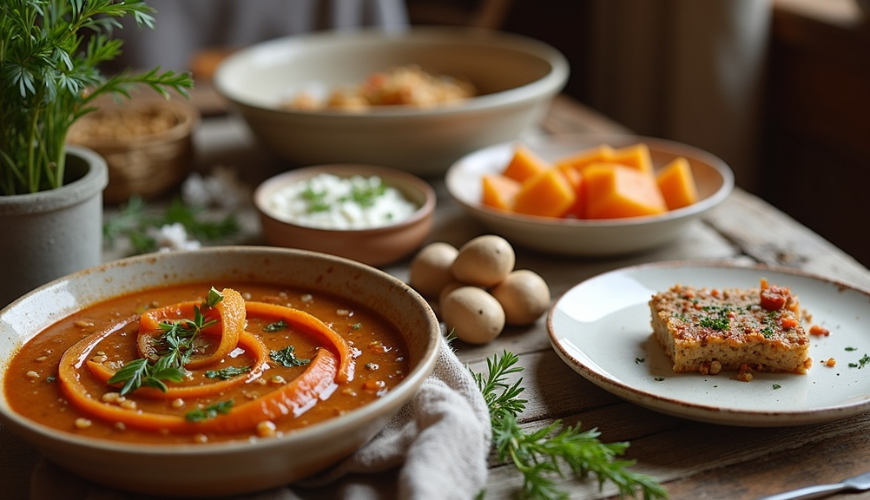
Eating according to the season sounds like advice from times when people had no choice. Yet, precisely in an age where it is possible to buy almost anything at any time, seasonal eating is becoming surprisingly relevant again. Not out of nostalgia, but because it can serve as a simpler compass for balanced diets, be gentler on the planet, and often more wallet-friendly. And when it gets dark early outside, the body asks for a slightly different regime than in July – it's not a weakness, but a natural reaction to light, temperature, and movement.
In practice, this means less thinking about "superfoods" and more attention to what grows (or stores well) here and now. Why seasonal eating benefits the body, how balanced winter meals can look, and what are tips for eating by the season so that it's not just theory?
Try our natural products




Why Seasonal Eating Benefits the Body (and Not Just the Body)
Seasonal eating is often explained ecologically: less transport, less energy for greenhouses, less packaging. All of this is true. But what's important is also what happens on the plate. Seasonal crops are usually harvested when ripe, so they have a chance to offer better taste and more natural composition. In contrast, foods traveling halfway around the world are often harvested early to survive transport – and then they "ripen" more by time than by the sun.
It's not about making an enemy of imports. Rather, it's about realizing that seasonality naturally supports diversity. Those who rely on tomatoes, zucchinis, cucumbers, and berries in summer automatically switch to pumpkins, apples, and root vegetables in autumn. In winter, cabbage, legumes, fermented foods, and things that store well come into play. This rotation is beneficial for the body: different types of fiber alternate, the ratio of water and starches changes, and the spectrum of plant compounds shifts. The intestines – which play a significant role in how one feels today – appreciate variety.
When discussing why seasonal eating is beneficial, the relationship to the natural rhythm is often mentioned. In winter, there is less light, more time indoors, and a craving for warm meals. It's logical: the body tries to maintain thermal comfort and energy. Seasonal cuisine provides practical tools for this – warm soups, broths, roasted vegetables, porridges, legume dishes. In summer, we naturally reach for lighter, more watery things, like salads and fruits. It sounds banal, but it's precisely this type of "banality" that works best in the long run.
Moreover, seasonal food often means cooking with simpler ingredients and less ultra-processed foods. This is one of the most practical reasons it can benefit health. For context, overview information from the World Health Organization on healthy diets and the role of fruits and vegetables is useful: WHO – Healthy diet. It doesn't say "eat seasonally," but it points the way: more plant-based foods, more fiber, less added sugar and salt. A seasonal approach often naturally leads to this.
Another detail sometimes lost in discussions: seasonality can also be a psychological relief. Instead of an endless choice, one leans on what makes sense right now. Less decision-making, less "what should I," more "this is now available and good." In a time when food is often a source of stress, this is surprisingly valuable.
"Eat food. Not too much. Mostly plants." – Michael Pollan
How to Eat Balanced in Winter for Energy and Calm
Winter is specific for the diet. We move outside less, the body asks for warmth and comfort, and at the same time, it's easy to slip into eating "heavily" but not necessarily balanced. Balanced winter eating isn't about banning bread or eating a salad every day – rather about having the basic building blocks on the plate: enough protein, fiber, complex carbohydrates, and quality fats.
In winter, it makes great sense to base meals on warm foundations. Soups are not just "starters" – a well-made soup can be a full meal. When lentils, beans, or chickpeas are added to a vegetable soup, it creates a combination that fills and is gentle on digestion. Root vegetables (carrots, parsley, celery), onions, garlic, cabbage, or leeks are available and flavorful in winter. And when a spoonful of quality oil, seeds, or nuts is added to them, the body also gets fats that help with the feeling of fullness.
A common winter mistake is skipping proteins. Morning bread roll, pasta at noon, "something quick" in the evening – and hunger returns. Proteins are not just for athletes. They help stabilize energy and support regeneration. In winter, it's practical to have legumes on hand (even canned in glass), eggs, quality dairy products, tofu, or tempeh. For those who eat meat, it can be considered a supplement, not the basis of every meal.
A real-life example illustrates this best. Imagine a typical workday: morning darkness, rushing, freezing outside. In the office (or at home by the computer), it's easy for lunch to be "skipped" with sweet pastries and coffee. Afternoon fatigue sets in, evening brings ravenous hunger and cravings for anything salty. A small change is enough: warm oatmeal with apple, cinnamon, and a handful of nuts in the morning, thick lentil soup with root vegetables for lunch, and roasted vegetables with hummus or quark for dinner. The result? Not a miracle overnight, but often more stable energy, fewer sweet cravings, and a feeling that the body "holds up."
Winter balance also concerns micronutrients. In our conditions, vitamin D is often addressed in winter – it’s not a topic of seasonal eating in the narrow sense, but it relates to the lack of sunlight. Meaningful information on this is provided by NHS – Vitamin D (the British public health service clearly explains why vitamin D intake is often recommended in winter). Although vitamin D is harder to cover with food, it's worth knowing that in winter, it's not just about "calories" but overall well-being.
Then there's fiber. Winter cuisine has excellent tools for it: cabbage, kale, legumes, oats, buckwheat, barley. Fiber aids digestion, satiety, and supports a healthier eating regime in the long term. If more bread and less vegetables are eaten in winter, that's exactly where it's worth returning to seasonal ingredients.
Balance isn't just about "what." It's also about "how." In winter, it helps to: eat more regularly, as the body often asks for a stable energy supply, and include warm meals, which calm and satisfy. And when the craving for sweets hits, sometimes instead of a cookie, baked apple with cinnamon or yogurt with nuts is enough – still sweet, but nutritionally different.
Tips on How and What to Eat Seasonally for Sustainability in Practice
Seasonal eating can be approached strictly – and often ends in frustration. It works much better as a flexible rule: what can be bought locally and in season takes precedence; what can't, isn't dramatically fretted over. Especially in winter, when people naturally reach for citrus fruits or spices that don’t grow here. The important thing is for seasonality to support the quality of the diet, not to become another pressure.
A practical trick is to view seasonal eating as a combination of fresh and stored. In our conditions, it’s realistic in winter to base a diet on what stores well: potatoes, root vegetables, onions, garlic, pumpkins, apples, and to add sauerkraut, fermented vegetables, legumes, grains. Freshness can be supplemented with sprouts or herbs in a pot on the window – without big demands.
If the article is to be truly useful, a short list that can be taken as an orientation map helps. It's not dogma, just inspiration for what works well in winter:
- Plate foundation: root vegetables, cabbage, potatoes, pumpkin, leek (roasting, stewing, soups)
- Proteins for satiety: lentils, beans, chickpeas, eggs, quark/yogurt, tofu/tempeh
- Smart carbohydrates: oats, buckwheat, rice, whole grain bread in moderation
- Fats and "flavor touch": nuts, seeds, quality oils, tahini
- Seasonal sweetness: apples, pears, dried plums (more for porridges and baking than endless snacking)
Adding a simple rule "in every main meal, something vegetable and something protein" creates a regime that can be maintained even in a hectic week.
Seasonal eating is not just about shopping, but also about kitchen habits. Cooking "in advance" helps greatly, as winter meals allow for it: soups, stews, legumes, roasted vegetables. Those who have a box of roasted root vegetables and cooked lentils in the fridge are halfway there – dinner is made in minutes. And if household sustainability is also addressed, it makes sense in terms of waste reduction: seasonal ingredients can usually be processed entirely, peelings for broth, leftovers for spreads or baked dishes.
Interestingly, a seasonal approach also changes the relationship to taste. In summer, people often seek crunchiness and freshness, in winter more fullness and warmth. Spices like caraway, marjoram, thyme, or ginger can turn ordinary vegetables into something that tastes "like food," not like a duty. And this is where it's worth not underestimating quality: when the base is good, there's no need to overpower it with sugar or a ton of salt.
Seasonal eating is often linked with local farmers and community boxes. Not everyone has the opportunity, but even an ordinary store provides clues: when cauliflowers are expensive and tasteless in winter, while cabbage is beautiful and available, it's a signal worth listening to. And when one learns a few "winter staples" – like pumpkin soup with red lentils, cabbage salad with apple and seeds, roasted root vegetables with herbs – seasonality starts to work on its own, without much planning.
Perhaps the most pleasant thing is that seasonal eating doesn't just bring "health benefits" on paper. It also brings the simple joy of food that matches the weather and the mood of the day. When it's freezing outside and the house smells of roasted vegetables with garlic and thyme, it's the kind of simple comfort that no trend can replace. And isn't that actually the answer to the question many people ask in winter – what to eat to feel good and make sense in the long run?