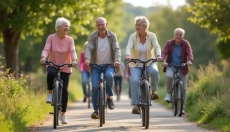

Exercise for tired people can surprisingly add energy
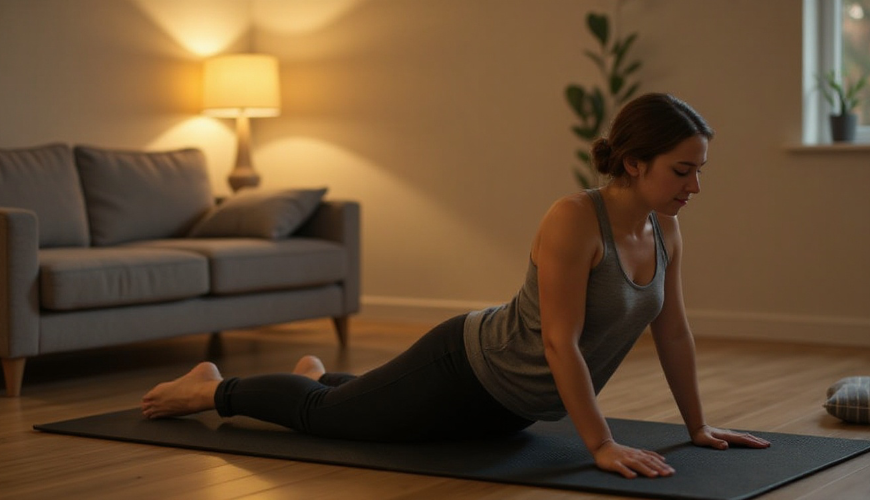
Fatigue is often considered a common toll of work, family, commuting, and the constant flow of information. However, when a person is chronically exhausted, they start moving less and less, ironically losing one of the most accessible ways to relieve both body and mind. It might sound contradictory: why move when there is no energy? Yet, light exercise that adds energy rather than depletes it does exist. It's not about hard work or "working for performance," but about smart, short, and gentle movements that promote circulation, breathing, and the feeling that the body belongs to the person again—not just the calendar.
This is where an approach often referred to abroad as low energy workouts comes in handy—exercises for days when energy is low. In Czech, it might simply be exercises for tired people: short, gentle, safe, and easily interruptible. Ideal also as exercise for beginners because it doesn't rely on perfect technique but on natural movement and gradually returning to activity.
Try our natural products





Why light exercise can reduce fatigue (and not worsen it)
When a person is tired, they often imagine that any movement will cost more "energy currency." This can be true for intense training. However, low-intensity movement works more like a gentle boost: it raises body temperature, stimulates blood flow, loosens stiff muscles from prolonged sitting, and often helps the psyche by bringing a sense of control and small victory.
It is no coincidence that professional institutions have long emphasized that even moderate activity is important. For instance, the World Health Organization (WHO) talks about the benefits of regular movement for health across ages—and also acknowledges that every minute that fits into the day counts. Similarly, the NHS points out that movement can improve mood and help with stress. These are exactly the situations when a person "has no strength" but would still like at least a small shift.
However, the choice is crucial. Exercise for overwhelmed and tired people has several common rules: it is short, has low difficulty, can be done at home without equipment, doesn't require high heart rates, and after finishing, one should feel lightness rather than exhaustion. When a gentle approach to oneself is added, movement can become a habit that returns energy—instead of taking it.
"The best exercise is not the hardest one, but the one that actually gets done."
And now the most practical part: tips on what exercises to do for tired and overwhelmed people, including specific exercises suitable even for complete beginners.
Exercise for the tired and beginners: short routines that awaken the body
The idea "I must exercise for at least half an hour" is a common reason why people don't start at all. With low energy exercises, it's better to reverse the logic: start with 5–10 minutes and keep the door open. If there's energy, you can add another round. If not, even those few minutes can improve the day.
A practical example from real life: in one office, several people agreed that after lunch, they wouldn't automatically reach for coffee but would first try a "five-minute session." One of them had long-term back pain from sitting and wasn't in the mood for sports in the evening. After two weeks of short routines (mainly spine mobility, a few squats by the chair, and breathing), he noticed that his energy "broke" less in the afternoon and he fell asleep more easily in the evening. It wasn't about any transformation into athletic form—more about an inconspicuous change in body rhythm that accumulated.
To make it work similarly, it's useful to have a few simple blocks at hand. Below is a single list (to keep the text clear), with specific exercises divided according to what a person most often needs: to mobilize, strengthen without exhaustion, or calm down.
Simple "low energy" routine (10–15 minutes) – choose 6–8 exercises
-
Belly breathing (1–2 minutes)
Sit or lie on your back, hands on your belly. Inhale through the nose so the belly rises, exhale slowly through the mouth. The goal is not to "breathe correctly" but to calm the nervous system and release tension in the chest. -
Cat (8–10 slow repetitions)
On all fours, alternate arching and curving the back. Great for stiffness after sitting, gently mobilizes the spine, and often relieves the neck. -
Shoulder circles and "open chest" (30–60 seconds)
Shoulders back and down, slow circles, then clasp hands behind or just mimic and gently open the chest. Helps against "office" posture. -
Chair squat (6–10 repetitions)
Stand in front of a chair, slowly sit down and immediately stand up. If tired, you can truly sit on the chair and rest for two seconds. It's a safe variation that strengthens the legs without pressure on performance. -
Step-ups on a stair or solid step (30–60 seconds)
Alternate right/left. Calm pace, without getting out of breath. If there are no stairs, a simple "step touch" in place (step to the side and bring together) will do. -
Bridge (glute bridge) on the back (8–12 repetitions)
Lie on your back, bend knees, feet on the ground. Lift the pelvis, hold briefly, and lower. Great for the glutes and back of the body, which "turn off" when sitting. -
Bird-dog (6 repetitions per side, slowly)
On all fours, extend one arm and the opposite leg, hold for a moment, and return. Helps stabilize the torso and back without aggressive strengthening. -
"Dead bug" in a simple version (6–10 repetitions)
Lie on the back, knees bent, arms up. Alternately lower one heel to the ground and return. Gentle core strengthening, suitable even when tired. -
Wall angels (6–10 repetitions)
Back against the wall, elbows bent, slowly move hands up and down. It doesn't matter if hands don't touch the wall. Excellent for shoulders and upper back. -
Hip stretch in kneeling (30–45 seconds per side)
One knee on the ground, the other foot in front. Gently push the pelvis forward. Hips are often tight from sitting, and releasing them often adds a feeling of lightness when walking. -
Walking in place with loose arms (1–2 minutes)
When not in the mood for anything complicated, walking is enough. It's important to move the arms and breathe. It's the simplest "restart." -
Child's pose (30–60 seconds)
Kneel, sit on heels, and lean forward. Relaxation of the back and calming. Suitable as a finishing touch when the day is challenging.
This routine can be tailored to the current energy level. Sometimes, three exercises and breathing are enough. Other times, more can be added. The essential point is that light exercise should genuinely be light—and still effective.
Tips for exercising when overwhelmed: how to recognize the right intensity
Fatigue isn't just physical. It's often a mix of stress, lack of sleep, and overload. Therefore, it makes sense to monitor not only what is exercised but also how. In practice, a few simple guidelines can help, which can be used without smartwatches and without counting calories.
Firstly: during exercise, it should be possible to speak in full sentences. As soon as a person is so out of breath that they can barely finish a sentence, it's probably too much for a "tired day." Secondly: after finishing, there should be a feeling of blood circulation and relaxation, not a need to immediately lie down from exhaustion. And thirdly: the next day, the body shouldn't hurt so much that it discourages further movement. Exercise for beginners is largely about creating continuity.
Many people also recognize overload by the fact that they don't want to "start." Here, a small trick works: set an absurdly small goal. For example, two minutes of mobility or five chair squats. It often turns out that starting was the hardest part—and the body then asks for another minute. And if it doesn't, it's still done. That's a win too.
If something "extra" is to be added to light exercise, surprisingly, regular walking works well. Not fast, not athletic, even just a brisk walk outdoors. In combination with gentle back and hip strengthening, walking can be what gradually brings a person back into rhythm. After all, the CDC has long emphasized that regular physical activity in everyday life is crucial for health—and walking is the most accessible form.
It's fair to add that there are situations where fatigue isn't "just" fatigue. If it's long-term, significant, associated with dizziness, breathlessness, chest pain, unexplained weight loss, or sleep disorders, consulting a doctor is appropriate. Movement is a great aid but shouldn't be a patch for something that requires professional examination.
Meanwhile, it might make sense to incorporate the low energy approach into daily life. A few minutes in the morning to mobilize the spine, a short strengthening of the legs and back in the afternoon, breathing and relaxation in the evening. Ideally, it becomes an inconspicuous ritual that supports other sustainable habits: better sleep, more regular meals, more water, fewer "quick" stimuli. And when combined with an environment that makes it easier—comfortable clothing, a pleasant space, the knowledge that nothing needs to be proven—movement becomes care, not punishment.
Ultimately, the most pleasant aspect is the simple fact: exercise for tired people doesn't have to be a compromise. It can be the most realistic way to move long-term, without fluctuations and without guilt. And if sometimes all you manage is a cat-cow, a few breaths, and a hip stretch, it can still be exactly what the body needed that day.