

Bean brownies that taste like the classic version will win your heart, even if you're not a fan of b
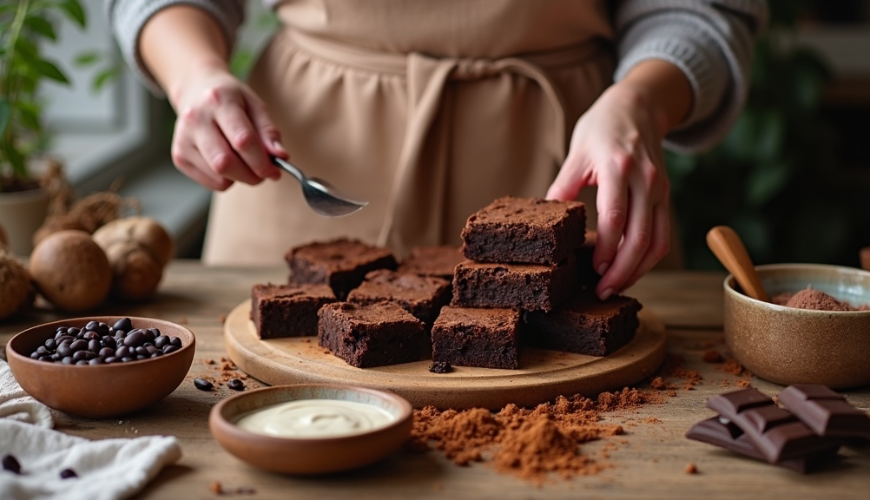
When you mention brownies, most people think of a dense chocolate dessert that's a bit of a guilty pleasure—sweet, buttery, and dangerously addictive. However, in recent years, a quiet revolution has been occurring with brownies: legumes are being added to the batter in place of part of the flour or even the entire flour component. Bean brownies might sound like an internet joke at first, but in reality, it's a surprisingly functional idea that combines chocolate delight with a more practical composition. And the best part? If the recipe is done well, no one will realize on the first bite that beans are hiding in the dessert.
In the kitchen, it sometimes pays to stop thinking in categories of "this is sweet" and "this is savory." Beans are quite neutral in taste and, when combined with quality cocoa, chocolate, and a bit of sweetener, they start working as a natural "carrier" of moistness. That's exactly why so many people are searching for a recipe for delicious bean brownies today: people want a dessert that won't just remain a dietary substitute but will actually be good. And they often ask: what makes bean brownies better, and why beans? The answer isn't just one—it's a combination of texture, nutritional benefits, and sustainability.
Try our natural products

Why Bean Brownies Are So Popular (and Why It Makes Sense)
It's not about turning brownies into a "healthy obligation." The point of the bean version is that beans can replace some of the traditional ingredients in the batter without sacrificing pleasure. Black beans or white beans (such as cannellini) are most commonly used. Black beans are popular because their color naturally supports the dark chocolate appearance, and when combined with cocoa, they almost perfectly blend in taste. White beans are milder, so they work well in recipes where you don't want to deal with an intense "legume" note.
What makes bean brownies better? Often, it's the consistency. When blended, beans create a smooth base that holds together, and the result is a moist, dense center—exactly what is expected from brownies. At the same time, they can reduce the need for a large amount of flour and sometimes even part of the fat. This doesn't mean it's automatically a low-calorie dessert (chocolate and sweetener still play the primary role), but the composition can be more balanced.
The second aspect is nutritional. Beans naturally contain fiber and plant proteins. Thus, components that are usually missing in classic brownies appear in the dessert. Fiber also contributes to making sweets feel more "filling"—you feel satisfied with a smaller piece. It's not magic, just practical experience from everyday life: when a dessert is just sugar and fat, people often keep reaching for more, whereas the satisfaction comes quicker with a denser version.
And then there's sustainability. Legumes are among the crops that have a firm place in the future diet—they are nutritious, storable, and compared to many animal protein sources, they can have a lower environmental footprint. Information from Harvard T.H. Chan School of Public Health serves as a clear context for the role of legumes in healthy eating and their nutritional benefits, written in an understandable way yet based on scientific knowledge.
Perhaps the most important thing is something else: bean brownies give people the feeling that they can bake smarter—without moralizing, without extremes, just with a small shift towards better composition. And anyone who has ever tried to "sneak" more legumes into the diet at home knows that such tricks are worth their weight in gold.
Recipe for Delicious Bean Brownies That Even Skeptics Will Enjoy
Before you start mixing and baking, it's worth saying one thing out loud: good bean brownies don't rely on "not having bad things in them." They rely on the fact that the ingredients used create a tastefully meaningful whole. If you skimp on cocoa or use poor-quality chocolate, the beans won't save it. Conversely, quality cocoa and genuine chocolate can turn a legume base into a dessert you can offer to guests without hesitation.
Basic Ingredients (and Why They're Important)
For a standard home baking dish (about 20 × 20 cm), this ratio often works well:
- 1 can of black beans (about 240 g after draining and rinsing) or the same amount of cooked beans
- 2 eggs (or alternatively "flax eggs" if baking without eggs)
- 3–5 tablespoons of quality cocoa
- 80–120 g of dark chocolate (depending on how intense the desired result is)
- 80–120 g of sweetener (brown sugar, coconut sugar, maple syrup; amount adjusted to taste)
- 2–4 tablespoons of oil or melted coconut fat (not necessary to overdo it, but some fat makes brownies brownies)
- a pinch of salt (yes, even in sweet recipes—it enhances the chocolate)
- 1 teaspoon of baking powder (optional, if you want a slightly "fluffier" texture)
- vanilla or cinnamon to taste
If desired, you can add a handful of chopped nuts or chocolate chips. That's the magic of brownies: it's a dessert that welcomes a personal touch.
The crucial step is working with the beans. If they are from a can, they must be very well rinsed and drained. This removes the brine and part of the typical "canned" smell. If the beans are home-cooked, it's good to cook them until completely soft—the blender will then make a smooth puree, and there will be no skins or small pieces in the batter.
A Practical Procedure That Works
The beans are blended until smooth along with the eggs and sweetener. Then add cocoa, salt, optionally baking powder, and finally melted chocolate with a bit of fat. The mixture is blended just enough to be homogeneous. Bake typically at 170–180 °C for about 20–30 minutes, depending on the oven and batter height. The brownies are done when the edges are firmer but the center still appears slightly "moist." Overbaking is the most common reason for a crumbly or dry result.
A simple rule is helpful here: brownies often "finish" after being removed from the oven. When allowed to cool and ideally rest for a few hours, the flavor rounds out, and the texture becomes denser. And if the goal is truly intense chocolate flavor, it's worth using cocoa with a higher fat content and quality dark chocolate.
One sentence that keeps repeating among home bakers is: "Good brownies are not defined by what's not in them, but by how they taste." And this is doubly true for the bean version.
A Small Real Example That Makes the Decision
In many households, bean brownies have their "moment of truth" when a guest arrives or kids come home from school, and someone asks what kind of dessert it is. Imagine a typical afternoon situation: a tray of cut squares is on the table, smelling of cocoa and chocolate, and someone takes a second piece without asking about the ingredients. Only then does it come up: "By the way, it's made from beans." The reaction is typically either laughter and incredulous shrugging or immediate curiosity about how it can taste "normal." This moment explains why the recipe for delicious bean brownies is so often shared: people love foods that surprise without feeling like a compromise.
What Makes It Better and Why Bean: Taste, Composition, and Sustainability in One
The question "why bean" has several layers, and it's fair not to confuse them. Some people are looking for a gluten-free dessert, others want to cut down on white flour, some want to add fiber, or just try something new. And some simply need to use up the beans left in the pantry. All these motivations are actually quite practical.
Taste-wise, beans act as a background. When properly flavored, they don't overpower the cocoa or chocolate; they just add density. That's why bean brownies often come out in a "fudge" style, with a creamier texture. In classic brownies, this effect is mainly achieved with fat and proper baking; in bean versions, the legume base also contributes to it.
Composition is another reason why bean brownies might be better. Not because it's a magically healthy dessert, but because it incorporates more fiber into sweets and often fewer refined ingredients. And those interested in how fiber relates to overall health can look into overview information from the World Health Organization (WHO), where general principles of a healthier diet are discussed (including emphasis on plant-based components).
Practicality is perhaps the least celebrated but the most real. Canned beans are accessible, storable, and quick. Combined with cocoa and chocolate, they create a dessert that can be baked even when there's no flour at home or when you don't want to deal with complicated weighing. And for households trying to eat more diversely, it's a pleasant way to move legumes from "mandatory soup" to something that evokes joy.
It's also good to be honest: bean brownies aren't for everyone, and there's no need to present them as the only right path. Some people love the classic and want butter, flour, and sugar just as they know it. The bean version is more of a clever alternative for times when you're looking for something a little different—or when you want to offer a sweet at home that has more than just flavor.
And maybe that's the answer to the question, what makes it better: it knows how to connect multiple worlds. It's a dessert that retains chocolate intensity but brings legumes into the mix, a component that belongs to a modern, more sustainable diet. Moreover, if quality ingredients are chosen and baking isn't overdone, the result is a dessert that doesn't need defending—just slice it, serve it, and let it speak for itself.